
Karrimor is a British outdoor brand that grew out of a Lancashire bicycle shop in the 1940s, and for Kenyan hikers it is mainly a value label: leather boots, taped waterproof jackets and rucksacks that cope well with day hikes around Nairobi. Bought thrifted, good pieces cost even less if you judge each one by its label and condition.
The difficulty is that one logo now covers very different kit. A 1980s rucksack sewn in England, a budget walking boot from the current range, a military-style Karrimor SF pack and a Japanese designer jacket can all carry the same name. Below you will find where the brand came from, what its boots, jackets and packs do well on Kenyan trails, how to check a second-hand piece, and how to find Karrimor in Nairobi.

Quick Facts
- Origin: Karrimor began as a family business making cycle bags in Lancashire, England; the Karrimor Bag Company was formed in 1946.
- Ownership: the company went into receivership in March 2004 and its assets were bought by Lonsdale Sports, part of the Sports Direct group (now Frasers Group).
- Waterproofing name: WeatherTite, used on both boots and jackets.
- Hot Rock boot: leather upper, WeatherTite lining, Dynagrip rubber outsole and Ortholite insole.
- WeatherTite 3-in-1 jacket: fully taped nylon shell rated 10,000 mm waterproof, with a removable fleece.
- Best Kenyan uses: day hikes such as Ngong Hills, Mt Longonot and Ol Donyo Sabuk, plus rainy-season forest walks from March to May and October to December.
Where Did Karrimor Come From?
Karrimor started in a bicycle shop in Rossendale, Lancashire, where Charles Parsons’ wife Mary and her sister Grace Davies sewed bike bags during the Second World War. A formal bag company followed in 1946, and the business grew into one of Britain’s best-known rucksack makers.
The early decades are the reason the name still carries weight with older hikers. In April 1952 the firm became Karrimor Weathertite Products, named after its weatherproof cycling bags. Mike Parsons, Charles’ son, joined in 1960 and became the main designer. The company opened its first factory in Haslingden in 1965, the same year it introduced the Karrimat closed-cell foam sleeping mat. It developed KS-100e, a light waterproof nylon fabric, and its 1960s Alpiniste is often described as the first modern frameless climbing rucksack.
The firm also helped start a sport. The first mountain marathon, a two-day navigation race across British hills, ran in 1968 under the brand’s name. In 1975 the company became Karrimor International Ltd, and in 1991 its Condor rucksack won a British Design Award. If you find an old pack with “Made in England” on the label, it most likely dates from this period.
Who owns Karrimor now?
Frasers Group, the company formerly called Sports Direct, owns Karrimor today. After years of ownership changes, including a 1999 sale to Cullinan Holdings of South Africa, the business went into receivership in March 2004, and Lonsdale Sports bought its assets for £5 million.
Since then the brand has been used mainly for affordable outdoor and running gear, largely made in China, and sold in huge volumes through UK and international sports stores. That does not mean every modern piece is poor. In March 2012 the brand relaunched a technical jacket range, and the top model, the Alpiniste, used eVent fabric rated to 20,000 mm, as grough reported at the launch. Most of what you will see today, though, sits in the budget-to-mid price band, and it should be judged that way.
Is Karrimor SF the same as Karrimor?
Karrimor SF is a separate label aimed at military, security and bushcraft users. Its packs look different from the hiking range: olive, black or camouflage colours, heavy fabrics and attachment points for pouches.
The Sabre 45 is a typical example. Retail listings give it 45 litres of space, 1000D nylon with a PU-coated back, a Coolmesh back panel, zips for detachable PLCE side pockets and a weight of about 1.8 kg. That is tough enough for rough camping, but heavy for a day on Elephant Hill, where a 25-30 litre pack under a kilo carries more comfortably.
What about Karrimor in Japan?
Japan has its own Karrimor range, sold through karrimor.jp, with a very different look: minimalist jackets in Pertex and Gore-Tex fabrics and light rucksacks in high-tenacity materials. Outdoor writers have noted that its quality and price sit well above the UK range. These pieces rarely reach Kenya, but if a Japanese-labelled jacket turns up thrifted, treat it as a premium shell rather than a budget one.
Is Karrimor a Good Brand for Hiking in Kenya?
Karrimor is a good fit for Kenyan day hikes and moderate treks when budget matters more than weight or long-term durability. Its boots and jackets cover dust, mud and steady rain well; for multi-day high-altitude trips, premium brands still hold up longer.
The table below matches the main product types to the hikes most Nairobi walkers do.
| Karrimor product | What to expect | Kenyan hikes it suits |
|---|---|---|
| Hot Rock and similar leather mid boots | WeatherTite lining, Dynagrip lugs, padded ankle collar | Ngong Hills, Ol Donyo Sabuk, Longonot’s ash slopes, muddy Kereita forest paths |
| Low walking shoes | Lighter, cooler, less ankle support | Karura and Oloolua forest walks, dry-season Ngong Hills |
| WeatherTite waterproof jackets | Taped seams, around 10,000 mm ratings on many models | Short rains in the Aberdares, afternoon storms on Mt Kenya’s lower slopes |
| 3-in-1 jackets | Shell plus zip-in fleece, heavier than separates | Cold early starts, camps at Met Station or Old Moses |
| Day rucksacks (20-30 L) | Simple harness, hydration sleeve on some models | Any day hike within two hours of Nairobi |
| Karrimor SF packs | Very tough, heavy, military styling | Rough camping, porter-free overnight trips, bushcraft |
How good are Karrimor walking boots?
Karrimor walking boots are solid entry-level boots: comfortable from the first wear, waterproof when new, and grippy on red soil and gravel. They are softer and less supportive than premium leather boots, so they suit day hikes better than heavy loads.
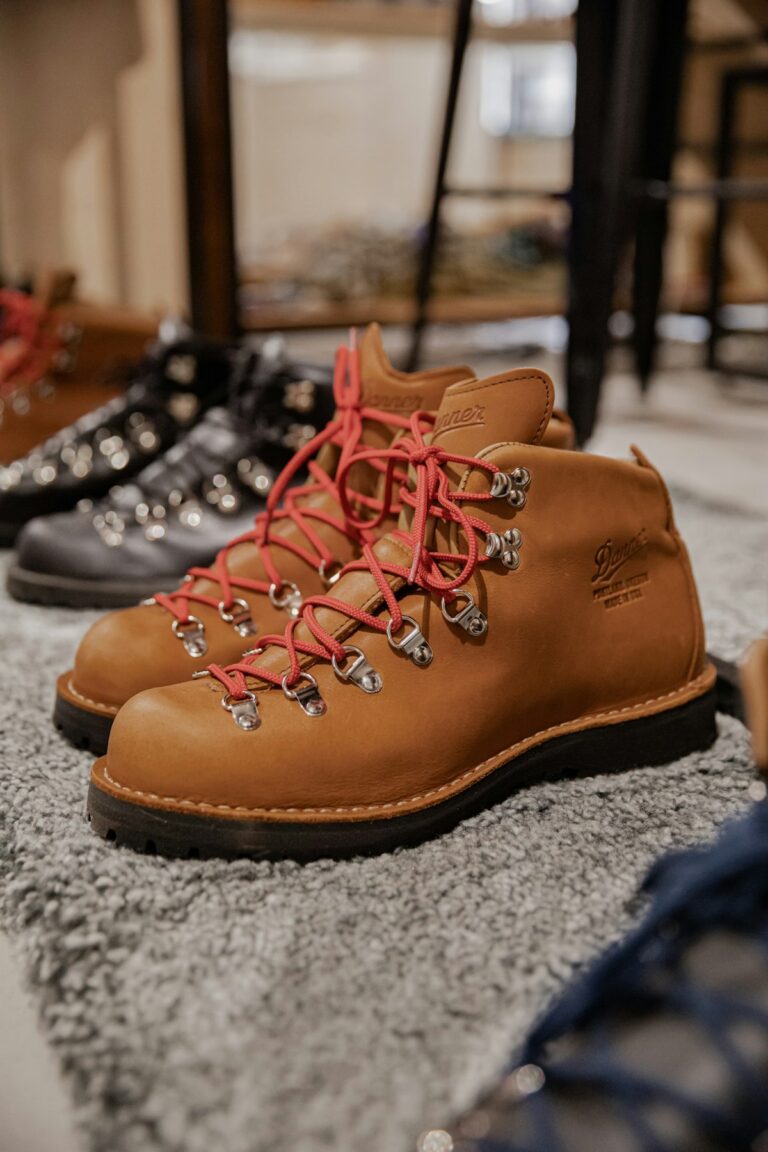
The men’s Hot Rock is a good reference point. The current listing describes a leather upper with a WeatherTite waterproof lining and mesh inner, a rubber Dynagrip outsole with deep lugs, a “Frame Flex Chassis” midsole, a cushioned Ortholite insole, a high padded ankle collar and a heel pull loop. It is sold in UK sizes, with men’s sizes from 6 to 11 on the listing. Women’s and junior versions use the same name, so check the size label inside the tongue rather than the colour.
On Kenyan trails, deep lugs matter most on Longonot’s loose ash descent and on wet murram after the October showers. The softer chassis makes the boot pleasant on gentle forest walks but tiring under a 15 kg pack. If you are planning Mt Kenya, read our guide to hiking boot brands for Kenyan trails and compare a stiffer boot before you decide.
Are Karrimor jackets properly waterproof?
Most of the brand’s waterproof jackets are properly waterproof for hiking, provided the label says WeatherTite and the seams are taped. Ratings around 10,000 mm handle the steady rain of Kenya’s short rains; very long storms will test any budget shell.
The men’s WeatherTite 3-in-1 jacket is listed with a 100% nylon shell, a DWR finish, a 10,000 mm waterproof rating, 10K breathability, fully taped seams, a mesh lining and a removable polyester fleece. The tuck-away hood is handy on windy ridges such as the Ngong Hills, where gusts can turn a hood into a sail. A 3-in-1 is heavier than a separate shell and fleece, so most hikers end up wearing the two parts on different days: the fleece for a cold 6 am start, the shell when cloud builds after midday.
Older jackets with names such as “water resistant” or “showerproof” on the tag are another matter. They will keep off drizzle on a Karura walk but not a two-hour downpour in the Aberdares. If you need a dedicated shell, our rain jackets section lists what is in right now.
Which Karrimor rucksack is best for Kenyan day hikes?
For Kenyan day hikes, a day pack between 20 and 30 litres is the right size: enough for two to three litres of water, a rain jacket, a fleece and lunch. Bigger 45-65 litre packs only make sense for overnight trips.
Rucksacks are where the brand’s history shows most. Older packs from the Lancashire factory era were built from heavy, waterproof fabrics and often last for decades, but their foam and coatings can age. Newer packs are lighter and simpler. Whichever you find, try it on loaded; our article on choosing hiking backpacks in Nairobi explains torso length and hip-belt fit. If you would rather have a ready-to-go option, our 28L day hiking backpack covers the same job.
Gear up for your next hike
Shop quality hiking and outdoor gear at great prices — from socks and gloves to hats, balaclavas and camping fuel. Everything you need for Kenya’s trails, delivered fast.
How Do You Judge Second-Hand Karrimor Gear?
Judge second-hand Karrimor gear by the parts that wear out first: soles and midsoles on boots, seam tape on jackets, and coatings and buckles on rucksacks. A faded colour matters far less than any of these.
Because the brand sold in such large numbers across the UK and Europe, a lot of it reaches the thrifted market, which is good news for Kenyan hikers on a budget. The checks below take a few minutes and work for any brand, but they suit this brand especially well because the range spans so many ages and price levels.
- Read the inner label first. Look for the product name, size and fabric (WeatherTite, eVent, Pertex). “Made in England” points to an older piece; manufacture in China is normal for the current range.
- Press the boot midsole. Squeeze the side of the sole with your thumb. It should give a little; if it feels hard or shows fine cracks, the foam has aged.
- Check the lugs and the toe. Dynagrip lugs should still have clear edges. Look for any gap where the sole meets the upper at the toe or heel.
- Flex the leather. Bend the boot at the forefoot. Deep cracks across the crease let water in, whatever the lining says.
- Turn the jacket inside out. Seam tape should lie flat. Peeling or bubbling tape means leaks at the shoulders, the first place rain hits under a pack.
- Sniff and touch the rucksack lining. A sticky or flaking inner coating with a sour smell means the waterproof PU layer has broken down.
- Work every zip and buckle. Hip-belt buckles and the main zip take the most strain on a loaded day.

Our longer article on judging second hand hiking boots in Nairobi goes deeper into midsoles, resoling and fit.
How can you tell if Karrimor gear is genuine?
Genuine Karrimor gear usually has neat, even stitching, a clearly printed care label with a product code, and logos that are sharp and correctly spelt. Spelling errors, blurred prints and missing inner labels are warning signs on any branded item.
Counterfeit outdoor gear exists in every market, so keep the checks general. Compare the logo with photos on the brand’s own listings, look at the quality of zips and eyelets, and be wary of a “waterproof” jacket with no taped seams inside. None of this proves anything about a particular seller; it simply helps you decide whether the item in your hands is worth the money.
How Does Karrimor Compare With Other Brands?
Karrimor competes most closely with Regatta and Quechua on price and purpose. All three make sensible, affordable kit for day hikers. Lowa, Scarpa and similar premium makers cost more but last longer under heavy loads and on rocky, high-altitude ground.
Regatta is the nearest match: both are British, both sell huge volumes, and both use their own waterproof fabrics. Regatta publishes Isotex ratings from 3,000 mm up to 30,000 mm, which makes its labels a little easier to read; our guide to Regatta jackets in Kenya explains them. Quechua, Decathlon’s hiking label, is the other obvious comparison for boots. The Quechua waterproof hiking boot sits in a similar bracket to a Hot Rock and suits the same day hikes.
Where the brand falls behind is in the premium boot world. A Lowa or Scarpa leather boot has a stiffer midsole, a better-sealed membrane and soles that can sometimes be replaced, all of which matter on a five-day Mt Kenya traverse. For a Saturday on Ol Donyo Sabuk, those advantages rarely show.
Pro Tips
- Size with hiking socks on: try boots on with the thick socks you will hike in; merino wool hiking socks add noticeable volume.
- Leave a thumb’s width: your longest toe should sit about a finger’s width from the front so it does not hit on steep descents.
- Separate the 3-in-1: wear the fleece alone on dry mornings and the shell alone in warm rain.
- Add rain trousers: a shell keeps your top dry, but wet trousers chill you fast above 3,000 m; pair it with waterproof rain pants.
- Pack light: Karrimor SF packs are tough but heavy; choose a 20-30 L day pack for day hikes.
Which Kenyan Hikes Suit Karrimor Kit?
Karrimor kit suits most popular hikes within two to three hours of Nairobi: Ngong Hills, Mt Longonot, Ol Donyo Sabuk, the Kereita and Karura forests and the Aberdares’ lower trails. It is a less natural choice for the high, rocky ground of Mt Kenya.
Mt Longonot, about 90 km from Nairobi, is a good test. The full hike from the gate and around the crater rim is about 13.5 km, and the ash on the steep sections punishes smooth soles, so Dynagrip lugs earn their keep there.
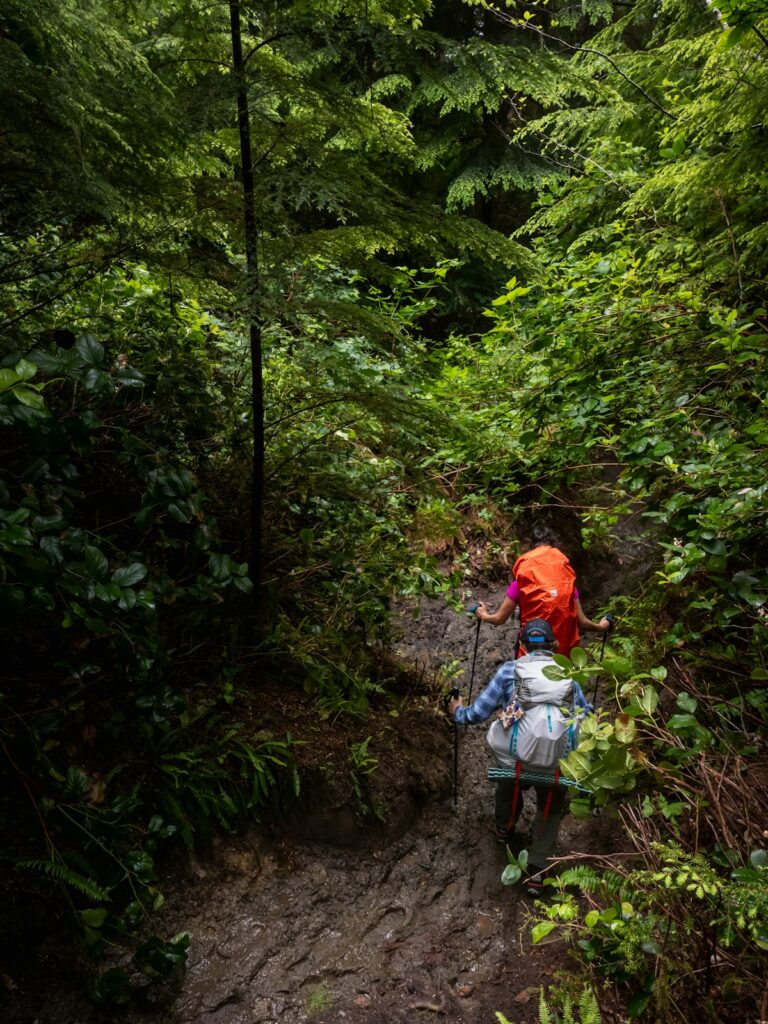
Ngong Hills, roughly 25 km from the city centre, are mostly grass and dust in the dry months, which low walking shoes handle well. Ol Donyo Sabuk’s forest road is gentle but slippery after rain, and a waterproof mid boot keeps feet dry through the puddles. In the Aberdares, Elephant Hill is long and boggy enough that a taped shell, gaiters and a waterproof boot all matter at once; see our Elephant Hill hike guide before you go.
For Mt Kenya, these boots and jackets are usable on the lower slopes up to the Sirimon or Naro Moru camps, but plan stiffer boots, warmer layers and better gloves for summit day on Point Lenana at 4,985 m. Check current park rules and fees with the Kenya Wildlife Service before any national park hike.
Ready to hit the trail?
Join one of our upcoming guided hikes — from beginner-friendly day hikes to longer treks across Kenya’s best routes.
Where Can You Find Karrimor in Nairobi?
You can look for Karrimor in Nairobi at thrifted outdoor gear shops and branded sports outlets. At Hiking Outdoor Gear Hub, Karrimor turns up among the quality thrifted big-brand stock at our Mountain Mall shop on Thika Road, alongside some new items.
Thrifted stock changes from week to week, so we do not promise a particular boot, jacket or pack on any given day. The easiest way is to message us on WhatsApp with your size and what you need, and we will tell you which Karrimor pieces are in. You can also visit our third-floor store at Mountain Mall, off Thika Road, in Shop D39 near the Garden Estate and Thome turn-offs, a short hop from Kasarani and Roysambu. We are open Monday to Friday from 8:30 am to 6:00 pm, Saturday from 9:00 am to 2:00 pm, and on Sunday by appointment.
When you come in, bring the socks you hike in and, if you can, your current boots. Comparing the insole length of a new-to-you boot against a pair that already fits you takes the doubt out of UK sizing faster than any chart. Buying thrifted means good gear at a fraction of its original price, and it keeps sound kit on the trail instead of in landfill.
How should you care for Karrimor gear in Kenyan dust and mud?
Clean leather walking boots after every muddy hike with a soft brush and water, dry them slowly at room temperature, and reproof jackets when rain stops beading. Heat from a jiko, a car dashboard or direct sun can weaken glues and leather.
Red soil is fine and gritty, and once it dries in leather creases it acts like sandpaper. Brush it out the same evening; the Hot Rock listing recommends a soft suede brush. Stuff wet boots with newspaper and change it every few hours. For jackets, wash with a technical cleaner rather than ordinary detergent, which can strip the DWR finish, then reproof. Empty rucksacks completely and let them air with all pockets open so the inner coating does not stay damp for days.

Frequently Asked Questions
Is Karrimor a good brand or just a cheap one?
Karrimor is both, depending on the item. The brand built its name on high-quality rucksacks made in Lancashire, and since 2004 it has mostly sold affordable boots, jackets and packs through Sports Direct. Today’s range is good value for day hikers rather than top-end mountain kit. Older England-made packs and the Japanese range sit higher in quality, so read the label to know which Karrimor you are holding.
Are Karrimor boots waterproof enough for the rainy season in Kenya?
Karrimor boots with a WeatherTite lining are waterproof enough for most rainy-season day hikes in Kenya, such as muddy forest trails in April or November. They keep feet dry through puddles and wet grass when the leather is in good condition. Deep cracks, a split at the toe or a worn lining will let water in, so check a second-hand pair carefully and add gaiters in deep mud.
Does Sports Direct own Karrimor?
Yes, Karrimor is owned by Frasers Group, the retail group formerly called Sports Direct. The original company went into receivership in March 2004, and Lonsdale Sports, part of the Sports Direct group, bought its assets for £5 million. Since then the name has been used mainly as an affordable outdoor and running brand. A separate range is sold in Japan with a different style and price level.
Can I climb Mt Kenya in Karrimor boots?
You can walk Mt Kenya’s lower routes in Karrimor boots, but most hikers are better off with a stiffer, warmer boot for the full climb. The Hot Rock and similar models are comfortable and grippy, yet softer under a heavy pack and on the frozen scree below Point Lenana at 4,985 m. For a three- to five-day trek, compare a sturdier leather boot and wear warm merino socks.
Is old Karrimor gear worth buying second hand?
Old Karrimor gear is often worth buying second hand, especially rucksacks from the brand’s Lancashire years, which were built from heavy, long-lasting fabrics. Check the inner coating for stickiness, the foam in the hip belt and every buckle. Old boots are riskier because midsole foam hardens with age even when the upper looks fine, so press the sole and flex the boot before paying.
Final Thoughts
Karrimor rewards the buyer who knows which era and which range a piece came from. Older England-made packs are built to last, the current boots and WeatherTite jackets are honest value for day hikes, and Karrimor SF is for rough camping rather than light walking. Match each item to your usual trail, then check soles, seams and coatings.
If a Mt Longonot or Ngong Hills weekend is coming up, send us your size and the hike you have planned, and we will tell you which thrifted pieces fit the job.
Looking for a Karrimor boot or jacket in your size?
Our team can help you choose the right gear, answer your hiking questions and get your order dispatched quickly. Message us for a quick, straight answer.