
Fake hiking boots usually give themselves away in the small details: a tongue label with no style number, a blurred sole logo, glue smeared where the sole meets the upper, flimsy eyelets and a price far below what even a worn original sells for. Check those points before you pay and most copies fall out of the running.
That matters in Kenya because a boot is safety kit. A copy that looks right on a rack in Nairobi can lose its grip on Longonot’s loose ash or split at the toe on Mt Kenya scree. Below are seven signs of fake hiking boots, a comparison table, a basin test for waterproofing, and how to tell honest wear on a thrifted pair from poor manufacturing.
Quick Facts
- Fastest check: the tongue label, which should show a size grid and a style number.
- GORE-TEX proof: Gore’s black diamond hangtag reads “Guaranteed to keep you dry”; without the tag, the boot itself carries a GORE-TEX label.
- Vibram mark: a golden yellow octagon, that colour since 1967, and always crisp.
- No Vibram is normal too: Salomon uses its own Contagrip rubber.
- Price: Vibram and Mammut both warn that a deal too good to be true usually is.
- Used is not fake: scuffs are normal on thrifted boots; crooked glue lines are not.
Why do fake hiking boots matter more than fake trainers?
A copied trainer lets you down on looks. Fake hiking boots let you down halfway up a mountain, because counterfeiters cut costs on the parts that keep you upright and dry.
A real hiking boot has a stiff midsole, deep lugs and often a sealed membrane. Copies imitate the outside; the midsole may fold in half and the “waterproof” lining may be plain mesh. Gore says some counterfeits look almost identical but none are tested to its standards.
On the descent from Longonot’s rim, where ash rolls underfoot like ball bearings, fake hiking boots with a slick sole and soft heel turn a sore knee into a fall. In the long rains, roughly March to May, a membrane that exists only as a printed logo means wet socks within an hour on Ngong Hills.
How to spot fake hiking boots: 7 signs to check
Work through these checks in order. One odd detail is not proof, but two or three together should make you walk away.
1. Does the tongue label carry a style number you can search?
Genuine boots from the big brands have a tongue label with sizes in several systems, a style number and a country of manufacture. Mammut’s authenticity advice names missing style numbers as a common giveaway of copies.
Search that number with the brand name: the same model and colourway on the brand’s site is a good sign. Fuzzy printing and sizes that do not convert properly are typical of fake hiking boots; our guide to converting UK, EU and US boot sizes helps you check the maths.
2. Is the GORE-TEX branding where it should be?
A membrane boot should show the GORE-TEX name on the boot itself, usually on the tongue, side or heel. According to GORE-TEX’s own FAQ, genuine products come with a black diamond hangtag, and the product stays labelled when that tag is gone.
Thrifted boots rarely keep their hangtag, so check that the permanent branding is evenly printed or stitched. A logo that peels like a sticker is one of the clearer signs of fake hiking boots. Gore’s guarantee covers original owners of new products only, so no used pair carries it.
3. What does the sole tell you?
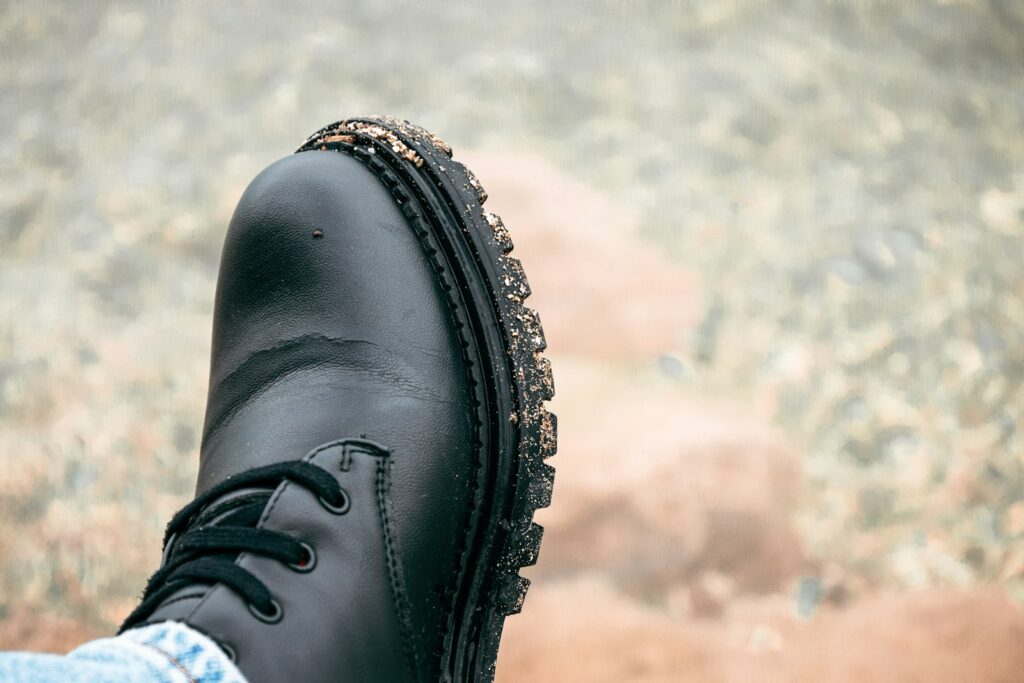
Turn the boot over. A good sole is costly to copy, so it often exposes fake hiking boots faster than the upper does. Look for deep lugs with sharp edges, crisp moulded lettering and rubber that feels slightly tacky rather than hard and shiny.
Many boots use Vibram soles, whose logo is a golden yellow octagon: the shape dates from 1947 and the gold from 1967. Plenty of real boots never carry it, so compare the sole pattern with photos of the same model rather than hunting for one logo.
4. Are the stitching and glue lines neat?
Genuine boots have short, even stitches in straight rows, often doubled where the heel and toe take strain. Copies tend to show long, loose stitches and frayed ends.
Then look where the rubber meets the upper. Thick glue smeared above the rand, or gaps you can slide a fingernail into, are common on fake hiking boots.
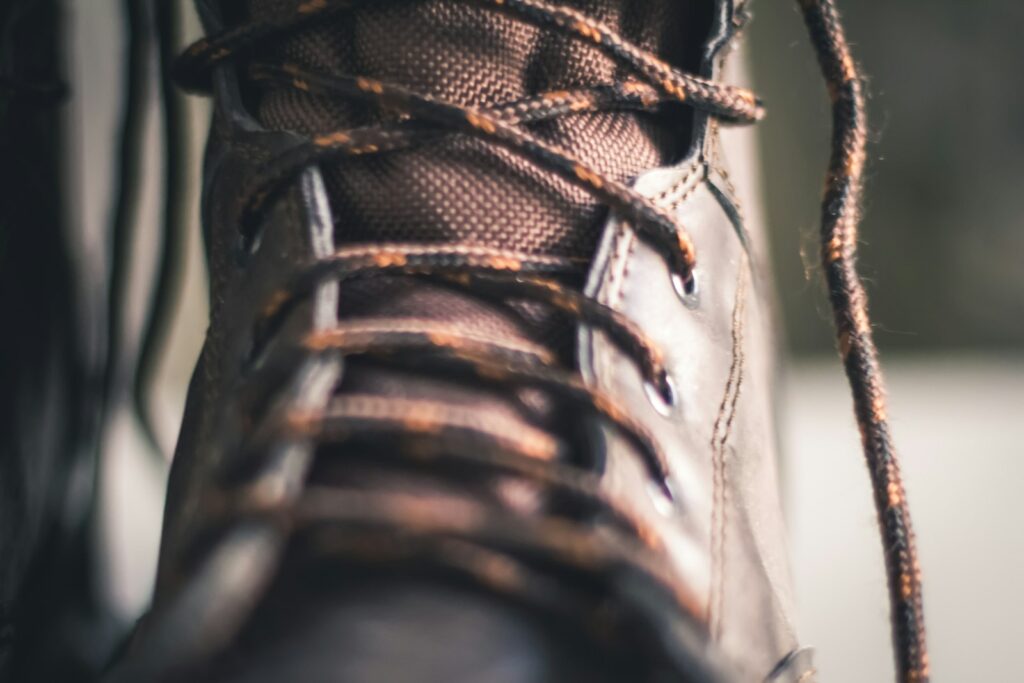
5. Do the eyelets, hooks and laces feel solid?
Metal hooks on a real hiking boot are firmly set and do not turn when twisted. On many fake hiking boots they are thin painted plastic or already rusting.
6. How does the boot feel in your hands?
Hold the toe and heel and twist. A proper hiking boot resists, bending only at the ball of the foot. Fake hiking boots often fold in the middle, and that will not support you on rocky ground, whatever the label says.
Press the heel cup with your thumb; it should be firm. If the pair feels as light as a canvas shoe next to the weight listed on the brand’s site, ask why.
7. Do the price and the seller’s story add up?
Vibram’s counterfeit page warns that prices far below official ones usually mean a fake, or an order that never arrives. On a thrifted pair the price should reflect wear, not undercut other used pairs of that model by half. Before paying any online seller, ask for close-ups of the tongue label, sole and heel.
| Check | Genuine pair | Sign of fake hiking boots |
|---|---|---|
| Tongue label | Size grid, style number, clean print | No style number, fuzzy text |
| GORE-TEX branding | Permanent, crisp label on the boot | Sticker-like logo, odd spelling |
| Sole | Deep, sharp lugs; crisp lettering | Shallow lugs, blurred logo |
| Seams and glue | Short, even stitches; thin glue line | Loose stitches, glue smears, gaps |
| Hardware | Firm metal hooks and eyelets | Painted plastic, early rust |
| Structure | Firm heel, bends at the ball of the foot | Folds in the middle, soft heel |
| Price | Fits the model and its condition | Half the price of similar used pairs |
Gear up for your next hike
Shop quality hiking and outdoor gear at great prices — from socks and gloves to hats, balaclavas and camping fuel. Everything you need for Kenya’s trails, delivered fast.
Can a used boot be genuine and still a poor buy?
Yes. Many thrifted boots are genuine but worn out, and a real Lowa with a crumbling midsole is no better on a mountain than a copy. Condition is the second question after authenticity.
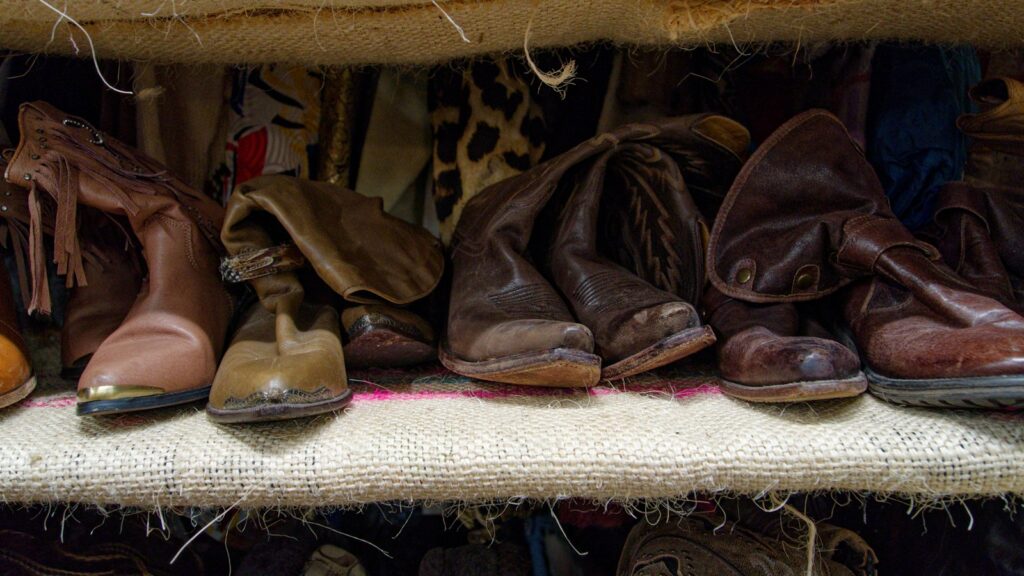
Honest wear looks consistent: lugs worn evenly, creases across the toe, scuffs on the toe cap. Warning signs on a real pair are a crumbly midsole (polyurethane foam can break down with age, even unused), a sole peeling at the toe and lugs worn flat. See our guide to judging second-hand hiking boots in Nairobi.
A quality thrifted pair from a known brand often has years left in it, at a price that makes good kit affordable. Fake hiking boots are the opposite: poorly made from day one. Once you own a good pair, our boot care routine for Nairobi’s dust and mud keeps it going.
Before You Pay: Checklist
- Photograph the tongue label and search the style number.
- Compare the sole with the same model online; fake hiking boots often get the lug pattern wrong.
- Twist the boot: it should bend at the ball of the foot only.
- Squeeze the heel cup and inspect the glue line.
- Try both boots on with hiking socks, late in the day.
- Walk down a step or slope; your toes should not hit the front.
How can you test a boot’s waterproofing at home?
A basin test shows whether a membrane boot keeps water out. It takes about ten minutes, and it quickly catches fake hiking boots whose “waterproof” lining is only a printed logo.
- Pour 3-5 cm of water into a basin, below the tongue gusset.
- Put on dry socks, lace up and stand in it for five to ten minutes.
- Check your socks for damp patches at the toe and flex crease.
- Dry the boots naturally, away from direct heat.
Wet socks do not prove a copy, since a genuine membrane can wear through after years of use, but that boot should stay home in the rains. Our guide to waterproof hiking boots in Nairobi explains how membranes differ.
Where can you buy genuine hiking boots in Nairobi?
Buy where you can handle the boots, read the labels and try them on before paying. That is the easiest way to avoid fake hiking boots in Nairobi.
You can run all seven checks yourself at our Mountain Mall shop in Nairobi, Shop D39, 3rd floor, on Thika Road near Garden Estate, Thome and Kasarani. We open Monday to Friday 8:30am-6:00pm, Saturday 9:00am-2:00pm, and Sunday by appointment. Our boots are mostly quality thrifted pairs from big brands, plus some new items.
Boots we have listed include the Lowa Renegade Evo GTX Mid, the Keen Targhee Mid waterproof boot and the budget Quechua waterproof hiking boot; see also our Lowa brand page. Try them on with merino wool hiking socks. Our round-up of hiking boot brands that suit Kenyan trails compares the main names.

Ready to hit the trail?
Join one of our upcoming guided hikes — from beginner-friendly day hikes to longer treks across Kenya’s best routes.
Frequently Asked Questions
Are fake hiking boots common in Kenya?
Copied hiking boots do turn up in Kenya, as copies of popular outdoor brands do in most markets. The Anti-Counterfeit Authority’s 2025 consumer survey found that about 31% of counterfeit purchases in Kenya happen online, and that many buyers struggle to tell genuine goods from copies. Buying where you can inspect the boots yourself is the simplest protection.
Is a GORE-TEX logo on the tongue enough to prove they’re real?
A GORE-TEX logo alone is not proof, because logos are easy to print. Gore says genuine products carry its black diamond hangtag and stay labelled once the tag is removed. Check that the branding is crisp and permanent, and confirm the style number matches a GORE-TEX model on the brand’s site.
Do all real hiking boots have Vibram soles?
Real hiking boots do not all have Vibram soles. Many brands use Vibram, but Salomon fits its own Contagrip rubber, as others use in-house compounds. Compare the sole pattern, lug depth and lettering with photos of the exact model instead. A blurred logo is the warning sign, not a missing one.
Can I wear fake hiking boots on an easy hike like Karura?
Copies may survive a flat, dry walk such as a short Karura Forest loop, but they are a gamble on anything steeper. Weak midsoles, poor grip and peeling soles cause trouble on Longonot’s ash or Mt Kenya scree. For anything harder, choose a genuine pair, new or thrifted.
What do I do if I think I’ve bought fake hiking boots?
Ask the seller for a refund or exchange, showing photos of the label and sole. Goods sold as a brand they are not can be reported to Kenya’s Anti-Counterfeit Authority, and Gore runs a “Report a fake GORE-TEX product” form on its website. Keep a doubtful pair off serious hikes.
Final Thoughts
Copies can fool the eye on a shelf, but rarely survive a careful look at the label, sole, seams and flex. Run the seven checks every time, because fake hiking boots save you money only until the first steep descent. Then try your shortlist on with hiking socks and walk a slope before you decide.
Want a genuine pair for your next hike?
Our team can help you choose the right gear, answer your hiking questions and get your order dispatched quickly. Message us for a quick, straight answer.