Hiking boot sizes in Kenya are usually quoted in EU numbers, yet most boots also carry UK and US sizes, and the three systems never line up neatly. The safest way to buy is to measure your foot length in centimetres, convert it with the brand’s own chart, then test the fit wearing hiking socks.
You ask for a 42, the tongue label says UK 8, and the pair still pinches on the way down a crater wall. Below are conversion tables, a five-step way to measure your feet, the fit tests that matter on steep descents, and where to try pairs on in Nairobi.

Quick Facts
- Labels: Most hiking boot sizes in Kenya appear as EU, UK and US numbers, often with a CM figure too.
- Men’s sizes: On Keen’s chart, US 9 = UK 8 = EU 42 = 27 cm.
- Women’s sizes: On the same chart, US 7 = UK 4.5 = EU 37.5 = 24 cm.
- Toe room: About a thumb’s width in front of your longest toe.
- When to try on: Late afternoon, when feet have swollen slightly.
- Half size up: A sensible start; wide feet may need a full size.
Why Are Hiking Boot Sizes in Kenya So Confusing?
Boot labels here are confusing because the boots come from everywhere. One pair was made for the British market, the next for Europe or America, and each system counts in different steps, so a single number never tells the whole story.
Three numbers on one tongue label
Most modern boots list EU, UK and US sizes inside the tongue, sometimes with a CM figure. EU sizes move in steps of two-thirds of a centimetre, UK and US sizes in thirds of an inch, so conversions land on awkward numbers like 42.5. Sellers mostly quote hiking boot sizes in Kenya in EU numbers, but the centimetre figure travels best between brands.
Why thrifted pairs need extra care
Thrifted pairs add another layer. A boot first sold in Britain may show the UK size most clearly, while an American pair leads with US sizing. That is why hiking boot sizes in Kenya feel messier on second-hand shelves. Ours combine quality thrifted boots with some new pairs, keeping good brands affordable, so judge each by length and fit. Our post on judging second hand hiking boots in Nairobi covers soles and midsoles.
Hiking Boot Sizes in Kenya: A Conversion Table to Start From
Treat these tables as a starting point, not a final answer. The rows come from Keen’s official size chart; Lowa, Scarpa, Quechua and other makers publish their own, and they can differ by half a size.
Men’s sizes
| Foot length (cm) | EU | UK | US men’s |
|---|---|---|---|
| 25 | 39.5 | 6 | 7 |
| 26 | 40.5 | 7 | 8 |
| 27 | 42 | 8 | 9 |
| 28 | 43 | 9 | 10 |
Women’s sizes
| Foot length (cm) | EU | UK | US women’s |
|---|---|---|---|
| 23 | 36 | 3.5 | 6 |
| 24 | 37.5 | 4.5 | 7 |
| 25 | 38.5 | 5.5 | 8 |
| 26 | 39.5 | 6.5 | 9 |
Two quirks catch people out. A 26 cm foot is a men’s US 8 and EU 40.5, but a women’s US 9 and EU 39.5 on the same chart. The EU column also skips: men’s UK 7.5 is EU 41, and UK 8 jumps straight to EU 42. Remember both when reading hiking boot sizes in Kenya off a worn label.
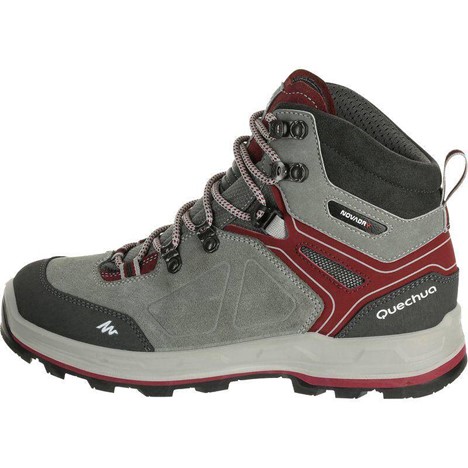
The Keen Targhee Mid waterproof boots follow a chart from Keen, an American brand, while the Lowa Renegade GTX Mid and the Quechua Forclaz 500 High come from European brands with charts of their own. Between two sizes, compare the centimetre figure rather than the EU number.
How Do You Measure Your Feet for Hiking Boots?
Measure both feet in centimetres, late in the day, standing up, and size to the longer one. Five minutes with a sheet of paper is enough.
- Wait until late afternoon, when your feet have swollen slightly after a day of walking around Nairobi.
- Put on the socks you will hike in, for example cushioned merino wool hiking socks.
- Stand on A4 paper with your heel against a wall and ask someone to mark the tip of your longest toe.
- Measure from the wall to the mark in centimetres, then repeat with the other foot.
- Take the longer figure to the brand’s chart and allow for toe room.
One foot is often a few millimetres longer than the other, so fit the bigger one. Lacing or a thicker sock can take up a little spare room on the smaller side, but nothing stretches a cramped toe box halfway down a four-hour descent. Measuring like this turns hiking boot sizes in Kenya from guesswork into one reliable number.
How Should Hiking Boots Fit on Kenyan Trails?
A good fit leaves a thumb’s width in front of your longest toe, holds your heel with slight lift at most, and lets your toes move. Steep, loose descents near Nairobi test all three.
Toe room for Longonot ash and Mt Kenya scree
Toe room protects you on descents. On the crater rim of Mt Longonot or the scree below Point Lenana, your foot slides forward, and a boot that felt fine on a flat floor jams your toes into the front. Walk down stairs before you buy and keep your toes clear of the end.
Heel hold and lacing
Heel hold comes from the boot’s shape and sensible lacing, not yanking the laces tight. Slight lift is normal in a stiff new boot; if your heel keeps rising when properly laced, try another model rather than a smaller size.
Width, volume and women’s lasts
Lowa explains that its women’s boots use a separate last with adjusted instep height and ball circumference, because women’s feet usually have less volume. A slim foot may slide around in a men’s boot of the right length. Width matters as much as length when you compare hiking boot sizes in Kenya, and our post on hiking shoes for women in Nairobi covers women’s options.
Should hiking boots be half a size bigger?
Starting half a size above your everyday shoes is the usual advice for hiking boot sizes in Kenya and elsewhere. Wide feet, multi-day treks or thick socks for a cold summit night can justify a full size up. Beyond that, a loose boot lets your foot slide and rub.
Gear up for your next hike
Shop quality hiking and outdoor gear at great prices — from socks and gloves to hats, balaclavas and camping fuel. Everything you need for Kenya’s trails, delivered fast.
Where Can You Try On Hiking Boots in Nairobi?
You can try pairs on at Shop D39 in Mountain Mall, on the 3rd floor, along Thika Road near the Thome and Garden Estate turn-off, a short ride from Kasarani. We open Monday to Friday 8:30am-6:00pm, Saturday 9:00am-2:00pm, and Sunday by appointment.
You can also order online and pay by M-Pesa or cash on delivery; thrifted stock moves quickly, so ask what is in your size. Sending us your foot length in centimetres takes the confusion out of hiking boot sizes in Kenya when you cannot try a pair on. For more on buying in the city, read where to buy hiking boots in Nairobi and our round-up of hiking boot brands.
What should you look for when buying a pair in your size?
Run through these checks before paying, whichever of the hiking boot sizes in Kenya you end up choosing.
| Check | What a good fit looks like |
|---|---|
| Toe room | A thumb’s width in front of the longest toe, in hiking socks |
| Heel | Only slight lift when fully laced |
| Width | No pressure on the little toe or the ball of the foot |
| Downhill test | Toes stay off the front on stairs or a ramp |
| Insole (thrifted) | Stand on it: heel at the back, space beyond your toes |
The Quechua waterproof hiking boot and the Keen boots on our shelves are good pairs to compare, and our hiking gear checklist for Kenya shows what else to pack.
Fitting-Room Pro Tips
- Bring your hiking socks and any insoles you use.
- Walk for ten minutes in both boots, including stairs.
- Lace fully every time; loose laces make a boot feel longer.
- Save your foot length in centimetres on your phone; it beats any label when comparing hiking boot sizes in Kenya.
- Break new boots in on short walks before a big climb.
Which Sizing Mistakes Cause the Most Blisters?
Buying by the number on your office shoes causes the most trouble. Dress shoes, trainers and boots are built on different lasts, so treat your street size as a rough clue when reading hiking boot sizes in Kenya.
- Morning fittings: feet are smallest then, so the pair feels tight by afternoon.
- Thin socks: cushioned hiking socks need noticeably more room.
- Swapping men’s and women’s numbers: a women’s US 9 is not a men’s US 9.
Another trap with hiking boot sizes in Kenya is assuming one brand’s 43 matches another’s. A German 43 and an American 43 can feel quite different, so try each new model on.
Ready to hit the trail?
Join one of our upcoming guided hikes — from beginner-friendly day hikes to longer treks across Kenya’s best routes.
Frequently Asked Questions
I wear a 42 in normal shoes. What size hiking boot should I get?
With a 42 in everyday shoes, start by trying an EU 42.5 or 43 boot, then confirm with your foot length in centimetres. On Keen’s men’s chart an EU 42 suits a 27 cm foot. Most hiking boot sizes in Kenya are sold in EU numbers, so ask for those.
Is a UK 8 the same as an EU 42?
A UK 8 equals an EU 42 on Keen’s men’s chart, which also lists it as US 9 and 27 cm. Because hiking boot sizes in Kenya are labelled differently by each maker, the centimetre figure is the most reliable number to compare.
Can a woman wear men’s hiking boots?
A woman can wear men’s hiking boots if the fit works, and many with wider feet prefer them. Convert carefully, because charts for hiking boot sizes in Kenya list women’s US numbers differently from men’s. Women’s models often use a lower-volume last, so a slim foot may slip in a men’s boot.
How tight should hiking boots feel?
Hiking boots should feel snug around the heel and midfoot but never tight across the toes. Your heel should barely lift, your toes should wiggle, and a thumb’s width should sit in front of the longest toe. Shop pressure points get worse on the trail.
Can I order hiking boots online if I’m not sure of my size?
Yes, you can order boots online from us and pay by M-Pesa or cash on delivery, but measure first. Send your foot length in centimetres and the brand and size of a pair that fits you well. Those details make hiking boot sizes in Kenya far easier to match.
Final Thoughts
Centimetres travel better than labels. Measure both feet in the evening, convert with the chart of the brand in front of you, and let a thumb’s width of toe room and a quiet heel decide the rest. Hiking boot sizes in Kenya stop being a puzzle once you carry that one number with you.
Before your next day on Longonot or the Ngong Hills, measure tonight and bring the figure, and your hiking socks, when you come to try boots on.

Stuck between a 42 and a 43?
Our team can help you choose the right gear, answer your hiking questions and get your order dispatched quickly. Message us for a quick, straight answer.