If you need to know where to buy hiking boots in Nairobi, start at Hiking Outdoor Gear Hub in Mountain Mall on Thika Road (3rd Floor, Shop D39). You can try quality thrifted and new boots from Lowa, Keen and Quechua with your own hiking socks on, or order online and pay with M-Pesa or cash on delivery.
A boot that pinches in the shop will hurt far more on the loose ash below Mt Longonot’s rim or in the black-cotton mud of a short-rains morning. Below we cover where to buy hiking boots in Nairobi, which type of boot suits Kenyan trails, a six-step fit routine, what to look for on a pre-owned pair, the mistakes people make most often, and how to make boots last.
Quick Facts
- Where to buy hiking boots in Nairobi: Mountain Mall, 3rd Floor, Shop D39, Thika Road, close to Kasarani, Garden Estate and Thome
- Shop hours: Monday–Friday 8:30am–6:00pm, Saturday 9:00am–2:00pm, Sunday by appointment
- Online orders: hikingoutdoorhub.com, paid by M-Pesa or cash on delivery
- Best all-round type for Kenya: a mid-cut waterproof boot with a deep, lugged rubber sole
- Toe room: roughly a thumb’s width (1–1.5 cm) between your longest toe and the front of the boot
- Best time to try boots on: late afternoon, wearing the socks you hike in
Where to Buy Hiking Boots in Nairobi: Our Mountain Mall Shop and Online
The most practical answer to where to buy hiking boots in Nairobi is a shop where you can try several brands and sizes side by side. Our shop sits on the 3rd floor of Mountain Mall, Shop D39, along the Thika Superhighway.
Mountain Mall is close to Kasarani, Garden Estate and Thome, and matatus leaving the CBD along the superhighway pass right by it. We are open Monday to Friday from 8:30am to 6:00pm and on Saturday from 9:00am to 2:00pm. Sunday visits are by appointment.
Most of our footwear is quality thrifted stock from established outdoor brands, with some new pairs alongside. That mix is the reason many hikers settle on us when they research where to buy hiking boots in Nairobi: a pre-owned Gore-Tex boot from a serious brand costs far less than the same boot new, and the money saved can go on good socks and a rain shell. You can see the rest of the shop, from jackets to camping gas, on our Shop D39 boot shelves on Thika Road page.
Which hiking boots do we usually stock?
Our boot range changes week to week because thrifted stock arrives in single pairs and small batches. Recent pairs listed for hikers asking us where to buy hiking boots in Nairobi include:
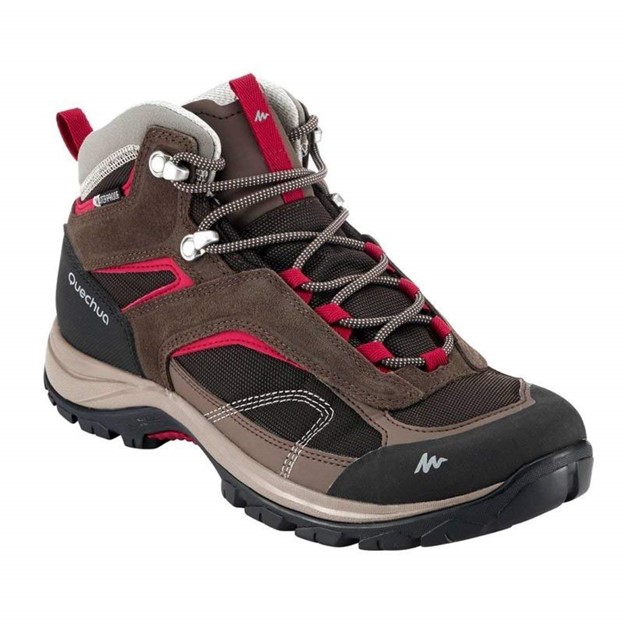
- Quechua waterproof hiking boot: a light, beginner-friendly mid boot for day hikes.
- Quechua MH100 hiking boots: an entry-level mid-cut boot that suits dry-season ridges and forest paths.
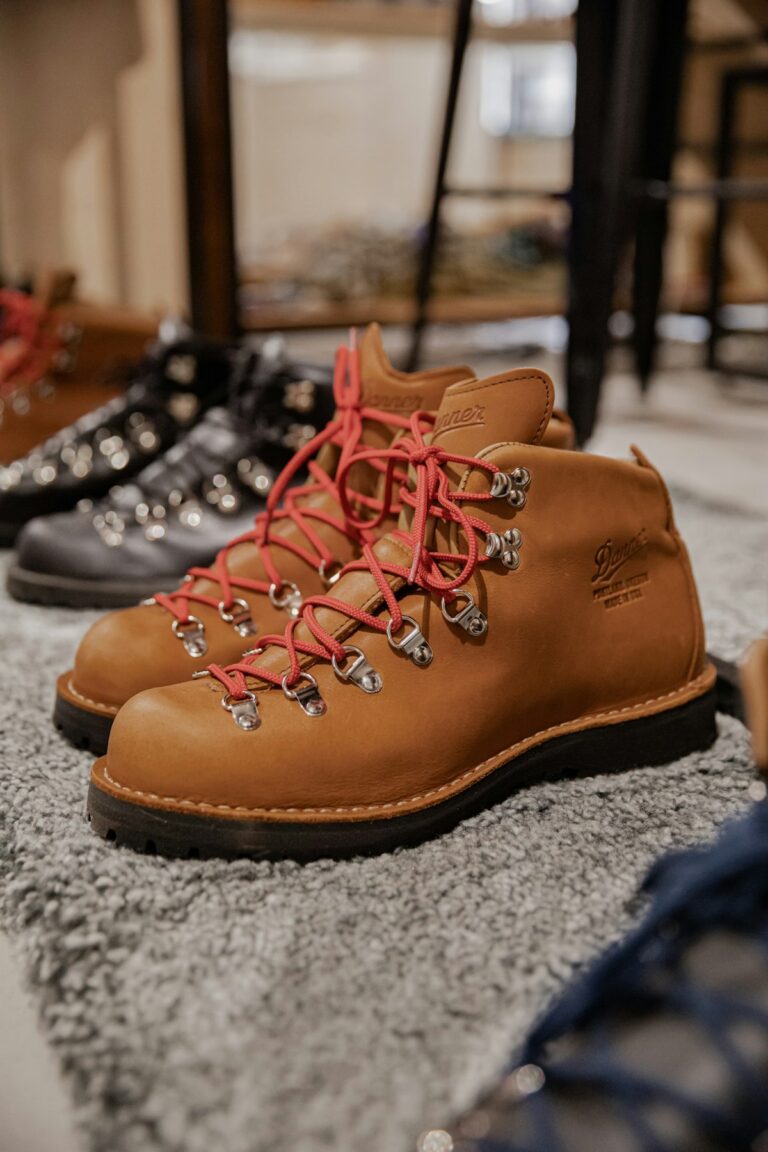
- Lowa Renegade Evo GTX Mid: a Gore-Tex lined boot with a Vibram sole, popular for rough, wet ground and multi-day trips.
- Keen Targhee Mid waterproof boots: known for a roomy toe box and a protective rubber toe cap.
You can also browse by brand on our Lowa, Keen and Quechua pages. If brand matters to you in deciding where to buy hiking boots in Nairobi, our hiking boot brands guide for Kenya compares eight of them trail by trail.
Can you order hiking boots online in Nairobi?
Yes. Ordering online is the second answer to where to buy hiking boots in Nairobi if you cannot get to Thika Road: order at hikingoutdoorhub.com and pay with M-Pesa or cash on delivery. It works best when you already know your size in that brand, or when you send us your foot length in centimetres on WhatsApp first so we can compare it with the boot’s size label.
Here is how the two ways compare if you are still weighing up where to buy hiking boots in Nairobi:
| Visiting the shop | Ordering online | |
|---|---|---|
| Try-on | Try several pairs and sizes with your own socks | Size chosen from foot length and the brand’s label |
| Best for | First boots, wide or narrow feet, half sizes | Repeat buyers who know their size in a brand |
| Payment | M-Pesa or cash | M-Pesa or cash on delivery |
| Timing | Mon–Fri 8:30am–6pm, Sat 9am–2pm, Sun by appointment | Order any time of day |
Which Type of Hiking Boot Suits Kenyan Trails?
A mid-cut waterproof boot suits most Kenyan hikers. It covers the ankle bone on loose scree, keeps feet dry through both rainy seasons and grips on muddy forest paths, which describes almost every trail within a day of Nairobi.
Decide on the type before you decide where to buy hiking boots in Nairobi, because the type narrows the shelf quickly. Use this as a starting point:
| Boot type | Best for | Kenyan examples |
|---|---|---|
| Low-cut hiking shoe | Dry, well-made paths and light daypacks | Karura Forest, Oloolua Nature Trail |
| Mid-cut hiking boot | Most day hikes: mud, loose rock, steep descents | Ngong Hills, Mt Longonot, Ol Donyo Sabuk, Elephant Hill |
| Stiff high-cut trekking boot | Multi-day treks, heavy packs, cold and wet high ground | Mt Kenya, the Aberdares moorland, Kilimanjaro |
Our longer article on hiking boots for Kenyan trails goes deeper into leather versus fabric uppers, sole stiffness and membranes. If you mostly do light, dry routes and like a fast pace, a low shoe can be enough; our post on Salomon hiking shoes explains where light footwear works and where it does not.
Do you need waterproof hiking boots in Kenya?
Waterproof boots earn their place in Kenya because the long rains (roughly March to May) and short rains (roughly October to December) turn red soil into slick mud. The Kenya Meteorological Department’s October–December seasonal outlook pointed to a wetter-than-usual short-rains season for Nairobi, with rain running into January. If you are working out where to buy hiking boots in Nairobi during October or November, a waterproof pair is the safer bet.
In the hot, dry months a non-waterproof boot breathes better and dries faster after a river crossing. For a full comparison of membranes and what keeps water out longest, see our post on waterproof hiking boots in Nairobi. On very muddy routes, pair any boot with waterproof leg gaiters so water and grit cannot get in over the collar.
How Should Hiking Boots Fit?
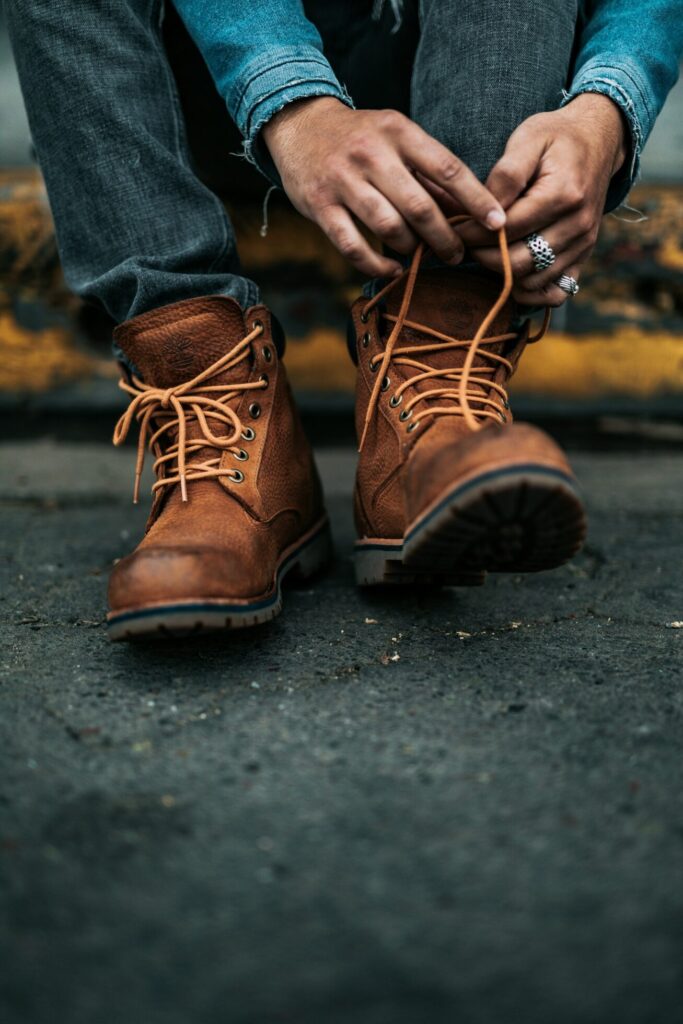
Hiking boots should hold your heel and midfoot snugly while leaving your toes free to wiggle, with about a thumb’s width in front of the longest toe. On a slope, your toes should never touch the front, and your heel should lift only slightly.
Run through these six checks with every pair, in this order. They take about ten minutes, save weeks of blisters, and work wherever you settle on where to buy hiking boots in Nairobi:
- Shop late in the day. Feet swell a little by afternoon, much as they do a few hours into a hike.
- Wear your hiking socks. A thick cushioned sock can take up half a size compared with a thin office sock.
- Do the finger test before lacing. Slide your foot forward until your toes touch the front; one finger should fit behind your heel.
- Lace firmly and walk for five minutes, including stairs. A flight of stairs is a fair stand-in for a rocky path.
- Test a descent. Walk down a ramp or step and check that your toes stay clear of the front of the boot.
- Try both feet. Most people have one foot slightly larger, and the boot must fit that one.
If one pair passes all six checks and another fails one, take the pair that passes, whatever the colour. That rule matters more than brand loyalty when you decide where to buy hiking boots in Nairobi.
What size hiking boots should I buy?
Buy the size that fits your longer foot with hiking socks on, which for many people is half a size above their everyday shoes. Measure your foot length in centimetres, standing, and compare it with each brand’s chart, since sizing differs between brands. Keep that number handy whenever you check where to buy hiking boots in Nairobi online.
| UK size | EU size (approx.) | US men’s (approx.) | US women’s (approx.) |
|---|---|---|---|
| 5 | 38 | 6 | 7 |
| 6 | 39 | 7 | 8 |
| 7 | 40.5–41 | 8 | 9 |
| 8 | 42 | 9 | 10 |
| 9 | 43 | 10 | 11 |
| 10 | 44–44.5 | 11 | 12 |
| 11 | 45.5–46 | 12 | — |
Treat the table as a starting point only. Thrifted boots carry the size label of the market they were first sold in, so a pair marked US 10 and one marked EU 43 may fit almost the same. The insole test is the tie-breaker: pull the insole out, stand on it, and check there is about a thumb’s width of insole beyond your longest toe.
Do women need women’s hiking boots?
Many women find women’s-specific boots fit better because they are built on a narrower last, with a slimmer heel and lower volume over the instep. Some women with wider feet are comfortable in men’s models, so try both. For women weighing up where to buy hiking boots in Nairobi, our guide to women’s hiking shoes in Nairobi covers the differences in detail.
Gear up for your next hike
Shop quality hiking and outdoor gear at great prices — from socks and gloves to hats, balaclavas and camping fuel. Everything you need for Kenya’s trails, delivered fast.
Are Second-Hand Hiking Boots Worth Buying in Nairobi?
Second-hand hiking boots are worth buying when the tread, midsole and upper still have plenty of life left. A well-made pre-owned boot from a serious outdoor brand often outlasts a cheap new pair, and costs a fraction of its original price.
For many people researching where to buy hiking boots in Nairobi, quality thrifted boots are what make a proper Gore-Tex pair affordable at all. The point is to judge each pair on its condition, not its age or its logo. Use this table whenever you pick up a pre-owned boot, in our shop or anywhere else:
| Part of the boot | What to look for when buying | Walk away if |
|---|---|---|
| Tread | Deep, sharp lugs at the heel and toe | Lugs are worn smooth or rounded |
| Midsole | Firm, even foam that springs back under a thumb press | Deep cracks, crumbling, or a flat, dead feel |
| Sole bond | Sole attached all the way round when you flex the boot | A gap opens at the toe or heel |
| Heel counter | Firm cup at the back of the heel | It folds in easily when squeezed |
| Lining | Smooth inside the heel and around the ankle | Worn-through lining that could rub |
| Upper and eyelets | No splits; every hook and eyelet secure | Cracked leather or torn stitching at the flex point |
Why can an old, unworn boot still fall apart?
An unworn boot can still fail because some polyurethane (PU) midsoles break down chemically over time, a process called hydrolysis. Boot maker Meindl explains in its guide to sole hydrolysis that long storage without flexing, and storing boots damp, are the main causes, and the result is a sole that crumbles or separates.
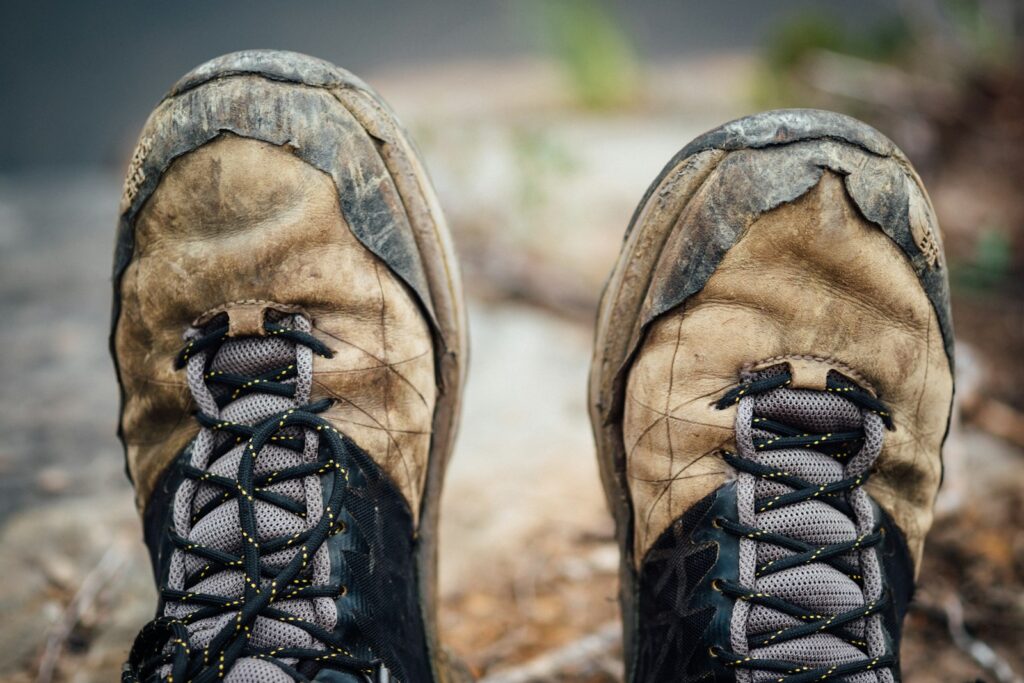
So a pair that looks almost new but has a crumbly midsole is not a bargain. Whichever way you answer where to buy hiking boots in Nairobi, bend every boot hard at the forefoot and press the midsole with your thumb before you pay. Boots that have been walked in regularly are often in better shape than boots that sat in a box for years.
Pro Tips: Where to Buy Hiking Boots in Nairobi Without Regrets
- Bring your socks: the exact pair you plan to hike in, not new ones.
- Bring your insoles: if you use custom or after-market insoles, fit the boot with them in.
- Know your foot length: measure in centimetres at home, standing, both feet.
- Name your trails: tell us whether you hike Karura, Longonot or Mt Kenya; the right stiffness differs.
- Flex every boot: look for gaps between sole and upper at the toe and heel.
- Allow break-in time: buy at least two weeks before a big hike, not the Friday before.
Common Mistakes When Choosing Where to Buy Hiking Boots in Nairobi
The commonest mistake when working out where to buy hiking boots in Nairobi is buying without trying boots on, closely followed by buying for looks rather than fit. Both are easy to avoid if you plan the purchase rather than squeezing it into a lunch break.
Buying a size that fits only in the shop
A boot that feels “just right” with thin socks at 10am will feel tight at 2pm on a hot descent. Whatever you decide about where to buy hiking boots in Nairobi, fit with hiking socks, late in the day, and if you are between sizes, go for the larger one and fine-tune with lacing or a thicker sock.
Choosing a mountaineering boot for day hikes
Very stiff, heavy boots are built for crampons and heavy loads, so ask about weight and flex when you weigh up where to buy hiking boots in Nairobi. On Ngong Hills or Ol Donyo Sabuk they mostly add weight and slow your feet down. A flexible mid-cut boot is the better buy unless Mt Kenya or Kilimanjaro is on your calendar; our hiking gear checklist for Kenya matches footwear to each type of hike.
Skipping socks in the budget
Cotton socks hold sweat and cause blisters even in a perfect boot, so budget for socks while you sort out where to buy hiking boots in Nairobi. A pair of merino wool hiking socks manages moisture and cushions the ball of the foot. Our post on hiking socks in Nairobi explains weights and lengths.
How Do You Break In and Care for Hiking Boots in Nairobi?
Once you have settled where to buy hiking boots in Nairobi, break the boots in by wearing them indoors, then on short walks, over one to two weeks before a long hike. After every outing, knock off the mud, rinse with clean water and dry them slowly at room temperature.
How long does it take to break in hiking boots?
Most modern fabric and synthetic boots need only a few days of short walks. Stiff full-grain leather boots can take two weeks or more. Either way, the test is a real hill: a half-day on Ngong Hills or the steep, dusty descent on Mt Longonot will show any hot spot before it becomes a blister on a bigger trip.
Our Mt Longonot hike guide describes that descent, and the best day hikes near Nairobi round-up lists gentler first outings for new boots.
How should you clean and store hiking boots?
Clean boots with a soft brush and plain water, take the insoles out and stuff the boots with newspaper to draw out moisture. Never dry them beside a jiko, a campfire or in strong direct sun; heat cracks leather and weakens the glue that holds the sole.
Re-proof leather with a wax made for boots, and fabric boots with a spray-on treatment once water stops beading on the surface. Store them dry and somewhere airy, not sealed in a bag at the back of a cupboard, and wear them every few weeks so the midsole keeps flexing between big trips.
Dust is the other enemy. Whether you sorted out where to buy hiking boots in Nairobi online or in person, brush fine red dust off after dry-season hikes, because it dries out leather. With the short rains here, pair clean boots with a good shell from our guide to rain jackets for hiking in Nairobi.
Ready to hit the trail?
Join one of our upcoming guided hikes — from beginner-friendly day hikes to longer treks across Kenya’s best routes.
Frequently Asked Questions
Where to buy hiking boots in Nairobi on a budget?
The cheapest sensible answer to where to buy hiking boots in Nairobi on a budget is a shop selling quality thrifted outdoor gear. Hiking Outdoor Gear Hub at Mountain Mall on Thika Road stocks pre-owned and new boots from brands such as Lowa, Keen and Quechua, so you can get a waterproof, supportive pair for well under the price of the same boot new.
Can I just hike in sneakers?
Sneakers work on short, dry, well-made paths such as Karura Forest, but they lack the grip, ankle support and toe protection that loose or muddy trails need. On Ngong Hills, Mt Longonot or any hike during the rains, hiking boots or trail shoes with a deep lugged sole are far safer and more comfortable.
Should hiking boots be a size bigger than my normal shoes?
Hiking boots are often half a size bigger than everyday shoes because you wear thicker socks and your feet swell on long walks. The right size leaves about a thumb’s width in front of the longest toe while holding the heel firmly. Always fit hiking boots to your larger foot, with your hiking socks on.
How long do hiking boots last?
Hiking boots usually last several hundred kilometres of trail, depending on weight, terrain, materials and care. Replace them when the tread is worn smooth, the midsole feels flat or crumbly, the sole starts to separate, or the boots let water in even after re-proofing. Regular wear and dry storage help boots last longer.
What boots are best for climbing Mt Kenya?
Mid- or high-cut waterproof boots with a fairly stiff sole and good ankle support are best for Mt Kenya. Routes cross bog, scree and freezing ground above 4,000 m, so choose a pair with room for thick socks and break it in well, since fit matters more than the shop when you weigh up where to buy hiking boots in Nairobi. Our Mt Kenya hiking guide covers the routes themselves.
Final Thoughts
Nobody else’s feet can tell you whether a boot fits, which is why the honest answer to where to buy hiking boots in Nairobi is any place that lets you try several pairs properly. Pick a mid-cut waterproof boot for most Kenyan trails, fit it to your larger foot with hiking socks, and flex every pre-owned pair before paying.
Now that you know where to buy hiking boots in Nairobi, measure both feet tonight, then visit Mountain Mall on Thika Road this week or send us your size on WhatsApp. Buying early leaves two weeks to break the boots in before your next hike.
Still deciding where to buy hiking boots in Nairobi, or which size to order?
Our team can help you choose the right gear, answer your hiking questions and get your order dispatched quickly. Message us for a quick, straight answer.