
Most first-time hikers in Nairobi spend on the wrong things, yet the best hiking gear for Kenyan trails starts with just six items: grippy mid-cut boots, a breathable rain shell, a 20-30 litre daypack, a fleece, cushioned hiking socks and room for 2-3 litres of water. Buy those first and add the rest as your hikes get longer and higher.
The trouble is that outdoor shopping lists are usually written for Europe or North America, not for red murram mud on Ngong Hills, volcanic dust on Longonot or frost at Mt Kenya’s camps. Below we set out the best hiking gear buying order for Kenya, where your money matters most, which items are fine to buy thrifted, and how to fit everything properly before your next weekend on the trail.
Quick Facts
- First six buys: The best hiking gear to start with is boots, a rain shell, 20-30 L daypack, fleece, hiking socks, water bottles or a 3 L bladder.
- Spend most on: Footwear and the waterproof jacket, because fit and dryness decide how a long day feels.
- Safe to save on: Fleeces, hats, gloves, trousers and trekking poles, which thrifted stock covers well.
- Rainy seasons: Long rains run roughly March-May and short rains roughly October-December.
- High-altitude extras: Mt Kenya’s Point Lenana (4,985 m) adds thermals, a down jacket, insulated gloves and a cold-rated sleeping bag.
- Where to buy: Hiking Outdoor Gear Hub, Mountain Mall, 3rd Floor, Shop D39, Thika Road, Nairobi, or online with M-Pesa or cash on delivery.
What Is the Best Hiking Gear to Buy First?
The best hiking gear to buy first is the kit that protects your feet, keeps you dry and carries your water. Boots, a rain shell, a daypack, a fleece, good socks and a hydration system cover nearly every day hike within two hours of Nairobi.
Everything else on the best hiking gear lists you see online, from trekking poles to gaiters, earns its place later. A beginner who owns those six things can walk Karura Forest in the morning sun, slog up Ngong Hills in a cold wind, or get caught by an afternoon downpour on the Aberdares without real trouble. Buying in this order also spreads the cost over a few months instead of one painful shopping trip.
| Buy order | Item | Why it matters on Kenyan trails | Spend or save? |
|---|---|---|---|
| 1 | Mid-cut hiking boots | Grip on loose scree and wet murram; ankle support on rocky descents | Spend |
| 2 | Waterproof rain shell | Afternoon storms in both rainy seasons; wind on exposed ridges | Spend |
| 3 | 20-30 L daypack | Carries water, food, layers and a small first-aid kit | Middle |
| 4 | Fleece mid-layer | Cold mist above about 2,500 m, early starts and summit breaks | Save |
| 5 | Hiking socks | Cushioning and moisture control stop blisters | Middle |
| 6 | Bottles or a 3 L bladder | Most day routes have no safe water to refill | Save |
Why do boots come before everything else?
Boots come first because feet are the part of you that touches every metre of the trail. Trainers slide on the powdery ash of Longonot’s crater rim and soak through in a muddy forest within minutes, while a lugged rubber sole and a mid-cut collar keep you upright and steady.
Blisters, rolled ankles and sore toes on the descent end more Kenyan day hikes than tiredness does. That is why the best hiking gear budget leans towards footwear. Our deeper look at boots for red soil, scree and mud explains soles, uppers and cuts in more detail.
How much water should you be able to carry?
Plan to carry 2-3 litres of water on a typical Kenyan day hike, and the upper figure on hot, exposed trails or anything over five hours. Very few routes near Nairobi have a safe place to refill, so your pack needs room for it from the start.
Bottles work, but many hikers prefer a bladder because they sip steadily instead of stopping. The 3 litre hydration backpack is a light option for shorter walks, and the bladder slides out easily for cleaning and drying.
Where Should You Spend Money and Where Can You Save?
Spend on boots, the rain shell and the fit of your daypack; save on fleeces, trousers, hats, gloves and poles. The first group fails painfully if it is wrong, while the second group is forgiving and widely available second-hand.
Which pieces of the best hiking gear are worth spending on?
A good boot keeps its shape after years of use, and a proper waterproof shell has a membrane and taped seams that a cheap plastic jacket lacks. Spending a little more on these two pieces of the best hiking gear usually costs less over time, because they keep working season after season instead of being replaced after one wet October.
Your daypack sits in the middle. Price matters less than fit: a padded hip belt, a back length that suits your torso and shoulder straps that do not dig in after three hours. A 28L day hiking backpack is about right for a full day with layers and lunch.
Where can you save on the best hiking gear?
Fleeces, hats, gloves, gaiters and trekking poles have little to go wrong with them. A twenty-year-old fleece still traps warm air, and a pole either locks or it does not. These are the places to stretch your budget so that more of it goes to footwear.
Clothing next to the skin is a personal choice. Some hikers are happy with thrifted base layers once washed; others prefer new. Either way, avoid cotton for anything you sweat into, because it stays wet and chills you as soon as the wind picks up on a ridge.
Is thrifted hiking gear worth buying?
Thrifted hiking gear is worth buying when it comes from established outdoor brands and still has life in the parts that wear out. Well-made jackets, fleeces, packs and boots are built for years of use, so a pre-owned piece can serve you for many seasons.
That is why so much of the best hiking gear in Nairobi now comes thrifted rather than new. Our shop sells quality thrifted gear plus some new items, which brings brands that would otherwise be out of reach within a normal budget. Before you pay for any pre-owned item, look over the wear points yourself: tread depth on boots, seam tape inside jackets, zips, buckles and strap stitching. Our post on thrifted outdoor gear in Nairobi covers those signs item by item.
Which Hiking Boots Suit Kenyan Trails Best?
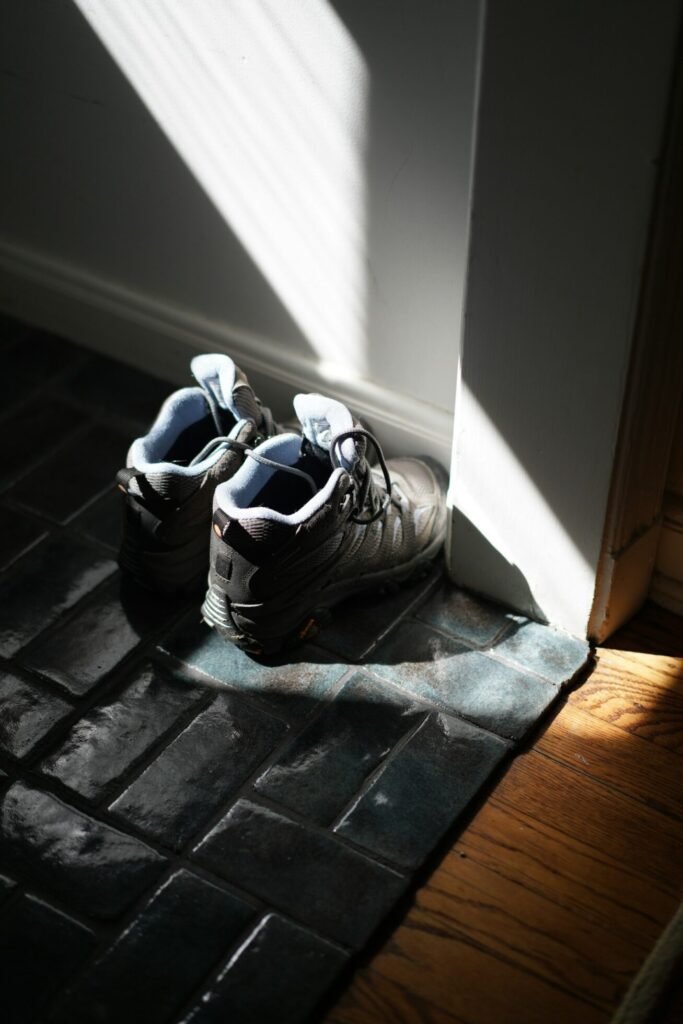
Mid-cut boots with a deep-lugged rubber sole and a waterproof membrane suit most Kenyan trails best. They grip on scree and mud, support the ankle on rough descents and keep feet dry when the short rains arrive mid-hike.
Low trail shoes are fine for Karura or Oloolua, where paths are firm and short. Once you step onto the steep, loose sections of Longonot, the boggy moorland of the Aberdares or the long descent from Kilimambogo, a mid-cut boot earns its weight. Leather uppers last well and resist thorny scrub; synthetic uppers are lighter and dry faster. Neither choice is wrong; the best hiking gear is simply the pair that fits your foot.
Among the boots we stock, three stand out as the best hiking gear for different needs. The Quechua waterproof hiking boot is a light, practical first pair for day hikes. The Lowa Renegade GTX Mid uses a Gore-Tex membrane and a stiffer build that suits longer treks and loaded packs, while the Keen Targhee Mid waterproof boot has a roomy toe box that many wide-footed hikers like. If wet weather is your main worry, read our guide to waterproof hiking boots in Nairobi before you choose.
What socks should go with your new boots?
Merino wool or synthetic hiking socks with medium cushioning suit most Kenyan hikes. They wick sweat, dry faster than cotton and cushion the heel and forefoot on long descents, which is where blisters usually start.
Always try boots on with the socks you will hike in. A pair of merino wool hiking socks also resists odour across several days, which helps on Mt Kenya treks where washing is not an option. Socks are the cheapest upgrade among the best hiking gear, so buy two or three pairs. Carry a spare pair in a plastic bag on rainy days.
The Best Hiking Gear for Kenya’s Rainy Seasons
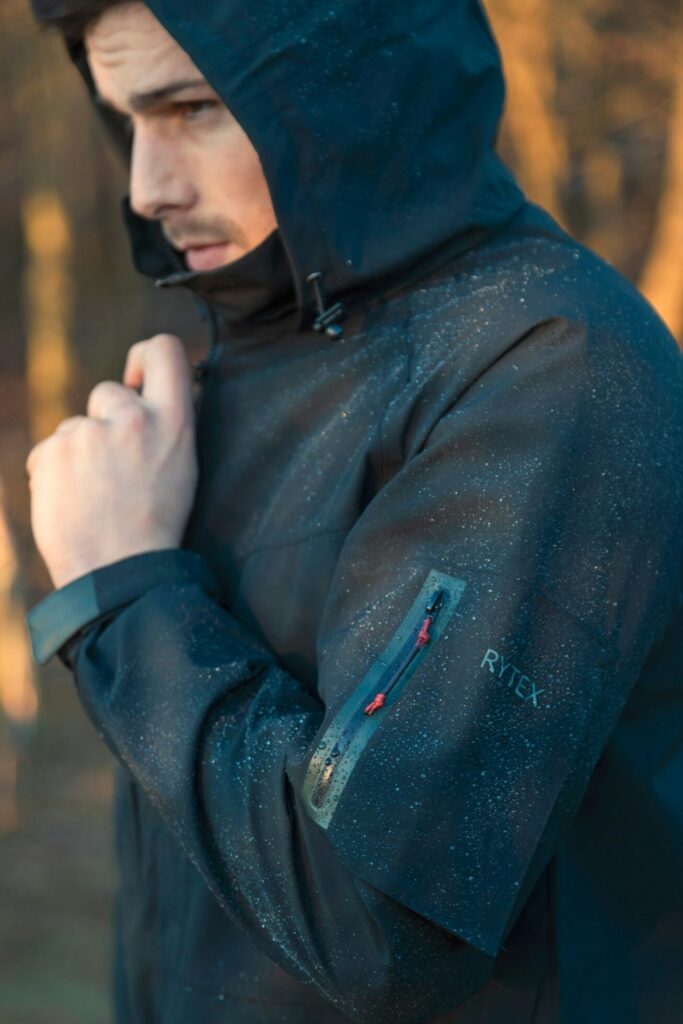
The best hiking gear for Kenya’s rainy seasons is a breathable waterproof jacket, rain pants, gaiters and a dry bag or pack liner. Together they keep you dry from the shoulders to the boots during the long rains and the short rains.
Rain in Kenya often arrives as a heavy afternoon storm rather than a steady drizzle, so the shell lives in your pack and comes out fast. Look for a hood that cinches around your face, pit zips or vents for the warm climb, and seams taped on the inside. A plastic poncho works in a pinch, but it is not the best hiking gear for exposed ground: it catches wind on ridges and snags in forest scrub.
Below the waist, waterproof rain pants keep your thighs warm when wet grass and bracken soak normal trousers, and waterproof leg gaiters stop mud and water running into your boots on boggy Aberdares paths. Before a wet-season trip, check the latest seasonal outlook from the Kenya Meteorological Department and plan for the conditions it describes for your area.
Our separate guide to rain jackets for hiking in Nairobi compares shells, softshells and ponchos in more depth, and the full range of shells sits in our hiking jackets category.
Gear up for your next hike
Shop quality hiking and outdoor gear at great prices — from socks and gloves to hats, balaclavas and camping fuel. Everything you need for Kenya’s trails, delivered fast.
How Does the Best Hiking Gear Change From Karura to Point Lenana?
The best hiking gear grows with altitude and time on the trail. A forest walk needs little more than shoes and water, a mountain day hike needs the full six-item core, and Mt Kenya adds warmth for nights well below freezing.
| Hike type | Examples | Gear on top of the basics |
|---|---|---|
| Forest walk, 2-3 hours | Karura, Oloolua | Trail shoes, 1 L of water, light rain jacket |
| Mountain day hike | Ngong Hills, Longonot, Ol Donyo Sabuk | Mid-cut boots, 2-3 L of water, sun hat, sunscreen, fleece |
| High moorland day | Elephant Hill, Table Mountain, Oldoinyo Lesatima | Rain pants, gaiters, gloves, warm hat, headlamp for early starts |
| Multi-day trek | Mt Kenya to Point Lenana (4,985 m) | Thermals, down jacket, insulated gloves, balaclava, cold-rated sleeping bag |
Day hikes near Nairobi
The best hiking gear for day hikes near Nairobi is the six core items plus sun protection. Equatorial sun is strong even when the air feels cool, so pack a wide-brim hat, sunglasses and sunscreen alongside your fleece. Our round-up of the best day hikes near Nairobi shows which trails are shaded and which are fully exposed.
High moorland in the Aberdares
The Aberdares turn cold, wet and misty with little warning, so the best hiking gear here leans towards waterproofs and warmth. Rain pants, gaiters, a warm hat and gloves matter more than on a lowland walk, and a rechargeable headlamp helps on the early starts these long days usually need.
Mt Kenya and other multi-day treks
The best hiking gear for Mt Kenya adds a full cold-weather layer system to the day-hike kit. Nights at the high camps drop below freezing, and the summit push to Point Lenana usually starts in the dark. Thermals, an insulated jacket and a sleeping bag rated for the cold are the main additions, and our Mt Kenya packing list goes through every item. For how the layers work together, see our post on layering for cold weather hikes.
Best Hiking Gear Buyer’s Checklist
- Boots: Deep tread, a firm midsole and soles fully bonded to the upper, with a thumb’s width of space in front of your toes.
- Rain jacket: Taped seams inside, a hood that adjusts, smooth zips and no peeling inner coating.
- Daypack: Padded hip belt, back length that fits your torso, and buckles that click firmly.
- Fleece and layers: Room to fit under your shell without pulling across the shoulders.
- Socks: Merino or synthetic, never cotton, with cushioning at heel and toe.
- Headlamp: Rechargeable, with a red-light mode and enough battery for a pre-dawn start.
Where Can You Buy the Best Hiking Gear in Nairobi?
You can buy the best hiking gear in Nairobi at a shop where you can try on boots, packs and jackets before paying, or online once you know your sizes. Trying on matters most for footwear and backpacks, where fit decides comfort.
You will find the Hiking Outdoor Gear Hub shop in Nairobi’s Mountain Mall on the 3rd floor, Shop D39, along Thika Road, close to Kasarani, Garden Estate and Thome. It opens Monday to Friday from 8:30am to 6:00pm and Saturday from 9:00am to 2:00pm, with Sunday visits by appointment. If you cannot get across town, you can order online and pay with M-Pesa or cash on delivery.
The stock mixes quality thrifted gear with some new items, so the best hiking gear in store shifts from week to week. If you are after something specific, such as a particular boot size or a down jacket for Mt Kenya, it is worth messaging on WhatsApp before you travel. Our hiking gear checklist for Kenya is a handy list to bring along so nothing gets forgotten.
How should you try on hiking boots and backpacks?
Try on boots in the afternoon, with your hiking socks, and walk on a slope if you can. Feet swell during the day and on long descents, so a boot that fits at 9am may pinch by the summit. Fit is what turns good kit into the best hiking gear for you.
- Wear the socks you plan to hike in, and bring any insoles you use.
- Lace the boots firmly and check for a thumb’s width of space beyond your longest toe.
- Walk downhill or down stairs: your toes should not hit the front of the boot.
- Check that your heel does not lift more than a little as you walk uphill.
- For a backpack, add some weight, fasten the hip belt over your hip bones and tighten the shoulder straps last.
- Walk around for a few minutes with the loaded pack to see whether anything rubs or slips.
Which Buying Mistakes Do New Hikers Make Most Often?
New hikers most often buy boots that are too small, rely on cotton clothing, skip the rain jacket in the dry months and pack too little water. Each mistake is cheap to avoid and costly to discover halfway up a hill, even with the best hiking gear in the rest of your pack.
Buying boots a size too small
Street-shoe sizes rarely translate directly to hiking boots. A boot that feels snug in a shop often crushes toes on a long descent such as the way down from Ngong Hills. Size for the end of the day, not the start, and try at least two sizes.
Trusting cotton
Cotton T-shirts and jeans soak up sweat and rain, then stay cold and heavy. On a windy ridge that becomes a real chill risk. Quick-dry synthetic or merino layers cost about the same thrifted and work far better, which is why they sit at the core of the best hiking gear for any season.
Leaving the rain jacket at home in January
The dry months still bring sudden showers on the mountains, and high ground makes its own weather. Your shell doubles as a windproof layer at the top of any peak, so it goes in the pack on every hike, all year.
Buying everything at once
Buying a full Mt Kenya kit before your first day hike ties up money in gear you may not need for months. Start with the core six, hike a few times, then add pieces as your plans grow. Joining a guided hike early on is a good way to see which of the best hiking gear other hikers actually rely on.
Ready to hit the trail?
Join one of our upcoming guided hikes — from beginner-friendly day hikes to longer treks across Kenya’s best routes.
Frequently Asked Questions
What’s the one piece of hiking gear I shouldn’t cheap out on?
Hiking boots are the one piece of gear not to cut corners on. They carry you over every rock, root and muddy slope, and a poor fit causes blisters, sore toes and twisted ankles that end the day early. A quality thrifted pair from a known outdoor brand is often the best hiking gear value, because the build lasts while the price stays reasonable.
Can I hike in Kenya with trainers instead of boots?
Trainers are fine for short, firm forest paths like Karura or Oloolua, but they struggle on steeper Kenyan trails. Loose volcanic ash on Longonot, wet murram on Ngong Hills and boggy moorland in the Aberdares need a lugged sole and better ankle support. If you hike more than once or twice a year, hiking boots or proper trail shoes quickly pay for themselves.
Is second-hand hiking gear in Nairobi any good?
Second-hand hiking gear in Nairobi is often very good, because established outdoor brands build jackets, fleeces, packs and boots to last for years. The key is to look at the parts that wear out first, such as soles, seam tape, zips and buckles, before you buy. Quality thrifted gear lets you own better brands for the money than new budget kit would.
Do I need a waterproof jacket in the dry season?
A waterproof jacket is worth packing in the dry season too. Mountains such as the Aberdares and Mt Kenya create their own showers, and the jacket blocks the cold wind that hits every exposed summit. A light, packable shell weighs little in a daypack, so most Kenyan hikers carry one on every hike regardless of the month.
How big should a daypack be for a Kenyan day hike?
A daypack of 20-30 litres suits most Kenyan day hikes. That size fits 2-3 litres of water, lunch, a fleece, a rain jacket, sunscreen and a small first-aid kit without overloading your back. Choose one with a padded hip belt and side pockets, and check that it accepts a hydration bladder if you prefer sipping as you walk.
Final Thoughts
Spend on what touches the ground and what keeps the rain off; save on almost everything else. Six well-chosen items cover nearly every trail near Nairobi, and the best hiking gear for higher, colder trips can be added one piece at a time as your plans grow.
Write down the next hike on your calendar, compare it with the best hiking gear tables above, and bring that short list to Mountain Mall or order online so you are ready before the weekend.
Not sure which of the best hiking gear to buy first?
Our team can help you choose the right gear, answer your hiking questions and get your order dispatched quickly. Message us for a quick, straight answer.