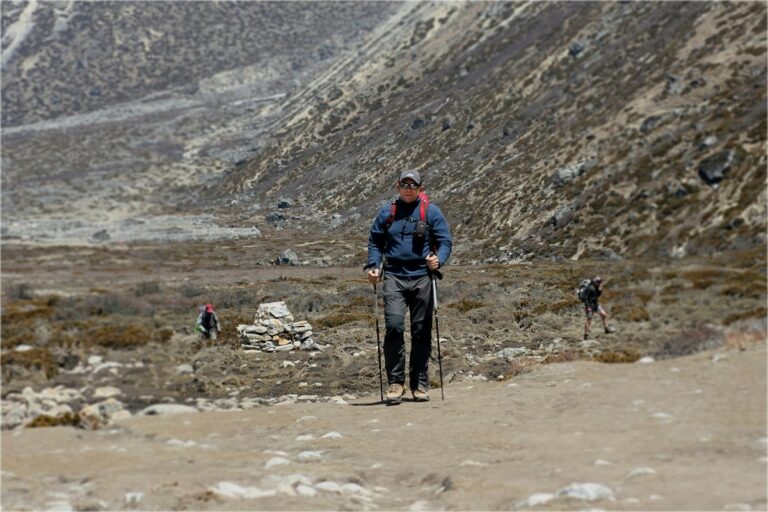

Before sunrise on Point Lenana (4,985 m), the air on Mt Kenya sits well below freezing, and that hour is what down jackets in Nairobi are bought for. Choose a hooded jacket with 600-800 fill power down, a light ripstop shell and a stuff sack, then wear it over your fleece at camp and on summit stops.
Most hikers only need one down jacket, so it pays to choose well among the down jackets in Nairobi the first time. Below we explain fill power and fill weight, down versus synthetic insulation, which Kenyan trips really need down, how to judge a pre-owned jacket, how to wash one without ruining it, and where to find down jackets in Nairobi for far less than a new-shop price.

Quick Facts
- Best all-round pick: a hooded down jacket with 600-800 fill power that packs into its own pocket or a small stuff sack.
- Fill power: the volume in cubic inches that one ounce of down fills; a higher number means more warmth for the weight.
- Fill weight: the amount of down inside the jacket; light jackets carry roughly 85 g, mid-weight ones about 140-170 g.
- Where down earns its place: Mt Kenya camps above 4,000 m, Kilimanjaro’s summit night (5,895 m) and the high Aberdares.
- Weak point: wet down loses its loft, so keep a rain shell over it in the long rains (March-May) and short rains (October-December).
- Thrifted value: quality pre-owned down jackets in Nairobi cost a fraction of new and still have years of warmth in them.
Do You Really Need a Down Jacket for Hiking in Kenya?
A down jacket is worth owning if you camp or summit above about 3,500 m, where nights drop below freezing. For day hikes around Nairobi, such as Ngong Hills or Mt Longonot, a fleece and a rain shell are usually enough.
Kenya sits on the equator, so people shopping for down jackets in Nairobi are often surprised by how cold its mountains get. Temperature falls steadily as you climb, and clear skies at altitude let the day’s warmth escape fast after sunset. On Mt Kenya, hikers at Shipton’s Camp (about 4,200 m) have reported clear nights dropping below −10°C. That cold arrives when you are tired, sitting still and burning little energy, which is exactly when a fleece stops being enough.
Down is the lightest way to carry serious warmth, which is why down jackets in Nairobi are the usual warm layer for Mt Kenya and Kilimanjaro climbs. A good jacket weighs well under half a kilo, squashes to the size of a large mango and lofts back up within minutes of coming out of its sack. Nothing else in a Kenyan hiker’s kit gives that much warmth per gram.
Which Kenyan trips call for one?
Not every trip justifies one of the down jackets in Nairobi. Use the table below as a rough guide. It is based on altitude and how long you will be standing still in the cold, not on how hard the walking is.
| Trip | High point | Down jacket? |
|---|---|---|
| Ngong Hills, Karura, Ol Donyo Sabuk | 2,000-2,500 m | No; a fleece covers cool starts |
| Mt Longonot day hike | 2,776 m | No; sun and wind are the bigger issues |
| Aberdares day hikes (Table Mountain, Elephant Hill, Oldoinyo Lesatima) | 3,300-4,001 m | Useful for summit breaks and misty, windy afternoons |
| Camping in the highlands or at Mt Kenya’s lower camps | 3,000-3,300 m | Yes, for evenings around camp |
| Mt Kenya to Point Lenana | 4,985 m | Yes; it is one of the most-used items on the trip |
| Kilimanjaro to Uhuru Peak | 5,895 m | Yes; summit night can sit anywhere from 0 to −20°C |
When is a fleece enough?
A fleece is enough whenever you keep moving and stay below the high moorland. Fleece breathes better while you climb and shrugs off damp, so for a Saturday on Ngong Hills or Kereita Forest it is the better mid-layer. Our article on choosing a fleece for Kenyan trails covers that layer in detail. Down comes in when you stop, and that is the moment down jackets in Nairobi are designed for.
How Warm Are Down Jackets in Nairobi? Reading Fill Power and Fill Weight
Warmth depends on two numbers: fill power, which measures the quality and loft of the down, and fill weight, which tells you how much down is inside. A 650-fill jacket stuffed with plenty of down can be warmer than a thin 850-fill one.
Labels on down jackets in Nairobi are a mix of European, American and Asian brands, and the wording varies, but these two figures appear on most of them. Learning to read the labels on down jackets in Nairobi takes five minutes and saves you from paying for a lightweight “down sweater” when you need a proper summit layer, or the other way round.
What does 600, 700 or 800 fill power mean?
Fill power is the space, in cubic inches, that one ounce of down fills when it lofts. As Patagonia explains in its fill power guide, a higher number means loftier down, so the jacket needs less of it to reach the same warmth. That makes it lighter and more packable. The table below shows how fill power on down jackets in Nairobi translates to Kenyan trips.
| Fill power | What it means | Good for in Kenya |
|---|---|---|
| Below 550 | Casual or fashion puffer; heavier and bulkier for its warmth | Cold Nairobi mornings, campfire evenings by the car |
| 550-650 | Solid budget hiking down | Highland camping, Aberdares summit stops |
| 700-800 | Mainstream outdoor-brand quality; light and compressible | Mt Kenya treks, multi-day carries where pack space matters |
| 850-900+ | Premium, ultralight down | Kilimanjaro and climbers counting every gram |
Why does fill weight matter just as much?
Fill weight is the total weight of down in the jacket. A lightweight down jacket typically holds around 85 g (3 oz), a mid-weight one about 140-170 g (5-6 oz), and expedition parkas far more. Many outdoor brands print the figure on the inside label or on their website. Labels on thrifted down jackets in Nairobi are sometimes faded or cut out, so if a jacket has no figure, squeeze it: a thin jacket that compresses to almost nothing has little fill, whatever its fill power.
Duck or goose down?
Goose down usually reaches higher fill power because geese are larger birds with bigger down clusters, so it tends to appear in premium jackets. Duck down is more common in mid-range and budget pieces, including many down jackets in Nairobi, and works well at 550-700 fill. A ratio such as 90/10 means 90% down clusters and 10% small feathers; more down means more loft. You may also see a Responsible Down Standard (RDS) tag, which shows the down was sourced under an animal-welfare standard.
Sewn-through or box baffles?
The stitched lines on a puffer are its baffles, the chambers that keep the down in place. Most hiking jackets use sewn-through stitching, where the outer fabric is stitched straight to the lining. It is light, but each seam is a thin, cooler line. Box-baffled jackets have fabric walls between the chambers so the down lofts evenly, which is warmer but heavier. For Mt Kenya and Kilimanjaro, sewn-through down jackets in Nairobi are fine as long as you layer a fleece underneath.
Down or Synthetic: Which Is Better for Kenya’s Wet Mountains?
Down is warmer for its weight and packs smaller, while synthetic insulation keeps more of its warmth when damp and dries faster. For dry, cold summit nights pick down; for soggy rainy-season camping, synthetic is the safer choice.
Kenya’s high mountains are not always dry. Mist rolls up the Aberdares most afternoons, and during the rains everything in a tent slowly gets damp. Down clusters collapse when they soak up water, and a wet down jacket can take a long time to dry out at a cold camp. That is the main weakness of down jackets in Nairobi bought for the rainy season. Synthetic fibres are made from polyester, so they hold little water and keep some loft even when wet.
| Feature | Down | Synthetic |
|---|---|---|
| Warmth for its weight | Highest | Lower; heavier for the same warmth |
| Packed size | Very small | Bulkier |
| When wet | Loses loft and dries slowly | Stays reasonably warm, dries quickly |
| Care | Needs gentle washing and careful drying | More forgiving in an ordinary wash |
| Best Kenyan use | Mt Kenya and Kilimanjaro in the dry seasons | Rainy-season camping, misty Aberdares days |
Does water-resistant down solve the problem?
Treated, or hydrophobic, down narrows the gap. Several brands behind the down jackets in Nairobi’s second-hand market coat the down clusters so they absorb less water and dry faster, Marmot’s Down Defender being one example. Paired with a shell that has a water-repellent finish, it copes well with drizzle and damp tents. Treated down is still not waterproof, so in real rain your shell goes on top of even the best down jackets in Nairobi. Our article on gear for Kenya’s rainy season explains how to keep the rest of your pack dry too.

How Should You Wear a Down Jacket on a Kenyan Mountain?
Wear down when you stop moving, not while you climb. Put it on at rest breaks, at camp and on the slow, cold parts of a summit push, over a base layer and fleece, and add a rain shell on top if it is wet or very windy.
The most common mistake with down jackets in Nairobi is hiking uphill in one. You sweat into it, the down gets damp from the inside, and then it is less warm when you really need it at the top. A better habit is to keep your down jacket in the top of your pack and pull it on the moment you sit down.
A layering order that works
- A wicking base layer, synthetic or merino, next to the skin. Our thermal wear guide covers the options.
- A fleece mid-layer for warmth while you move.
- The down jacket on top of the fleece whenever you stop or the pace drops.
- A waterproof rain shell over everything in rain, sleet or strong wind.
- Hat, gloves and a balaclava, because a warm body with cold hands still feels miserable.
A worked example: Mt Kenya summit morning
On a typical Sirimon or Naro Moru summit push, hikers leave Shipton’s Camp or Mackinder’s Camp around 2-3 a.m. to reach Point Lenana for sunrise. The first steep hour warms you up, so many start in base layer, fleece and shell, with the down jacket at the top of the pack.
On the slow final scramble and the cold wait for the sun, the down goes on over the fleece and under the shell. On the way down, as the sun climbs, it comes off again and goes back in its sack. The same routine suits down jackets in Nairobi bought for Kilimanjaro, where many climbers wear down for most of summit night because the pace is slower and the air is colder still.
For a full kit list for that trip, see what to buy in Nairobi before climbing Mt Kenya, and for layering principles in general, our post on layering for cold-weather hikes.
Down jackets in Nairobi itself
Nairobi’s June-August cold season brings grey, chilly mornings, and a light down jacket doubles as an everyday layer for early matatu rides, evening events or a weekend at a cool highland cottage. Down jackets in Nairobi that serve you in town and on the mountain earn their cost twice over.
What to Look for When Buying a Thrifted Down Jacket
When buying a pre-owned down jacket, look for even loft across every baffle, no clumps or empty chambers, a working full-length zip, an intact shell without open tears, and a fit that leaves room for a fleece underneath.
Down lasts many years if it has been looked after, which is why quality thrifted down jackets in Nairobi are such good value. You can often pick up a branded 700-fill jacket for far less than a new budget one. A few minutes of hands-on checking of down jackets in Nairobi tells you whether a particular jacket still has plenty of life left.
| What to check | Good sign | Walk away if |
|---|---|---|
| Loft | Baffles puff up evenly after a shake | Some chambers stay flat or empty when held to the light |
| Clumping | Down feels soft and spread out | Hard lumps that will not break apart |
| Shell fabric | No tears; water beads on the surface | Open rips leaking down, or a sticky, peeling lining |
| Zips and cuffs | Main zip runs smoothly; cuffs and hem seal | Broken zip slider or missing pulls you cannot replace |
| Smell | Neutral | A strong musty smell that hints at long, damp storage |
| Label | Fill power, down/feather ratio or brand line shown | “Down-feel” or polyester only, if you wanted real down |
How should a down jacket fit?
Down jackets in Nairobi should close comfortably over a base layer and a fleece without squashing them, since compressed down loses warmth. Raise your arms: the hem should not ride above your waist and the cuffs should cover your wrists. A hood that fits over a beanie is a real bonus on summit night. If you plan to wear a rain shell over it, try the shell on top too, or bring your shell’s size with you.
Common mistakes Kenyan hikers make
Three mistakes with down jackets in Nairobi come up again and again. The first is buying a fashion puffer with polyester fill, which looks the part but is heavy and bulky in a pack. The second is buying a jacket so snug it only fits over a T-shirt. The third is skipping a rain shell and wearing down as the outer layer on a wet Aberdares afternoon. A light shell over the top fixes all of that, and our post on rain jackets for hiking shows what to pair it with.
How do you wash and store a down jacket?
Wash it rarely, and gently; Nairobi’s dust brushes off a nylon shell easily, so most down jackets in Nairobi only need a wash once or twice a year. Close all zips, use a down-specific wash in a front-loading machine on a gentle, low-temperature cycle, then run extra spin cycles to remove water.
Drying is where down jackets in Nairobi are most often ruined. Tumble dry on low heat with two clean tennis balls in a sock to break up clumps. Without a dryer, lay it flat in a sunny, breezy spot and turn it often, teasing clumps apart by hand; expect it to take a couple of days. Never wring it, skip fabric softener, avoid top-loaders with a central agitator, and store it hanging or loose rather than squashed in its stuff sack.
Gear up for your next hike
Shop quality hiking and outdoor gear at great prices — from socks and gloves to hats, balaclavas and camping fuel. Everything you need for Kenya’s trails, delivered fast.
Where to Find Down Jackets in Nairobi at Thrifted Prices
You can find quality pre-owned down jackets in Nairobi at Hiking Outdoor Gear Hub, Mountain Mall, 3rd Floor, Shop D39, on Thika Road. We are open Monday to Friday 8:30am-6:00pm, Saturday 9:00am-2:00pm, and on Sunday by appointment.
Mountain Mall is easy to reach from Kasarani, Garden Estate, Thome and Roysambu, and from the CBD by any Thika Road matatu. Trying down jackets in Nairobi on in person is the best way to judge loft and fit, so bring the fleece you plan to wear under it. Our range is mostly quality thrifted gear from well-known outdoor brands, plus some new items, and stock of down jackets in Nairobi changes often. Browse our hiking jackets online, including a women’s packable down jacket and a women’s winter zip-up when in stock.
If you cannot get to Thika Road, order down jackets in Nairobi online and pay by M-Pesa or cash on delivery. Message us on WhatsApp with your height, chest size and the trip you are planning, and we will tell you which jackets currently fit the bill. You are also welcome to visit our Nairobi shop at Mountain Mall on Thika Road to see everything side by side.
What to pack with your down jacket
Down jackets in Nairobi work best as part of a small cold-weather kit. Add Thinsulate waterproof hiking gloves for summit night, a fleece-lined balaclava for wind on the crater rim, and a winter trapper hat for camp. A 28L day backpack carries the packed jacket, shell and water on summit day. Our hiking gear checklist for Kenya lists the rest by trip type, and if you are also choosing a bag for camp, see sleeping bags in Nairobi.
Brand fans can read about thrifted The North Face pieces in Nairobi, one of the brands whose down jackets in Nairobi turn up often on second-hand racks.
Pro Tips
- Pack it last, reach it first: keep the down jacket at the top of your pack so it goes on the moment you stop.
- Sleep warmer: on a cold Mt Kenya night, wear the dry jacket inside your sleeping bag or drape it over the foot end.
- Escaping feathers: pull a poking feather back in from the inside rather than plucking it out, which widens the hole.
- Quick repairs: close small tears with a patch of repair tape before the trip, not after the down has escaped.
- Keep it dry: carry it in a dry bag or plastic liner in the rainy season, and change out of sweaty layers before you put it on.
- Store loose: hang it at home in Nairobi and only compress it when you pack for the hike.

Ready to hit the trail?
Join one of our upcoming guided hikes — from beginner-friendly day hikes to longer treks across Kenya’s best routes.
Frequently Asked Questions
Is a down jacket good in the rain?
A down jacket is not good in steady rain on its own, because wet down collapses and loses most of its warmth. In Kenya’s long rains (March-May) and short rains (October-December), wear a waterproof shell over the down, or choose a synthetic jacket for wet camping trips. Light drizzle is fine for a jacket with treated down and a water-repellent shell, as long as you do not let it soak through.
What fill power do I need for Mt Kenya?
For Mt Kenya, a down jacket of about 600-800 fill power with a reasonable amount of fill is plenty when worn over a fleece. Fill power on its own is not the whole story: a well-filled 650 jacket can beat a thin 850 one. Check the jacket lofts well, has a hood and fits over your mid-layer, and it will cope with a sub-zero morning on Point Lenana.
How long does a down jacket last?
A down jacket that is washed gently and stored loose can last many years, often well over a decade, because the down itself wears out slowly. The shell fabric and zips usually fail first. That is why buying quality thrifted down jackets in Nairobi makes sense: a well-kept pre-owned jacket often has years of warmth left at a much lower price.
Can I wear a puffer jacket for hiking near Nairobi?
A puffer jacket is too warm for walking on most hikes near Nairobi, such as Ngong Hills, Karura or Mt Longonot, where daytime temperatures are mild. It is still handy for a 5 a.m. start, a windy summit break or an evening around camp. For the walking itself, a fleece and a light rain jacket are more comfortable because they breathe better.
Can you machine wash a down jacket?
A down jacket can be machine washed in a front-loading machine on a gentle, low-temperature cycle with a down-specific wash. Close all zips, add extra spin cycles, then tumble dry on low heat with clean tennis balls, or air-dry flat in sun and wind for a couple of days. Avoid fabric softener, wringing and top-loaders with an agitator. Always follow the care label first.
Final Thoughts
Warmth you can stuff into a pack pocket is what makes down worth having on Kenya’s high mountains. For Mt Kenya, Kilimanjaro and cold highland camps, look for 600-800 fill power, good loft, a hood and room for a fleece underneath, and keep a rain shell over it when the weather turns.
Quality thrifted down jackets in Nairobi bring that warmth within reach for far less than new.
Planning a climb? Bring your fleece to Mountain Mall on Thika Road and try it under a few of our down jackets in Nairobi before you commit, or send us a WhatsApp with your size and trip dates.
Not sure which down jacket suits your next climb?
Our team can help you choose the right gear, answer your hiking questions and get your order dispatched quickly. Message us for a quick, straight answer.