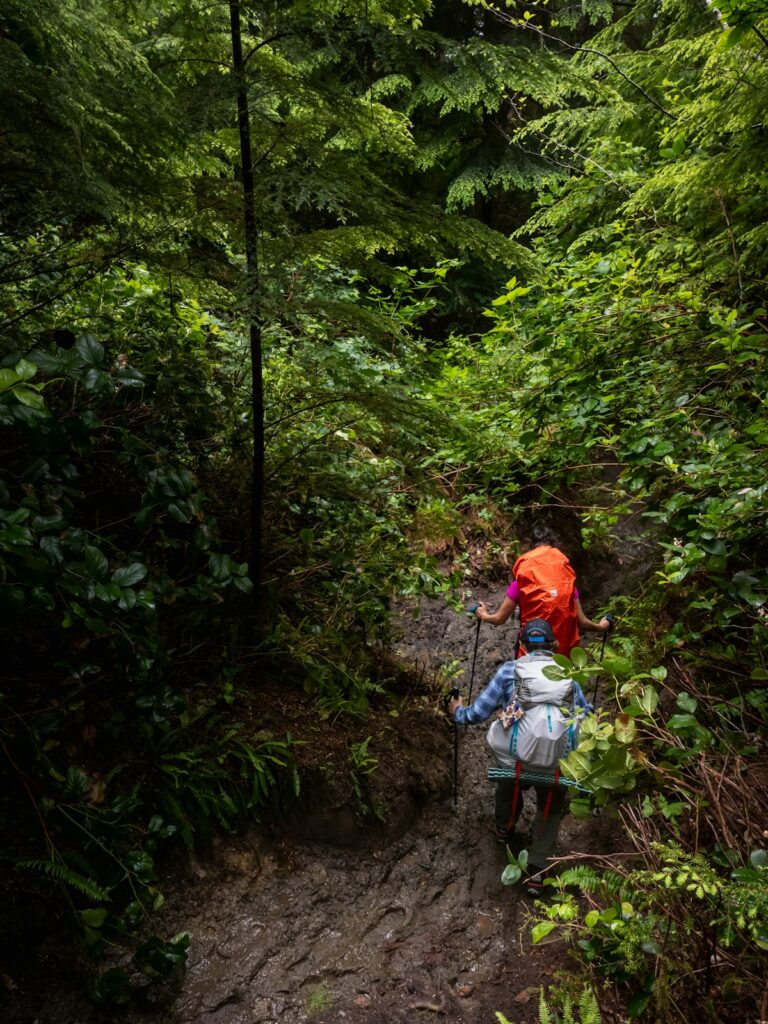

Black Diamond trekking poles are among the best poles you can carry on Kenyan trails, especially for steep descents such as the loose ash below Mt Longonot’s rim or the scree above Shipton’s Camp on Mt Kenya. Light folding Z-poles suit fast day hikes, while adjustable FlickLock models suit multi-day treks and shared use.
The catch is that Black Diamond makes a wide range of pole models, and the names (Distance, Trail, Pursuit, Alpine, FLZ) mean little until you know what each one is built for. Below we explain the main lines in plain terms, match them to real hikes around Nairobi and beyond, cover the brand’s headlamps, and show you how to judge a second-hand pair before you pay for it.

Quick Facts: Black Diamond Trekking Poles and Lights
- Brand origin: Black Diamond Equipment was founded in 1989 by former staff of Chouinard Equipment and moved its head office to Salt Lake City, Utah, in 1991.
- Lightest line: the Distance Carbon Z, a fixed-length carbon Z-pole weighing roughly 255-295 g per pair, depending on length.
- Folded size: Distance Carbon Z poles collapse to about 35-44 cm, short enough to strap across a 28-litre daypack.
- Adjustable workhorse: the Trail Pro uses 7075 aluminium shafts, a FlickLock Pro clamp and a 105-140 cm length range at about 265 g per pole.
- Headlamp pick: the Spot 400 gives 400 lumens, a 100 m beam on high and an IPX8 waterproof rating.
- Where they help most in Kenya: Mt Longonot’s ash descent (crater rim at 2,776 m), Ol Donyo Sabuk’s stony road and the summit push to Point Lenana (4,985 m).
What Is Black Diamond Known For?
Black Diamond is an American climbing and mountain equipment brand best known for carabiners, camming devices, trekking poles and headlamps. Its poles and lights carry the same engineering habits as its climbing gear: strong locks, replaceable parts and clear sizing.
The company’s story starts with Yvon Chouinard, who forged and sold climbing pitons from the boot of his car in Yosemite Valley in the late 1950s. That work grew into Chouinard Equipment. When Chouinard Equipment went bankrupt in 1989 after a run of lawsuits, a group of its employees bought the climbing business and founded Black Diamond Equipment the same year. In 1991 they moved from California to Salt Lake City, Utah, to be close to the Wasatch Mountains, and the brand is still based there.
For hikers, the two inventions that matter most are the FlickLock lever clamp, which made adjustable poles far easier to set and trust, and the Z-pole, a folding design that works like a tent pole held together by an internal cord. Most of the brand’s current hiking range is built around one or both. You can browse the full line-up on the official Black Diamond website, which lists the current specs and size charts.
Which Black Diamond Trekking Poles Suit Kenyan Trails?
For most Kenyan hikers, the Distance Z or Distance Carbon Z suits fast day hikes, the Distance FLZ suits mixed day and overnight use, and the Trail series suits heavier loads and multi-day treks such as Mt Kenya or Kilimanjaro.
Here is how the main Black Diamond trekking poles compare. Weights are per pair unless stated, taken from current brand and retailer listings, and vary slightly with length.
| Model | Shaft and lock | Approx. weight | Best Kenyan use |
|---|---|---|---|
| Distance Carbon Z | Carbon, fixed-length Z-fold | 255-295 g pair | Fast day hikes: Longonot, Ngong Hills, Sleeping Warrior |
| Distance Z | 7075 aluminium, fixed-length Z-fold | 320-360 g pair | Day hikes where you want a little more toughness than carbon |
| Distance Carbon FLZ | Carbon, Z-fold plus FlickLock adjustment | 310-365 g pair | Hikers who share poles or want one length for up, another for down |
| Trail Pro | 7075 aluminium, FlickLock Pro, telescoping | About 265 g per pole | Mt Kenya, Kilimanjaro, Elephant Hill with a full pack |
| Trail Back | Aluminium, telescoping, foam grips | About 510 g pair | Budget-friendly all-rounder for weekend hikers |
| Alpine Carbon Cork | Carbon, telescoping, cork grips | About 485 g pair | Long, sweaty treks where cork grips stay comfortable |
Distance Z and Distance Carbon Z: folding Black Diamond trekking poles for day hikes
The Distance Carbon Z is the pole people usually mean when they talk about Black Diamond trekking poles. It is made from 100% carbon fibre, comes in fixed lengths from 105 to 130 cm in 5 cm steps, and folds into three sections of about 35-44 cm. Pull the top section and the internal cord snaps the shaft together, and a speed cone at the top joint holds it in place.
The grips are light EVA foam with a foam extension below, so you can choke down on a steep traverse without changing the length. Each pole ships with interchangeable carbide and rubber tips and small removable trekking baskets. The aluminium Distance Z works the same way, just a little heavier and more forgiving if you tend to lean your full weight on a pole.
The trade-off with these Black Diamond trekking poles is length. A fixed Z-pole is one length, so you cannot shorten it for a long climb or lengthen it for the descent. On a four-hour Ngong Hills ridge walk that hardly matters. On a 1,000 m descent it starts to.
Distance Carbon FLZ: folding plus adjustable
The FLZ adds a FlickLock clamp to the top section, so the length can be adjusted within a short range while the pole still folds like a Z-pole. That makes it the pick among Black Diamond trekking poles if two people of different heights will share one pair, or if you like to shorten your poles on climbs and lengthen them on descents.
Trail series: telescoping Black Diamond trekking poles for loads and long treks
The Trail Pro and Trail Back are classic telescoping poles. They do not fold as small (the Trail Pro collapses to about 65 cm), but they take more abuse and adjust over a wide range, 105-140 cm on the Trail Pro. The Trail Pro also comes with carbide tech tips, flex tips, trekking baskets and snow baskets. For a five-day Mt Kenya traverse with a 50-litre pack, these are the more sensible Black Diamond trekking poles.
Alpine Carbon Cork and Pursuit: cork grips for long days
Cork grips mould to your hand over time and stay less slippery than foam when your palms sweat on a hot afternoon climb. The Alpine Carbon Cork pairs cork with carbon shafts; the Pursuit pairs cork with 7000-series aluminium. Both suit hikers who spend whole days on poles rather than an hour here and there.

FlickLock or Z-Pole: Which Black Diamond Trekking Poles Are Better for Kenya?
Neither is better everywhere. Z-fold Black Diamond trekking poles win on weight and packed size for day hikes; FlickLock telescoping poles win on adjustability and toughness for multi-day treks and heavier packs.
How does FlickLock work?
FlickLock is the external lever clamp used on adjustable Black Diamond trekking poles. You open the lever, slide the shaft to the length you want, and close it. A small screw on the clamp sets the tension, so if a pole starts to slip on Longonot’s descent you can tighten it on the trail with a coin or the tip of a knife. Twist locks, which you find on many cheaper poles, are harder to fix when they start slipping, especially with cold or muddy hands.
How do Z-poles fold?
Folding Black Diamond trekking poles are three short sections joined by a coated internal cord. Once you know the knack, they deploy in two or three seconds. Their weak spots are the cord, which can stretch or fray after years of use, and grit in the joints, which on red-soil trails gets everywhere. Wipe the joints after a dusty hike and they last.
Which kind for which Kenyan hike?
| Hike | What the ground is like | Pole type that fits |
|---|---|---|
| Ngong Hills | Grassy ridge, short steep dips, red soil | Light Z-pole, or none on a dry day |
| Mt Longonot | About 13.5 km with loose ash and gravel on the rim descent | Z-pole or FLZ; carbide tips bite into ash |
| Ol Donyo Sabuk | 18-20 km return on a stony park road, 700 m-plus of climb | FLZ or Trail; rubber tips on the hard road |
| Elephant Hill | About 18 km with deep bamboo mud | Trail series with trekking baskets to stop sinking |
| Mt Kenya (Point Lenana) | Multi-day, scree and frozen ground near 4,985 m | Trail Pro or FLZ, adjustable for long climbs and descents |
Carbon or Aluminium: Which Black Diamond Trekking Poles Last Longer?
Aluminium Black Diamond trekking poles usually last longer under rough treatment, because aluminium bends before it breaks. Carbon poles are lighter and absorb more vibration, but a hard sideways knock between rocks can crack a carbon shaft outright.
In practice this comes down to how you hike. If you place your Black Diamond trekking poles carefully and mainly do day hikes, carbon’s lower weight is felt in your arms by the end of the day. If you jam poles between boulders, lean on them crossing streams on the Chania or Gura rivers, or let porters strap them to a duffel on Kilimanjaro, aluminium Black Diamond trekking poles are the safer bet. A slightly bent aluminium shaft can often still be used to finish the trek; a split carbon one cannot.
Do Black Diamond Headlamps Earn a Place in Your Pack?
Yes, if you hike before dawn or after dark. Black Diamond’s Spot 400 is a well-specified all-rounder: 400 lumens, a 100 m beam on high, IPX8 waterproofing and a red night-vision mode, running on three AAA batteries or a rechargeable pack.
The Spot 400 weighs about 86 g with AAA batteries in it. On high it runs for around 2.5 hours on AAAs; on its 6-lumen low setting, around 200 hours. Three features stand out for Kenyan hikers. PowerTap lets you tap the side of the housing to jump between full and dimmed power, handy when you go from reading a trail junction to walking in a line. The lock mode stops it switching on inside your pack, a common way to arrive at a Mt Kenya hut with flat batteries. And the red light switches on without flashing white first, so you do not blind the person sharing your tent at 2:30 a.m.
The IPX8 rating means Black Diamond rates it to keep working 1.1 m underwater for 30 minutes, which more than covers a night of short-rains drizzle in the Aberdares. For summit night on Point Lenana or Kilimanjaro, 300-400 lumens is plenty. Our guide to choosing a headlamp in Nairobi explains lumens, burn times and batteries in more detail, and our waterproof rechargeable headlamp is a good option if you would rather charge from a power bank than carry spare AAAs.
Gear up for your next hike
Shop quality hiking and outdoor gear at great prices — from socks and gloves to hats, balaclavas and camping fuel. Everything you need for Kenya’s trails, delivered fast.
Where Can You Find Black Diamond Trekking Poles in Nairobi?
Black Diamond trekking poles turn up in Nairobi mostly as thrifted, pre-owned pairs, because new imports are limited. Our thrifted stock of big brands changes often, so message us on WhatsApp to ask which Black Diamond pieces are in this week.
We sell quality thrifted outdoor gear alongside some new items, which is how good poles and lights from brands like Black Diamond become affordable for Kenyan hikers. You are welcome to come and try poles for height at our Mountain Mall store off Thika Road: Shop D39 on the third floor, near Kasarani and Garden Estate, open Monday to Friday 8:30am-6:00pm, Saturday 9:00am-2:00pm, and Sunday by appointment. You can also order online and pay by M-Pesa or cash on delivery.
If there are no Black Diamond trekking poles on the shelf when you need a pair, our ultralight foldable trekking pole does the same job on day hikes. For a full pack list that covers poles, a light, a daypack and layers, see our hiking gear checklist for Kenya, and for how Black Diamond sits among the other big names, our round-up of hiking brands.
What should you check on second-hand Black Diamond trekking poles?
Spend five minutes on these checks before paying for pre-owned Black Diamond trekking poles:
- Shafts: sight down each section like a snooker cue. Aluminium should be straight; carbon should show no cracks, splits or crushed fibres, especially just above the tip and at each joint.
- Locks: close each FlickLock lever and lean your weight on the pole. It should not slide. If it does, try the tension screw before deciding.
- Z-pole cord: deploy and fold the pole several times. The sections should click together firmly and the cord should not feel slack or frayed where it exits the top section.
- Tips: look at the carbide point. A rounded, worn tip will skate on Longonot rock. Replacement tech tips exist, so a worn tip is a bargaining point, not a deal-breaker.
- Grips and straps: foam can tear and cork can crumble at the top. Check the wrist straps adjust and the stitching holds.
- Matching pair: make sure both poles are the same model and length. Odd pairs happen in second-hand bundles.
How can you tell genuine Black Diamond gear from a copy?
Genuine Black Diamond trekking poles carry clean, even printing of the model name and length on the shaft, a sharp, well-finished diamond logo, and smooth, consistent lever action. Copies often have blurred printing, loose levers, rough plastic seams and grips that feel hollow.
Price is a clue too. Very cheap “Black Diamond” poles or headlamps sold online, especially through web addresses with odd spellings of the brand name, deserve caution. Buy where you can hold the item, check it and ask questions. That applies to any brand, not just this one.

How Do You Set Up Black Diamond Trekking Poles for Kenyan Climbs and Descents?
Set your poles so your elbow bends at about 90 degrees when the tip rests on flat ground beside your boot. Then shorten them by 5-10 cm for long climbs and lengthen them by a similar amount for steep descents.
With fixed-length Black Diamond trekking poles such as the Distance Z, you get one setting, so pick the length that gives that 90-degree elbow on flat ground, and use the foam grip extension when you need a shorter hold on a climb. Check Black Diamond’s sizing advice for its fixed Distance poles before buying a used pair, because a pole that is 10 cm too short is a nuisance all day.
On the descent from Longonot’s rim, plant both poles a step ahead and lower yourself onto them rather than letting your knees take each drop. Through Elephant Hill’s bamboo mud, keep the trekking baskets on so the tips do not sink deep. On Mt Kenya’s summit night, put the wrist straps on correctly, coming up through the loop from below and gripping strap and handle together, so you can relax your grip without dropping a pole down the scree in the dark.
Going to Kilimanjaro? Fly with your Black Diamond trekking poles in your checked bag, not your hand luggage, and confirm the rules with your airline. Folding Z-poles fit neatly inside a duffel.

How Do You Care for Black Diamond Trekking Poles After Red Dust and Rain?
Take Black Diamond trekking poles apart after every muddy or dusty hike, rinse grit from the sections with clean water, and let them dry fully, extended or unfolded, before you store them. Never pack wet poles away collapsed.
Red murram dust from Ngong Hills and the fine ash from Longonot work into Z-pole joints and FlickLock clamps. Left in, the grit scratches the shafts and makes locks slip. Aluminium can also corrode at the joints if poles are stored wet, which is a common reason sections stick. Wipe the shafts with a damp cloth, dry them, and do not oil or grease them: lubricant attracts more dust and stops locks gripping.
Every few months, check the tension screw on each FlickLock, look at the carbide tips for wear, and run a Z-pole cord through your fingers to feel for fraying. Store poles indoors, away from direct sun, which slowly hardens foam grips and fades straps. The same rinse-and-dry habit applies to a headlamp: wipe it after a rainy night and take out alkaline batteries if it will sit unused for a month.
Pro Tips for Kenyan Hikers
- Practise first: try new Black Diamond trekking poles on a short walk in Karura Forest before using them on a big descent.
- Rubber for roads, carbide for ash: fit rubber tips on Ol Donyo Sabuk’s hard road and take them off for Longonot’s loose ground.
- Baskets in mud: keep trekking baskets on through the long rains (roughly March to May) and the short rains (October to December).
- Lock the light: switch a headlamp to lock mode before it goes in your pack.
- Pack spares: carry spare AAA batteries or a charged power bank on any overnight trek.
- Mind the soles too: poles reduce knee strain, but good boots, merino wool hiking socks and waterproof leg gaiters still do most of the work in mud.
If you are planning a longer trip, our explainer on whether trekking poles are worth buying covers the basics of pole technique, and our Mt Longonot hike guide shows exactly where on the crater you will be glad of them. A 28L day hiking backpack with side compression straps holds folded Z-poles securely between uses.
Ready to hit the trail?
Join one of our upcoming guided hikes — from beginner-friendly day hikes to longer treks across Kenya’s best routes.
Frequently Asked Questions
Are Black Diamond trekking poles worth the money?
Black Diamond trekking poles are worth the money if you hike often or plan Mt Kenya or Kilimanjaro. They are light, their locks hold, and worn tips and baskets can be replaced, so a pair lasts years. For a first hike or two, a cheaper folding pole is fine; buying a thrifted Black Diamond pair later is a sensible upgrade.
What’s the difference between Black Diamond Distance Z and FLZ?
The Distance Z is a fixed-length folding pole: one length, three sections, very light. The Distance FLZ keeps the same folding design but adds a FlickLock clamp, so you can change its length within a short range. The FLZ is slightly heavier but suits people who share poles or like to change length between climbing and descending.
Can I take trekking poles on a plane to Kilimanjaro?
Trekking poles, Black Diamond trekking poles included, normally travel in checked luggage, not in the cabin, because airport security often treats pointed poles as hold items. Rules differ between airlines and airports, so confirm with your airline before you fly. Folding Z-poles fit easily inside a duffel; telescoping poles can be collapsed and strapped inside a large pack.
Do I need one pole or two for Kenyan hikes?
Two poles give better balance and take more strain off your knees, especially on steep descents like Mt Longonot or Mt Kenya’s scree. One pole is enough for gentle walks such as Karura Forest, and leaves a hand free for photos. Black Diamond trekking poles are sold in pairs, so you can carry one and stash the other.
How long do Black Diamond trekking poles last?
Black Diamond trekking poles usually last many years with basic care: rinsing grit out after dusty hikes, drying them before storage and checking lock tension. Carbide tips and baskets wear first and can be replaced. Carbon shafts can crack if knocked hard against rock, while aluminium ones tend to bend rather than snap.
Final Thoughts
Your usual hike decides the right pole. Folding carbon Z-poles are hard to beat for quick day trips from Nairobi, an adjustable FLZ covers both day hikes and the occasional overnight, and an aluminium Trail pole takes the knocks of a full Mt Kenya or Kilimanjaro trek. A thrifted pair of Black Diamond trekking poles in good condition can serve you for years, provided the locks hold and the shafts are sound. Your next step: message us with your height and the hike you are planning, and we will tell you what we have in stock that fits.
Hunting for a pair of Black Diamond poles before your next descent?
Our team can help you choose the right gear, answer your hiking questions and get your order dispatched quickly. Message us for a quick, straight answer.