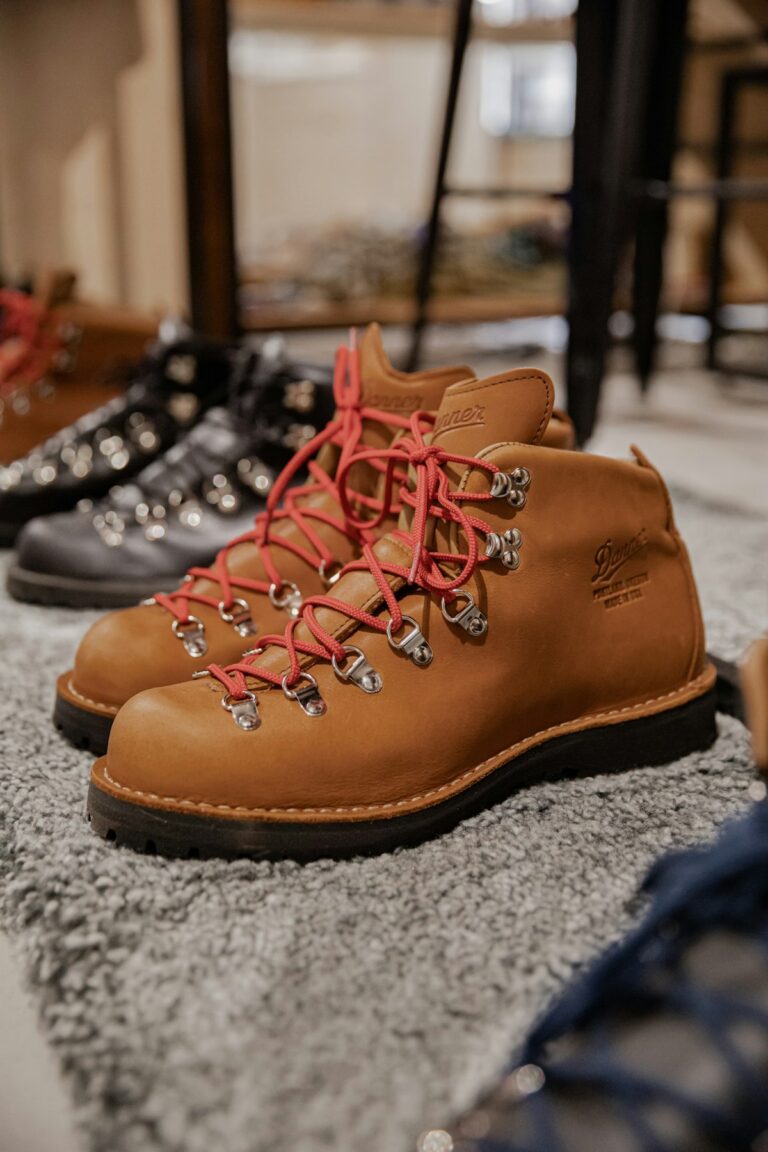
Split leather at the toe and heel, a waterproof membrane and a high, hook-laced collar make the Quechua Forclaz 500 a mid-weight trekking boot of roughly half a kilo from Decathlon. In Kenya it suits muddy forest days, volcanic ash and rocky day hikes near Nairobi, but not technical climbing or all-day bog walking.
Plenty of hikers walk into the shop asking for “the Forclaz”, usually because they saw a pair on Longonot or at a camp on Mt Kenya’s lower slopes. The name has changed over the years, the stickers differ between editions, and thrifted pairs come in several versions. Below we explain what the Quechua Forclaz 500 actually is, what its published specs mean on Kenyan trails, how it fits, how it compares with the other boots on our shelves, how to judge a pre-owned pair, and where to get one in Nairobi.

Quick Facts: Quechua Forclaz 500 High
- What it is: A high-cut waterproof walking and trekking boot designed by Decathlon, first sold under its Quechua label and later renamed Forclaz Trek 100.
- Upper: On the current edition, 30% split bovine leather, 50% polyester and 20% polyurethane, according to Decathlon.
- Weight: About 506 g per boot in EU size 42 on the current edition; older pairs are also close to half a kilo.
- Waterproofing: A breathable membrane tested by Decathlon for 10,000 flexes (about 10 km, or 3 hours of walking) with water up to the mid-upper.
- Ankle hold: Two top hooks plus one locking hook, so the lower and upper lacing can be set to different tensions.
- Best Kenyan use: Day hikes and easy multi-day treks such as Longonot, Ngong Hills, Ol Donyo Sabuk and the lower Aberdares.
What Is the Quechua Forclaz 500 High?
The Quechua Forclaz 500 High is Decathlon’s mid-range leather-trimmed trekking boot, built for long walks on trails rather than for rock climbing or glacier work. “High” means the high-cut version, and the 500 placed it above the cheaper entry boots in its range.
Decathlon has long used Quechua as its hiking label and Forclaz as its trekking label. For several years both names appeared on the same box, which is why so many second-hand pairs in Nairobi read “Quechua Forclaz”. The boot was aimed at people who walk for six to eight hours with a daypack, which describes most Kenyan weekend hikers fairly well.
From Forclaz 500 High to Forclaz Trek 100
Decathlon later renamed the Forclaz 500 High as the Forclaz Trek 100, a change noted in Indiahikes’ long-term review of the boot, where the reviewer took it across Himalayan moraine and streams. Current Decathlon listings describe it as the MT100 or Trekking 100 boot. The design idea stayed the same: a leather-reinforced upper, a waterproof membrane, a cushioned polyurethane midsole and a deep-lugged sole.
How to tell which edition you are holding
Older pairs usually show the Quechua logo, an orange or grey colourway and a “Crosscontact” sole with Y-shaped studs. Many also carry Quechua’s Novadry waterproof label inside the tongue. Newer pairs show the Forclaz logo and Trek 100 or MT100 on the tongue label. All of them share the same high collar, hook lacing and leather toe and heel panels, so the advice below applies to the whole Quechua Forclaz 500 family. Treat the specs as a guide to the boot type rather than a promise about one exact pair.
Quechua Forclaz 500 Specs, Read for Kenyan Conditions
On paper the Quechua Forclaz 500 is a mid-weight waterproof boot with leather where boots wear first and synthetic fabric where they need to breathe. The table translates Decathlon’s published figures into what you will feel on a hike outside Nairobi.
| Feature | What Decathlon lists | What it means on Kenyan trails |
|---|---|---|
| Upper | 30% split bovine leather, 50% polyester, 20% polyurethane | Leather toe and heel panels shrug off lava rock on Longonot; fabric panels dry faster than a full-leather boot after Ngong mud |
| Membrane | Waterproof, breathable; rated 2 out of 5, about 3 hours of rain | Fine for a short-rains afternoon shower; on an all-day wet Aberdares hike, add gaiters and expect damp by the end |
| Outsole | TPU and polyurethane, approved for hard and wet ground | Bites into murram and forest clay; the deep pattern sheds mud better than trainer tread |
| Midsole | Polyurethane cushioning | Firmer and longer-lasting than soft foam on rocky descents such as Ol Donyo Sabuk |
| Lacing | 2 top hooks and 1 locking hook; upper and lower zones adjustable separately | Lock the heel tight for the Longonot descent and keep the toes looser for swelling feet on long days |
| Weight | 506 g per boot, EU 42 | Light enough for 15-20 km days without tiring your legs |
Two figures matter most. The 506 g weight puts the Quechua Forclaz 500 between light synthetic boots such as the Quechua MH100 and heavier all-leather models. The 3-hour waterproof rating tells you this is a wet-weather boot for showers and puddles, not a boot to wade through bogs from morning to evening. Decathlon itself describes the current version as built for easy trails and states that it is not suitable for pure mountaineering, which you can read on Decathlon’s Trek 100 product page.
Which Kenyan Trails Suit the Quechua Forclaz 500?
The Quechua Forclaz 500 suits most Kenyan day hikes and easy multi-day treks: volcanic craters, forest ridges, rocky hill climbs and the lower slopes of the big mountains. It is less suited to all-day bog walking, snow, or sharp scrambling where a stiffer sole helps.
Mt Longonot: ash, grit and a steep descent
Longonot’s 13.5 km crater rim loop, about 90 minutes from Nairobi near Naivasha, is where the high collar earns its keep. Fine ash pours over the top of trainers, while the Forclaz collar and leather heel keep most of it out. The locking hook matters on the way down from the 2,776 m summit, where loose ground pushes your toes forward. Our Mt Longonot hike guide covers the route and timings in detail, and a pair of waterproof leg gaiters finishes the job of keeping grit out of your socks.
Ngong Hills: wind, grass and slippery clay
The Ngong Hills ridge, under an hour from the city centre, is mostly grass and red earth. After rain the clay turns greasy, and the deep sole pattern grips far better than smooth soles. Because the walk is breezy and dries quickly, the boot’s fabric panels help moisture escape on the long open stretches. Ngong is a good first outing for a new or new-to-you Quechua Forclaz 500.
Ol Donyo Sabuk: steady climbing on a road and rocky paths
Ol Donyo Sabuk, reached from Thika Road via Thika town, climbs to about 2,145 m on a long forest track. The firm polyurethane midsole keeps your feet comfortable over hours of gravel, and the ankle support helps when you cut down the rockier shortcuts. Our Ol Donyo Sabuk hike guide explains the route if you are planning it.
Elephant Hill and the Aberdares: mud and bamboo
Elephant Hill is about 18 km of bamboo, tussock and deep mud, and it tests any boot. The Quechua Forclaz 500 grips well there, but a 3-hour membrane rating means the inside can get damp on a long wet day, especially if mud goes over the collar. Wear gaiters, pack dry socks for the drive back and read our Elephant Hill hike planner before you go. We have a guided Elephant Hill day hike on 31 October; the Elephant Hill day hike page has the details.

Mt Kenya: fine for the lower route, think twice about the summit
Many trekkers wear boots in this class on Mt Kenya’s Sirimon or Chogoria routes in the dry months, January to February and July to September. The Quechua Forclaz 500 handles the forest and moorland well. Above about 4,000 m, on frozen scree and the pre-dawn push to Point Lenana at 4,985 m, it is a cold and fairly soft boot, so pair it with thick socks and gaiters, or choose a warmer, stiffer boot if you feel the cold. Our Mt Kenya packing list covers the rest of the kit.
How Waterproof Is the Quechua Forclaz 500 in the Short Rains?
The Quechua Forclaz 500 keeps your feet dry for about three hours of walking in rain, according to Decathlon’s own test. That covers most October-December short-rains showers around Nairobi, which tend to arrive in the afternoon and pass, but not a full day of steady rain.
Water usually gets into a Quechua Forclaz 500 at the top, not through the membrane. Rain runs down your legs into the collar, or mud swallows the boot above the ankle. Rain pants worn over the boot, or gaiters, stop that. Old membranes also fail at flex points near the toes, so on a thrifted pair it is worth a simple test at home: stand in a basin of water up to the laces for five minutes and check your socks.
Breathability is the other side of the coin. Indiahikes’ reviewer noted that the water resistance can make the boot feel less airy, and on a hot dry day at Hell’s Gate your feet will sweat more than in trail shoes. Merino socks help a great deal; our merino wool hiking socks stay warm when damp and control odour far better than cotton.
How Does the Quechua Forclaz 500 Fit?
The Quechua Forclaz 500 has a regular, medium-width fit, snug at the heel with a fairly roomy toe box. Most hikers take their usual trainer size, while those with wide feet or who wear thick socks often go half a size up.
Sizing tips before you buy
- Try boots in the afternoon, when your feet have spread a little, as they will on a long hike.
- Wear the socks you hike in. A thick merino sock can take up half a size.
- Leave about a thumb’s width between your longest toe and the front of the boot.
- Lace firmly and walk down a slope or a step. If your toes hit the front, go up a size.
- Check that the heel lifts no more than a few millimetres when you walk uphill.
Decathlon’s own fitting advice is much the same: try both boots standing up, in hiking socks, and check the heel and the front of the foot on a slope. It also recommends breaking boots in over the first few hikes, which matches the Indiahikes reviewer’s experience that the boot felt stiff on day one and comfortable within about a week.
Men’s and women’s versions
Decathlon made the Quechua Forclaz 500 High in men’s and women’s lasts. The women’s version is a little narrower at the heel and comes in smaller sizes. On thrifted stock the label inside the tongue tells you which you have, and what matters most is how the boot holds your heel, not whose name is on the box. For more women’s options see our guide to hiking shoes for women in Nairobi.
Quechua Forclaz 500 vs Other Boots on Our Shelves
Against the other boots we sell, the Quechua Forclaz 500 sits in the middle: tougher and better-supported than light synthetic boots, lighter and cheaper than premium Gore-Tex leather boots. The right choice depends on how often you hike and how wet your usual trails are.
| Boot | Upper and lining | Best for in Kenya | Where it falls short |
|---|---|---|---|
| Quechua Forclaz 500 High | Leather-and-fabric upper, waterproof membrane | Day hikes and easy treks, Longonot to lower Mt Kenya | All-day bog; very cold summit nights |
| Quechua MH100 | Synthetic upper, membrane | Short hikes under about 10 km in dry weather | Softer sole; less ankle hold on steep descents |
| Quechua waterproof hiking boot | Synthetic, waterproof lining | Budget wet-season day hikes | Less leather protection on lava rock |
| Keen Targhee Mid WP | Leather, KEEN.DRY membrane | Wide feet; roomy toe box | Heavier; wide fit can feel loose on narrow feet |
| Lowa Renegade GTX Mid | Nubuck leather, Gore-Tex | Frequent hikers, long wet days, Mt Kenya | Costs more, even second-hand |
If your feet are wide, the Keen is often more comfortable. If you hike every weekend in the rains, the Lowa’s Gore-Tex lining and Vibram sole last longer. For two or three hikes a month on mixed ground, the Quechua Forclaz 500 is a sensible middle choice. Our round-up of hiking boots for men in Nairobi compares every pair we stock, and the hiking boot brands guide explains what each maker is known for.
Gear up for your next hike
Shop quality hiking and outdoor gear at great prices — from socks and gloves to hats, balaclavas and camping fuel. Everything you need for Kenya’s trails, delivered fast.
Buying a Thrifted Quechua Forclaz 500: What to Look For
A pre-owned Quechua Forclaz 500 is a good buy if the sole, midsole and membrane still have life left in them. Our stock is quality thrifted gear plus some new items, which is how good boots become affordable, so it helps to know what to look at on any used pair.
- Lugs: look at the forefoot and heel studs. If they are worn smooth, grip on wet clay will be poor.
- Midsole: press the side of the midsole with your thumb. It should give a little and spring back; cracked or crumbly polyurethane means the boot is near the end of its life.
- Sole bond: bend the boot at the toe and check that the sole does not lift from the upper.
- Leather panels: scuffs are fine, but deep cracks at the flex point will let water in.
- Lining: feel inside the heel for torn lining or a worn heel counter.
- Hooks and eyelets: all hooks should be present and firm, including the locking hook.
Our longer guide to second hand hiking boots in Nairobi explains why polyurethane midsoles age even when boots sit unused, and how to judge a fair pair.
How Do You Care for Forclaz Boots After a Muddy Hike?
Brush off the mud while it is still damp, rinse with clean water, and let the Quechua Forclaz 500 dry slowly at room temperature, never in direct sun or beside a jiko. Heat dries out the leather and weakens the glue between upper and sole.
Take the insoles out of the Quechua Forclaz 500 and loosen the laces so air reaches the inside. Stuff the boots with newspaper and change it after an hour or two. Once the leather panels are dry, a water-based leather proofing product keeps them supple, and a spray-on proofer revives the fabric panels so water beads instead of soaking in. Decathlon’s only storage advice is to keep the boots in a dark, dry and well-ventilated place, which in Nairobi means not in a sealed plastic bag at the bottom of a wardrobe through the long rains.

Pro Tips: Getting the Most From a Quechua Forclaz 500
- Tie a surgeon’s knot at the locking hook before the Longonot descent, so the heel stays locked while the toes stay loose.
- Carry a spare pair of socks in a zip bag on any short-rains hike; it is the simplest fix for damp feet.
- Re-proof the fabric panels before October and before March, when the rains return.
- Break new or newly bought boots in on Karura Forest or a city walk before a big mountain day.
- Swap worn insoles for a fresh pair; it is a cheap way to bring back comfort in an older boot.
Where Can You Get the Quechua Forclaz 500 in Nairobi?
You can get the Quechua Forclaz 500 High from our shop at Mountain Mall on Thika Road, or order online and pay by M-Pesa or cash on delivery. The Quechua Forclaz 500 High waterproof hiking boots were listed at KSh 5,499 when this post went live; stock changes often.
The best way to get the fit right is to try them on, ideally with the socks you hike in. Come to the boot shelf at our Thika Road shop near Thome: Shop D39 on the third floor of Mountain Mall, close to Garden Estate and Kasarani. We are open Monday to Friday 8:30am to 6:00pm, Saturday 9:00am to 2:00pm, and on Sundays by appointment. Ask whether the pair on the shelf is new or pre-owned, and which edition it is; we are happy to tell you what we know. You can also browse the full Quechua range we carry, and our hiking gear checklist for Kenya lists everything else for your next trip.
Ready to hit the trail?
Join one of our upcoming guided hikes — from beginner-friendly day hikes to longer treks across Kenya’s best routes.
Frequently Asked Questions
Is the Quechua Forclaz 500 good for Mt Kenya?
The Quechua Forclaz 500 is good for Mt Kenya’s forest and moorland sections and works for a dry-season trek to Point Lenana if you add thick socks and gaiters. It is not a warm or stiff summit boot, so hikers who feel the cold or plan to trek in the rains may prefer a warmer, fully waterproof Gore-Tex boot for the high camps.
Are Forclaz boots really waterproof?
Quechua Forclaz 500 boots are waterproof for about three hours of walking in rain, according to Decathlon’s test of 10,000 flexes with water up to the mid-upper. In practice they keep feet dry through a typical Nairobi afternoon shower. Water entering over the collar is the bigger risk, so wear gaiters or rain pants over the boots on wet days.
What size Forclaz boots should I buy?
Most people buy the Quechua Forclaz 500 in their usual trainer size, leaving about a thumb’s width in front of the longest toe. If you have wide feet or hike in thick merino socks, try half a size up. Always test the fit by walking down a slope; if your toes touch the front, the boot is too small.
Is the Forclaz 500 the same as the Forclaz Trek 100?
The Quechua Forclaz 500 High was renamed the Forclaz Trek 100 by Decathlon, and current listings call it the MT100 or Trekking 100. The newer versions keep the same idea of a leather-reinforced upper, a waterproof membrane and hook lacing, though colours, logos and sole patterns differ slightly between editions.
How long do Quechua Forclaz boots last?
A Quechua Forclaz 500 can last several years for a hiker who goes out two or three times a month, provided the boots are dried slowly and stored well. The sole lugs and the polyurethane midsole usually wear out first. Check those parts carefully on any thrifted pair, because a midsole can age even when the boot has hardly been worn.
Final Thoughts
Half a kilo of leather, fabric and membrane buys you a boot that handles most of what Kenya’s weekend trails can throw at it, from Longonot ash to Ngong clay. The Quechua Forclaz 500 shines on day hikes and easy treks; add gaiters for long wet days and pick something warmer for freezing summit nights.
If it sounds like the right boot for your plans, bring your hiking socks to Mountain Mall and try a pair before the next short-rains weekend, or send us your size on WhatsApp and we will tell you what is on the shelf.
Wondering if the Forclaz 500 will fit your feet, or your next mountain?
Our team can help you choose the right gear, answer your hiking questions and get your order dispatched quickly. Message us for a quick, straight answer.