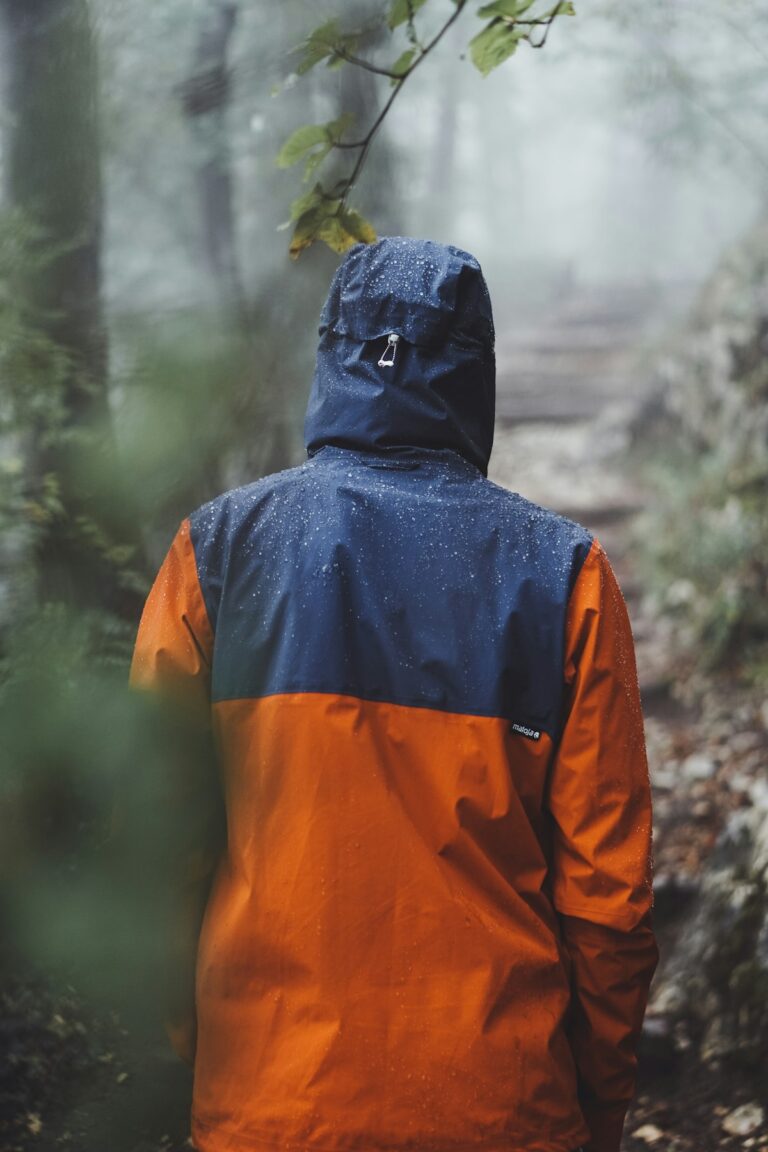

Mist rolling across the Aberdares in mid-afternoon is when most people find out whether their hiking jackets were the right choice. For Kenyan trails you need two at minimum: a breathable waterproof shell and a warm fleece. Add a down or synthetic insulated jacket for Mt Kenya or any night camped above 3,000 m.
Labels throw hardshell, softshell, 3-in-1, 10,000 mm and 800-fill at you, and the wrong pick leaves you soaked on Elephant Hill or shivering at Shipton’s Camp. Below we break down what each jacket type does, which ones each Kenyan hike calls for, the features worth paying for, how to judge a thrifted jacket and how to keep one working for years.
Quick Facts: Hiking Jackets in Kenya
- Main types: waterproof hardshell, softshell, fleece, insulated (down or synthetic) and windbreaker
- Minimum kit for most Kenyan hikes: a breathable waterproof shell plus a fleece
- Rainy seasons: long rains roughly March to May, short rains roughly October to December
- Mt Kenya cold: night frosts are possible from about 3,000 m, and summit nights are well below freezing
- Waterproof rating: as a rough guide, 10,000 mm handles regular rain and 20,000 mm or more suits heavy, prolonged rain
- Down vs synthetic: down is warmer for its weight; synthetic keeps more warmth when damp
What Are the Main Types of Hiking Jackets?
The main types of hiking jackets are waterproof hardshells for rain, softshells for wind and light showers, fleece jackets for warmth while moving, and insulated jackets for cold rest stops and summits. Each does one job well, and none does every job.
| Jacket type | Main job | Weakness | Kenyan use |
|---|---|---|---|
| Waterproof hardshell | Keeps out rain and wind | Little warmth on its own; can feel clammy | Rainy seasons, Aberdares, Mt Kenya |
| Softshell | Stretchy, breathable, blocks wind | Not fully waterproof | Windy, dry ridges such as Ngong Hills |
| Fleece | Warm mid layer, dries quickly | Wind blows straight through | Cold mornings, camp evenings |
| Insulated (down or synthetic) | Maximum warmth at rest | Too warm for climbing; down hates wet | Mt Kenya summit night, high camps |
| Windbreaker | Very light wind protection | Little rain protection | Hot, breezy day hikes |
Waterproof hardshell jackets
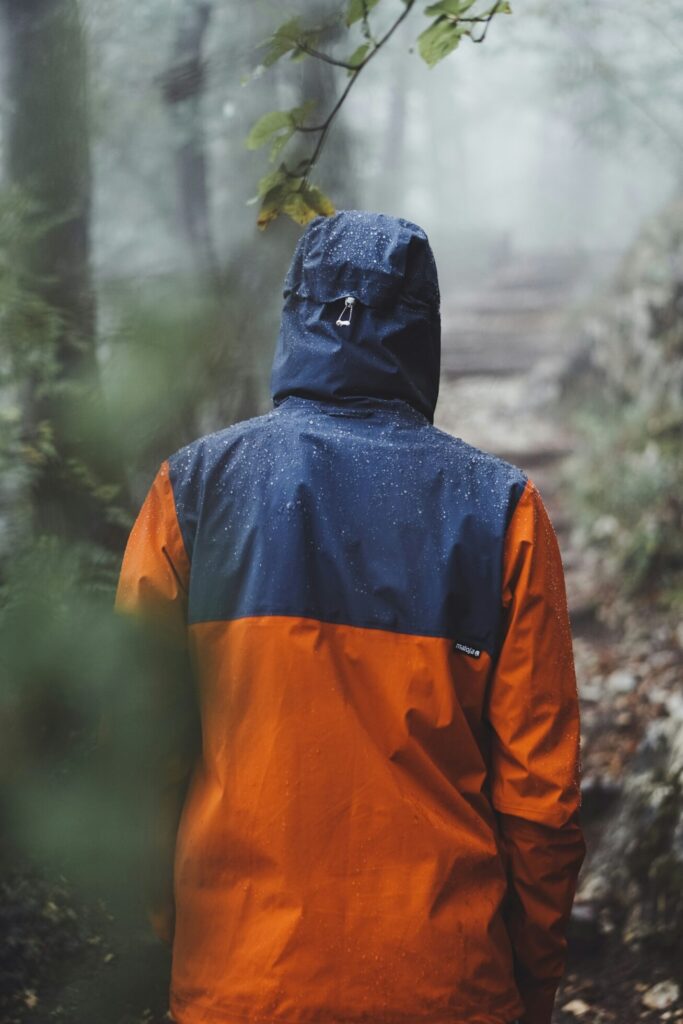
A waterproof hardshell has a membrane or coating that stops rain getting in while letting some sweat vapour out. Look for taped seams and a hood with a stiffened peak that keeps water off your face. Our guide to rain jackets for hiking in Nairobi covers waterproof shells in more depth.
Softshell jackets
A softshell is made from stretchy, tightly woven fabric that blocks most wind, sheds light drizzle and breathes far better than a hardshell. Softshells are the most comfortable hiking jackets for active climbing on cool, dry days, but they will soak through in a real downpour.
Fleece jackets
A fleece jacket is a warm, breathable mid layer that stays warm when damp and dries quickly. Fleece is ideal for chilly early starts and camp evenings, and it works best under a shell once the wind picks up, because air passes straight through the pile.
Insulated down and synthetic jackets
Insulated jackets trap warm air in down or synthetic fibres, giving the most warmth for their weight. Down packs smaller and is warmer for its weight; higher fill power (for example 800 compared with 600) means more loft from less down. Synthetic insulation is bulkier but keeps more of its warmth when damp, which matters in the misty Aberdares.
Are 3-in-1 hiking jackets any good?
A 3-in-1 jacket pairs a waterproof outer with a zip-in fleece, so you get two layers in one purchase. They suit cold Nairobi mornings, travel and casual walks. On steep climbs, though, most are heavier and less breathable than a separate shell and fleece, and the zip-in liner is often thin. Separate hiking jackets give you more control over your temperature.
How Cold and Wet Do Kenyan Trails Get?
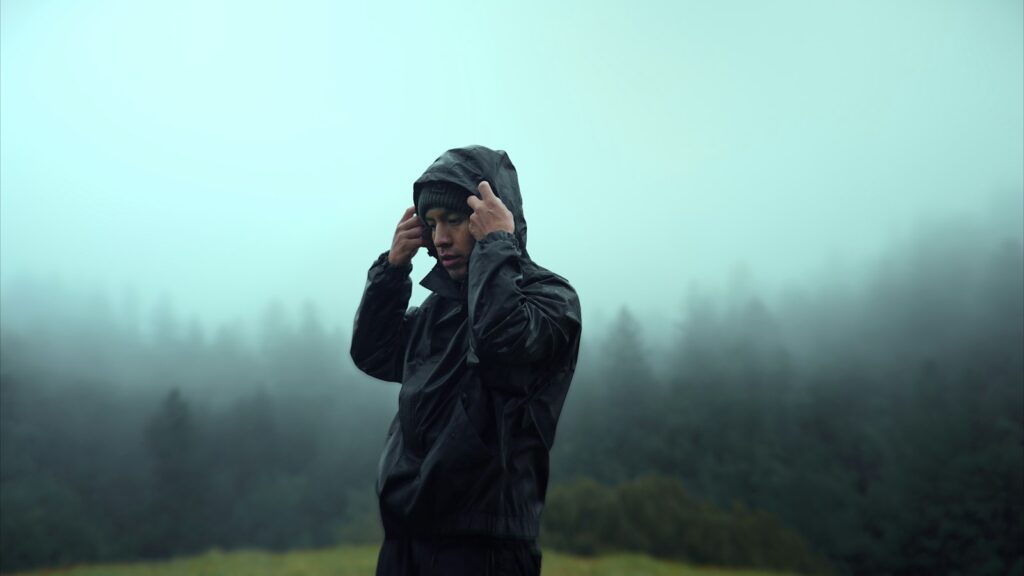
Kenyan trails range from hot, dusty crater rims on Mt Longonot (about 2,780 m) to frosty nights at 3,000 m and well-below-freezing summit nights on Mt Kenya. Rain is the more frequent problem: afternoon storms are common in the forest belts in both rainy seasons.
On Mt Kenya at around 3,000 m, daytime highs typically sit somewhere between 5°C and 15°C and night frosts are possible. Mornings are usually the clearest part of the day, while convectional rain tends to build by mid-afternoon. Higher up, rain or even snow can arrive in any month. That pattern is why your shell stays in the pack even on a bright 6 a.m. start out of Nairobi.
| Months | What to expect | Hiking jackets to pack |
|---|---|---|
| January-February | Usually the drier months, with clear mornings and cold nights on the high peaks | Fleece and a light shell; insulated jacket for Mt Kenya |
| March-May (long rains) | Heavy, frequent rain; muddy forest trails in the Aberdares and on Mt Kenya | Fully waterproof shell with taped seams, plus rain pants |
| June-September | Nairobi’s coolest, often overcast mornings; windy ridges | Fleece plus a windproof shell or softshell |
| October-December (short rains) | Sudden afternoon downpours between sunny spells | Packable waterproof shell, always in the daypack |
Rainfall timing shifts a little every year, so check the Kenya Meteorological Department forecast in the days before a hike and pack your hiking jackets for the worst afternoon rather than the best morning.
Which Hiking Jackets Do You Need for Kenyan Trails?
Most Kenyan hikers need two hiking jackets: a breathable waterproof shell and a fleece. Add an insulated jacket for Mt Kenya, Kilimanjaro or any overnight camp above about 3,000 m, where nights can drop below freezing.
| Hike | Conditions | Jackets to bring |
|---|---|---|
| Karura Forest, Ngong Hills | Mild, breezy, occasional showers | Light waterproof shell or windbreaker |
| Mt Longonot | Hot, dusty, windy crater rim | Windbreaker or light shell, sun protection |
| Ol Donyo Sabuk | Warm climb through forest, cooler summit | Light shell; fleece for an early start |
| Elephant Hill, Aberdares | Cold, misty, often wet and muddy | Waterproof shell plus fleece |
| Mt Kenya (Point Lenana, 4,985 m) | Rain low down, below freezing at the summit | Waterproof shell, fleece and insulated jacket |
These jackets work as a layering system rather than separate outfits. You wear the fleece while climbing on a cold morning, add the shell when rain or wind arrives, and pull the insulated jacket on at rest stops and the summit. Our guide to layering for cold weather hikes explains how the layers fit together, and the hiking gear checklist for Kenya shows where jackets sit in a full day-hike or multi-day kit. If the Aberdares are next on your list, our Elephant Hill hike guide describes the bamboo, bog and mist you will be dressing for.
Hiking jackets on a Mt Kenya climb: a worked example
Hiking jackets on Mt Kenya change by the hour, so it helps to picture a typical summit day. This is how a shell, fleece and insulated jacket rotate on a 4-5 day trek to Point Lenana:
- Forest and lower moorland, morning: a T-shirt or thin base layer while you climb, with the shell at the top of your pack.
- Moorland, mid-afternoon: clouds build and drizzle often starts, so the shell goes on before you get wet, not after.
- High camp evening (Shipton’s Camp sits at about 4,200 m): fleece and insulated jacket together, plus a warm hat and gloves.
- Summit push, usually leaving around 2-3 a.m.: thermal base layer, fleece, insulated jacket, and the shell on top to block the wind.
- Sunrise and descent: peel back to fleece and shell as the sun hits the scree, then stow the insulated jacket in a dry bag.
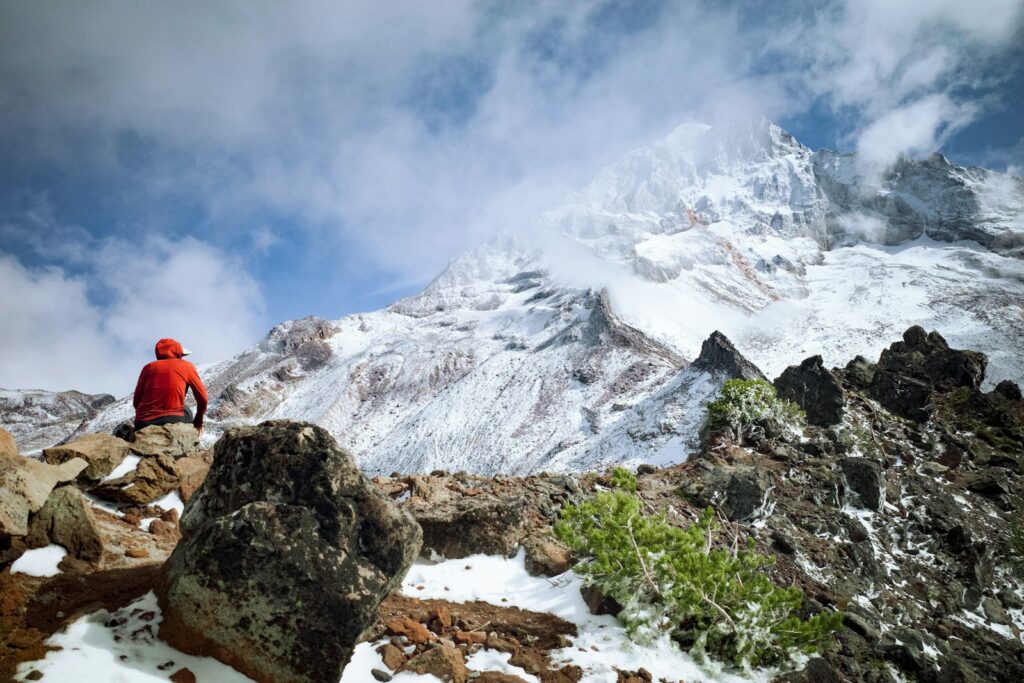
Notice that no single jacket is worn all day. That is the whole point of layering, and it is why a heavy city puffer makes a poor mountain choice: it is too hot on the climb and useless in rain. Our Mt Kenya packing list and our page on thermal wear in Nairobi cover the layers that go underneath.
What Features Should You Look for in Hiking Jackets?
The features that matter most in hiking jackets are real waterproofing and breathability, taped seams, an adjustable hood, a fit that works over your layers and pockets you can reach with a backpack on. Brand names matter less than these details.
- Taped seams: waterproof tape on the inside seams stops rain leaking through stitch holes.
- Adjustable hood: it should turn with your head and fit over a warm hat without blocking your view.
- Ventilation: underarm zips (pit zips) release heat on steep climbs.
- Pockets: chest or high hand pockets stay usable when a hip belt is fastened.
- Cuffs and hem: adjustable cuffs and a drawcord hem seal out wind.
- Packability: a shell that rolls into its own pocket is easy to carry on sunny days.
What waterproof rating should hiking jackets have?
As a rough guide, hiking jackets rated around 10,000 mm (hydrostatic head) handle regular rain, while 20,000 mm or more suits heavy, prolonged downpours like those in Kenya’s rainy seasons. Breathability is often given in g/m²/24h, and higher numbers let more sweat escape.
Higher-rated fabrics tend to be thicker and heavier, so a 20,000 mm shell makes most sense for the long rains or multi-day mountain trips, while a lighter, lower-rated shell is fine for a short-rains day hike. Ratings are not always printed, especially on older or thrifted jackets. In that case, look for a recognised waterproof membrane on the label, taped seams inside, and water that beads on the outer fabric. Pair your shell with waterproof rain pants for full protection in the wet season.
How should hiking jackets fit?
Hiking jackets should let you raise your arms overhead without the hem riding up, and the sleeves should cover your wrists when you reach forward. A shell needs room for a fleece underneath, while an insulated jacket can fit more closely. Try jackets on with the layers you plan to wear, and with your daypack on, so you can check the pockets and hem.
Gear up for your next hike
Shop quality hiking and outdoor gear at great prices — from socks and gloves to hats, balaclavas and camping fuel. Everything you need for Kenya’s trails, delivered fast.
Where Can You Buy Hiking Jackets in Nairobi?
You can buy hiking jackets in Nairobi at our shop, Shop D39 on the 3rd floor of Mountain Mall along Thika Road, or order online and pay by M-Pesa or cash on delivery. Most of our jackets are quality thrifted pieces, with some new items.
Thrifted stock is what makes a good shell or fleece affordable here: well-made hiking jackets last for years, so a pre-owned jacket from a respected brand can cost less than a cheap new one and perform better. Browse our hiking jacket collection and the rain jackets section online, or come and try layers on at the jacket rails in our Mountain Mall shop, close to Kasarani, Garden Estate and Thome. We are open Monday to Friday 8:30am-6:00pm, Saturday 9:00am-2:00pm, and on Sunday by appointment.
Big-brand pieces turn up regularly in thrifted stock, and our post on buying The North Face in Nairobi explains how to read the labels and fabrics on branded jackets.
Are thrifted hiking jackets worth buying?
Thrifted hiking jackets are worth buying when the waterproofing, insulation and zips are still in good order. Before you pay for any pre-owned jacket, from us or anyone else, run through these checks yourself:
| Jacket | What to check | Walk away if |
|---|---|---|
| Waterproof shell | Seam tape intact, zips run smoothly, hood adjusters work | The inner lining is flaking, peeling or sticky |
| Down jacket | Even loft in every baffle, no tears in the shell fabric | Down has clumped into corners or leaks from seams |
| Synthetic jacket | Insulation feels even and springy | The jacket feels flat and thin all over |
| Fleece | Fabric still soft, zip and cuffs in good order | Heavy bobbling and thin, see-through patches |
What Mistakes Do People Make With Hiking Jackets?
The most common mistakes with hiking jackets are relying on one heavy coat, wearing cotton hoodies as a warm layer, and leaving the shell at home because the morning looked sunny. Each one is easy to avoid once you think in layers.
- One big coat for everything: a thick winter coat overheats you on the climb and soaks through in rain; two lighter hiking jackets, a shell plus a fleece, do both jobs better.
- Cotton hoodies: cotton holds sweat and rain, then chills you at the first windy rest stop on a ridge.
- Buying the shell too tight: if it only fits over a T-shirt, it cannot go over your fleece when you need both.
- Trusting a sunny 7 a.m. sky: short-rains storms often arrive in the afternoon, long after you left the car.
- Wearing down in drizzle: wet down loses most of its loft; put the shell over it or switch to synthetic.
- Climbing in the insulated jacket: you sweat into it, then have nothing dry and warm for the summit.
Pro Tips: Getting the Most From Your Hiking Jackets
- Start cool: take off your fleece before a long climb so you do not soak it with sweat
- Shell on early: put your waterproof on at the first heavy drops, not once you are wet
- Keep down dry: carry your insulated jacket in a dry bag and wear it under the shell in drizzle
- Pack it high: keep your shell at the top of a 28L day backpack so you can reach it quickly
- Test the hood: check that it fits over your warm hat before a cold summit
- Protect your hands: pair jackets with Thinsulate waterproof hiking gloves on cold climbs
How Do You Care for Hiking Jackets?
Care for hiking jackets by washing them with a technical cleaner rather than ordinary detergent, never using fabric softener, and reproofing the outer fabric when water stops beading. Clean jackets breathe better and stay waterproof for longer.
Dirt, sweat, sunscreen and body oils clog waterproof fabrics and make a jacket feel like it is leaking. Close all zips and Velcro before washing, rinse well and dry according to the care label; many shells need gentle heat to reactivate their water-repellent finish. The outdoor brand Rab has a clear step-by-step guide to reproofing waterproof jackets and pants.
How do you wash a down hiking jacket?
Wash a down jacket rarely, using a down-specific cleaner on a gentle, cool cycle, then dry it thoroughly on low heat or in the shade, shaking it often to break up clumps. Damp down that dries slowly can smell and lose its loft, so make sure it is fully dry before storing it.
How should you store hiking jackets between hikes?
Store hiking jackets clean, fully dry and loosely hung or folded. After a muddy Aberdares day, rinse off the dirt and let the jacket dry in the shade before it goes back in the wardrobe. Keep down and synthetic jackets out of their stuff sacks between trips, because months of compression flattens the insulation.
Hiking jackets are only one part of staying dry. For the full wet-weather kit, from boots to pack covers, see our rainy season hiking gear guide and our advice on hiking boots for Kenyan trails. Warm, dry feet matter as much as a dry back, which is why merino wool hiking socks belong in the same bag.
Ready to hit the trail?
Join one of our upcoming guided hikes — from beginner-friendly day hikes to longer treks across Kenya’s best routes.
Frequently Asked Questions
What’s the best jacket for hiking in Kenya?
The best jacket for hiking in Kenya is a breathable waterproof shell with taped seams and an adjustable hood, worn over a fleece when it is cold. This pairing covers sudden rain, wind and chilly mornings on most trails around Nairobi. For Mt Kenya or other high peaks, add an insulated down or synthetic jacket for camp and summit night.
Is a rain jacket enough for hiking, or do I need something warmer?
A rain jacket is enough for warm, wet day hikes, but it adds little warmth on its own. On cold mornings, in the Aberdares or above about 3,000 m, wear a fleece or insulated layer underneath. The rain jacket then works as the outer shell that keeps wind and water off your warm layers.
Down or synthetic: which is better for hiking jackets?
Down is better for hiking jackets when you want the most warmth for the least weight and can keep the jacket dry. Synthetic insulation is better in damp, misty conditions because it keeps more of its warmth when wet. For Mt Kenya, either works if you carry down in a dry bag and wear a shell over it in drizzle.
What’s the difference between a hardshell and a softshell?
A hardshell jacket is fully waterproof and windproof, built to keep out heavy rain. A softshell jacket is stretchy, more breathable and blocks most wind, but only sheds light drizzle. Choose a hardshell for Kenya’s rainy seasons and the Aberdares, and a softshell for cool, dry and windy hikes such as the Ngong Hills ridge.
How can I tell if my old jacket is still waterproof?
An old hiking jacket is probably still waterproof if water beads and rolls off the outer fabric, the seam tape inside is intact and the inner lining is not peeling. If the fabric darkens and soaks up water, wash it with a technical cleaner and reproof it. A peeling or flaking membrane cannot be repaired, so replace that jacket.
Final Thoughts
One jacket cannot cover a Kenyan mountain day, and asking it to is how hikers end up either soaked or sweating. Think in hiking jackets that work together: a shell for rain and wind, a fleece while you move, and an insulated layer for high camps and summit nights.
Before the short rains settle in, lay out what you already own, spot the missing layer and fill that gap first. Then come and try it on at Mountain Mall, or browse online and pay with M-Pesa or cash on delivery.
Shell, fleece or down: which one is missing from your kit?
Our team can help you choose the right gear, answer your hiking questions and get your order dispatched quickly. Message us for a quick, straight answer.