
The Elephant Hill hike is a tough day hike of about 18 to 19 km return in the southern Aberdare Range, starting at Njabini Forest Station in Nyandarua County. Most hikers need 7 to 10 hours to climb roughly 1,150 m through farmland, bamboo forest and moorland to a summit commonly given as 3,658 m.
The Elephant Hill hike has a reputation among Nairobi hikers as the day that separates casual walkers from serious mountain hikers, and that reputation is earned. Deep mud in the bamboo, a long sustained climb and fast-changing weather catch out plenty of people every season. This guide covers how to get there, the route stage by stage, the best months to go, what to pack and the safety rules that matter, so you arrive at the gate ready for a long but rewarding day.

Elephant Hill Hike: Quick Facts
- Location: southern Aberdare Range, Nyandarua County, about 90-100 km north-west of Nairobi.
- Start point: Njabini Forest Station gate, roughly 4 km from Njabini town, at about 2,500 m.
- Summit: commonly given as 3,658 m above sea level (some sources list around 3,630 m).
- Distance and time: about 18-19 km return, usually 7-10 hours of walking.
- Difficulty: hard; a long climb of around 1,150-1,200 m with deep mud in the bamboo zone.
- Best months: the drier spells of January-February and June-September.
- Access: an armed Kenya Wildlife Service ranger escort is normally required; confirm current fees with KWS.
What Is the Elephant Hill Hike?
The Elephant Hill hike is a full-day climb to one of the highest points in the southern Aberdares, popular with Nairobi hiking groups as a step up from shorter day hikes. The hill gets its name from its outline, which looks like the head, back and tail of an elephant when seen from the Kinangop plateau.
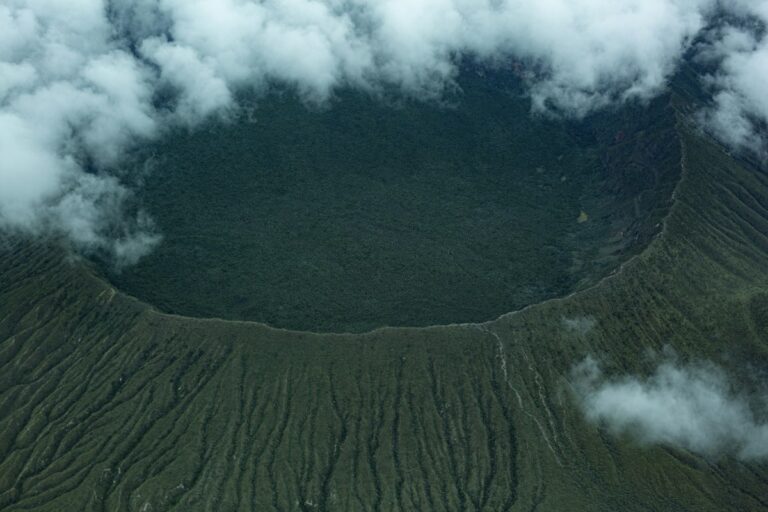
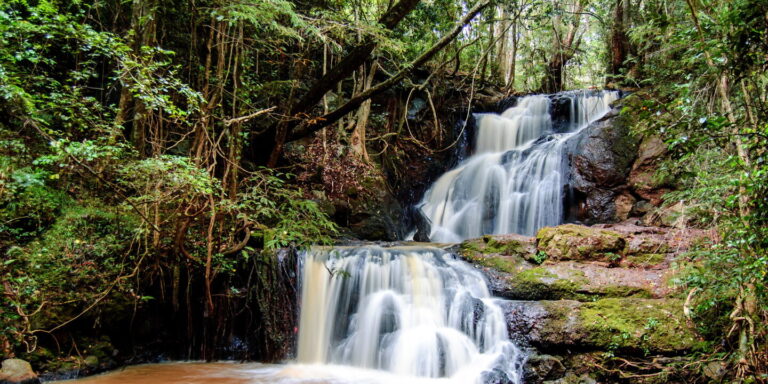
The route climbs steadily from cultivated land at the forest edge into indigenous montane forest, then through a thick belt of bamboo before breaking out onto open heath and tussock-grass moorland near the top. On a clear day the summit views stretch across the Kinangop farmland and the Rift Valley side of the range, with the higher Aberdare peaks rising to the north.
Many hikers treat the Elephant Hill hike as a benchmark before bigger objectives such as Mt Kenya or Ol Donyo Lesatima, because it combines real altitude, long hours on your feet and wet, technical ground in a single day. If you have already done the Mt Longonot hike comfortably, the Elephant Hill hike is a natural next challenge.
Where Is Elephant Hill and How Do You Get There?
Elephant Hill sits at the southern end of the Aberdare Range, and the usual trailhead is Njabini Forest Station, formerly known as Kinangop South Forest Station, about 4 km beyond Njabini town in Nyandarua County. The drive from Nairobi takes roughly 2 to 2.5 hours.
Driving from Nairobi
From Nairobi, take the Nairobi-Nakuru highway up the escarpment, then turn off towards the Kinangop area and follow the road to Njabini town. From town, a dirt road leads about 4 km to the forest station gate. Leave Nairobi by 5 am if you can: an early start gives you enough daylight for a 7 to 10 hour round trip, and you beat the worst of the traffic out of the city.
The final stretch of road can be rough and muddy after rain, so a vehicle with decent ground clearance is a good idea during the short rains. Many groups hire a van or join an organised trip so that nobody has to drive home tired after a long day on the mountain.
Can You Reach the Elephant Hill Hike Start by Matatu?
Yes, Njabini is served by matatus from Nairobi, and from Njabini town you can take a boda boda or walk the last 4 km to the forest station. Ask locally for the current Njabini stage before you travel, and remember that public transport adds time, which matters on a hike this long. Arrange your ranger escort in advance so you are not left waiting at the gate.
What Is the Elephant Hill Route Like?
The Elephant Hill hike follows an out-and-back route climb of around 9 to 9.5 km each way, passing through four distinct zones. Most of the effort comes after the bamboo gate, where the gradient steepens and the trail becomes muddy, rooty and rocky in turn.
| Stage | Approx. elevation | What to expect |
|---|---|---|
| Forest station to forest edge | 2,500-2,800 m | About 3-4 km of gentle dirt track through planted forest and farm plots |
| Bamboo Gate | about 2,933 m | Start of the dense bamboo belt; often deep, slippery mud |
| Point of Despair | about 3,255 m | A notorious false summit after a long, steep bamboo climb |
| The Tail | about 3,513 m | Open moorland and rocky steps along the elephant’s “back” |
| Summit | about 3,658 m | Rocky top with wide views across the Kinangop and the Aberdares |
The Lower Forest and Bamboo Zone
The first few kilometres are the easiest part of the day, on a broad track past tree plantations and small farms where you may meet grazing cattle. Use this section to warm up gradually rather than racing ahead. Once you pass the Bamboo Gate, the path narrows into a tunnel of bamboo where the ground can be churned into thick mud, especially from October to December and March to May.
Point of Despair to the Summit
Point of Despair earns its name because it looks like the top but is only around the halfway mark in terms of effort. Beyond it, the trail climbs onto heath and moorland along the ridge known as the Tail, then makes a final steep push of around 150 m to the summit. Mist often rolls in here, so stay close to your group and your ranger.
How Hard Is the Elephant Hill Hike?
The Elephant Hill hike is rated hard and is not recommended as a first hike. The challenge is the combination of 18 km or more of walking, more than 1,100 m of climbing, altitude above 3,500 m and slippery ground in both directions. The descent is often harder on the knees and toes than the climb, so save some energy for the walk out.
If you are newer to hiking, build up with shorter outings first. Our guide to the best day hikes near Nairobi lists gentler trails that build the fitness and footwork you will need for a long day in the Aberdares.
When Is the Best Time to Hike Elephant Hill?
The best time for the Elephant Hill hike is during the drier months, usually January to February and June to September. The Aberdares are one of the wettest parts of Kenya, so even in dry months you should expect mist, drizzle and muddy patches in the bamboo.
The long rains, roughly March to May, and the short rains, roughly October to December, turn the bamboo zone into a mud bath and make the rocky upper sections slick. Hiking in the wet months is still possible with the right gear and a strong group, but expect slower progress and plan for a longer day. Mornings are usually clearer, with cloud and showers building in the afternoon.
Temperatures near the summit can feel close to freezing in wind and rain, even when Njabini is mild. Pack for cold weather no matter what the forecast says at the gate.
What Should You Pack for the Elephant Hill Hike?
Pack for mud, rain, cold and a long day: waterproof boots with deep tread, gaiters, a rain jacket and rain pants, a warm layer, at least 2-3 litres of water, high-energy food and a headlamp. Good kit makes a bigger difference on the Elephant Hill hike than on almost any other day hike near Nairobi.
Footwear and Gaiters for the Elephant Hill Hike
Waterproof boots with ankle support and a deep, aggressive tread are the single most important piece of kit. A pair such as these Quechua waterproof hiking boots will cope far better with bamboo mud than trainers. Add waterproof leg gaiters to stop mud and water pouring into your boots, and wear wool or synthetic socks rather than cotton. Our guide to hiking boots for Kenyan trails explains what to look for in a pair.
Rain Gear and Warm Layers
Carry a waterproof jacket and waterproof rain pants even on a sunny morning, plus a fleece or insulated mid layer for the summit. Wet hands go numb quickly at 3,600 m, so waterproof gloves and a warm hat are worth their small weight. Our rainy season hiking gear guide covers how to layer these pieces.
Water, Food and Light
Carry at least 2-3 litres of water, because there is no reliable clean water on the route, along with energy-dense snacks and a proper lunch. A rechargeable headlamp is essential: many groups finish the descent at dusk, and the bamboo gets dark early under cloud. Trekking poles help a great deal on the slippery way down.
Gear up for your next hike
Shop quality hiking and outdoor gear at great prices — from socks and gloves to hats, balaclavas and camping fuel. Everything you need for Kenya’s trails, delivered fast.
All of our gear is quality thrifted, pre-owned kit, which makes branded boots, gaiters and rain layers far more affordable than buying new. You can browse online or visit our shop at Mountain Mall, 3rd Floor, Shop D39, Thika Road, Nairobi, to try boots on before your hike.
Pro Tips for the Elephant Hill Hike
- Start early: aim to be walking from the gate by 7:30 am at the latest.
- Set a turnaround time: agree in advance to turn back by early afternoon, summit or not.
- Pace the climb: keep a steady, conversational pace through the bamboo to save energy for the top.
- Trim your toenails: the long descent pushes toes into the front of your boots.
- Pack a change of clothes: leave dry clothes and shoes in the vehicle for the ride home.
- Waterproof your pack: use a dry bag or liner for your warm layer and phone.
How Do You Stay Safe on the Elephant Hill Hike?
Staying safe on the Elephant Hill hike comes down to hiking with an armed ranger or experienced guide, starting early, turning back on time and carrying enough warm, waterproof gear. Elephants and buffalo live in the lower forest and bamboo, which is why an escort is normally compulsory.
Rangers, Guides and Wildlife
Elephant Hill lies within the Aberdare ecosystem, where Kenya Wildlife Service manages park access and ranger escorts, and Kenya Forest Service runs the station and campsite at Njabini. Check current entry fees and escort arrangements on the Kenya Wildlife Service Aberdare National Park page or with the station before you go. Follow your ranger’s instructions, keep the group together and never approach wildlife.
Weather and Navigation
Mist can reduce visibility to a few metres on the upper moorland, and the trail can be hard to follow in cloud. Carry a phone with an offline map and a power bank, and do not split from the group. If anyone shows signs of exhaustion, severe headache or shivering they cannot stop, turn back together. Walking out in daylight is always better than pushing on to the summit late.
Ready to hit the trail?
Join one of our upcoming guided hikes — from beginner-friendly day hikes to longer treks across Kenya’s best routes.
Frequently Asked Questions
How long does the Elephant Hill hike take?
The Elephant Hill hike usually takes 7 to 10 hours of walking for the full return trip of about 18 to 19 km. Fit, experienced groups may finish faster in dry conditions, while muddy trails in the rainy season can add an hour or more. Add around 2 to 2.5 hours of driving each way from Nairobi when planning your day.
Is the Elephant Hill hike suitable for beginners?
The Elephant Hill hike is not suitable for complete beginners. The long distance, climb of over 1,100 m, altitude above 3,500 m and slippery bamboo mud make it a hard day even for regular hikers. Build up first with shorter hikes near Nairobi such as Mt Longonot or the Ngong Hills, and attempt the Elephant Hill hike once you can walk comfortably for six hours or more.
Do you need a ranger to hike Elephant Hill?
An armed Kenya Wildlife Service ranger escort is normally required on the Elephant Hill hike because elephants and buffalo live in the forest and bamboo zones. Arrange the escort before your hike, either directly or through a guided group. Fees and arrangements change, so confirm current charges with Kenya Wildlife Service or at Njabini Forest Station before you travel.
How high is Elephant Hill in the Aberdares?
Elephant Hill is most commonly given as 3,658 m above sea level, although some sources list it at around 3,630 m. The hike starts at roughly 2,500 m at Njabini Forest Station, so you climb around 1,150 to 1,200 m. At that altitude temperatures can drop close to freezing in wind and rain.
What is the best month to hike Elephant Hill?
The best months for the Elephant Hill hike are January and February, followed by June to September, when the Aberdares are usually drier. The long rains of March to May and the short rains of October to December make the bamboo zone very muddy. Even in dry months, start early, because cloud and showers often build by early afternoon.
Final Thoughts
The Elephant Hill hike is a demanding 18 to 19 km day in the southern Aberdares, climbing to around 3,658 m from Njabini Forest Station. With an early start, a ranger escort, waterproof boots, gaiters and proper rain gear, it is one of the most rewarding challenges within reach of Nairobi.
Plan your date for a drier month if you can, build your fitness on shorter trails first, and get your kit sorted before the day. Pop into our Mountain Mall shop on Thika Road for affordable thrifted boots, gaiters and rain layers, and your Elephant Hill hike will be a day to remember for the right reasons.
Planning an Elephant Hill hike and not sure your boots are up to the mud?
Our team can help you choose the right gear, answer your hiking questions and get your order dispatched quickly. Message us for a quick, straight answer.