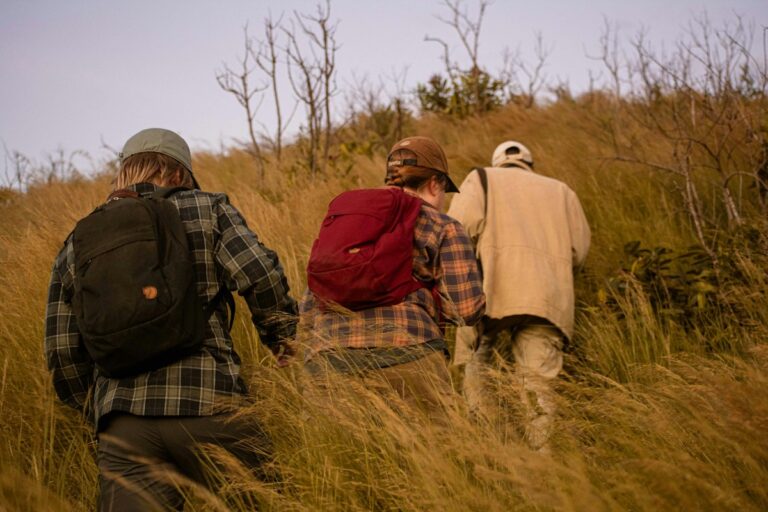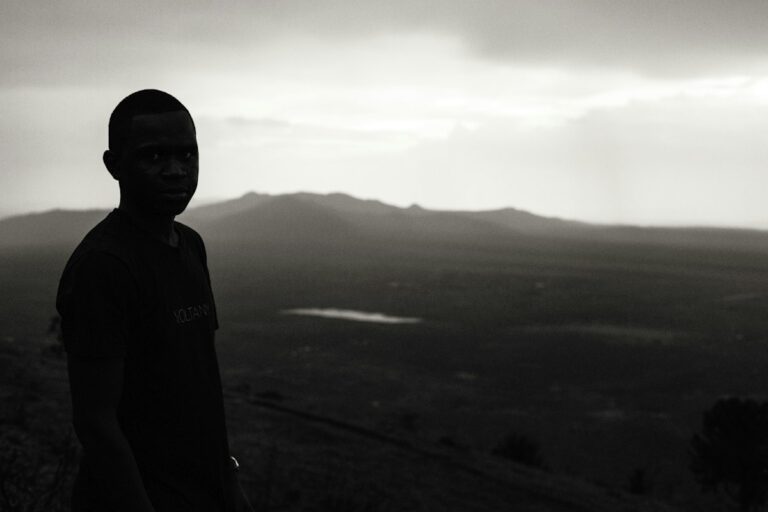

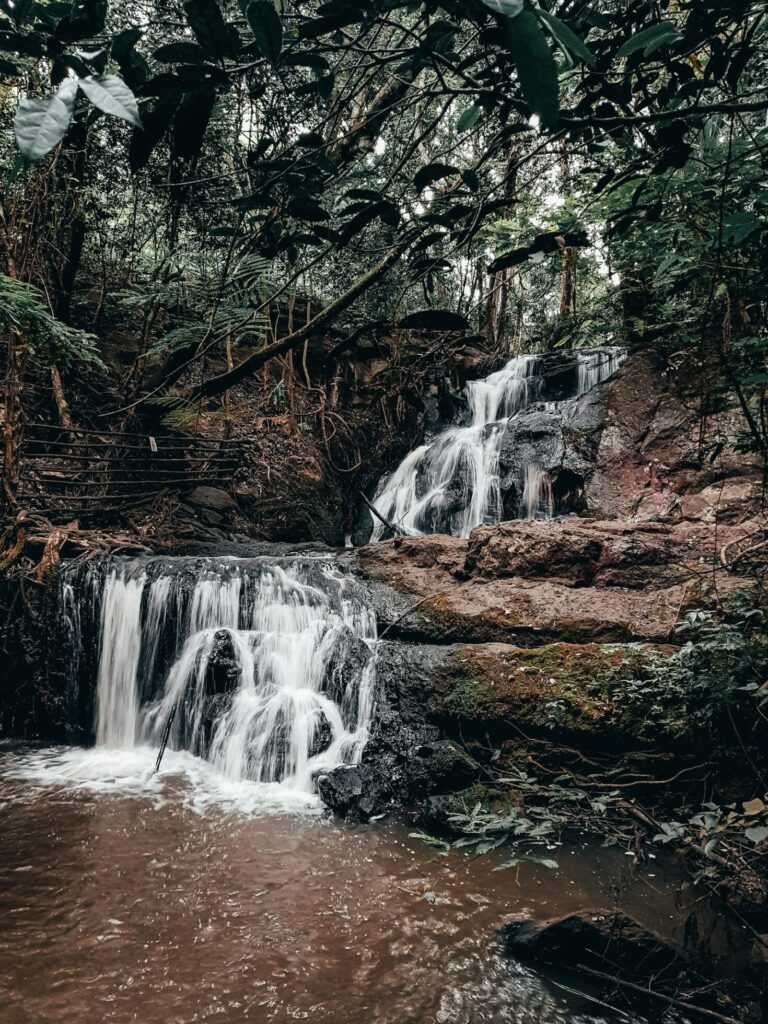
Water dropping about 15 m over three rock shelves, a short walk from the Limuru Road traffic, is the reason most people plan a Karura Forest hike. The forest sits roughly 6 km north of Nairobi’s CBD, with colour-coded loops of 5, 10 and 15 km, numbered junctions and shaded paths, so a visit takes one to four hours.
Karura is easy to reach and easy to underestimate: people turn up at the wrong gate, arrive without M-Pesa, or try the waterfall in white trainers as the short rains start. Below are the gates and matatus, the loops with times, the falls and caves, the rules, the best months and what to wear.
Quick Facts
- Location: northern Nairobi, about 6 km from the CBD, split by Limuru Road into the main forest and the Sigiria block
- Trails: more than 50 km of paths, including yellow (5 km), blue (10 km) and green (15 km) loops
- Highlights: a waterfall of about 15 m on the Karura River, the Mau Mau caves, Lily Lake, bamboo and marshland
- Hours: from about 6:00am, last entry around 5:30pm, gates locked at 7:00pm (Friends of Karura)
- Payment: entry is paid by M-Pesa through eCitizen; cash is not taken at the gate
- Difficulty: easy to moderate, with short climbs in and out of the river valleys
Where Is Karura Forest, and Which Gate Should You Use?
Karura Forest lies in Nairobi’s northern suburbs, between Limuru Road and Kiambu Road, about 6 km from the city centre. For a first Karura Forest hike, Gate A on Limuru Road is the simplest start, with parking, the forest office and the River Café.
Limuru Road cuts the forest in two. The main block holds the waterfall, caves and long loops; the smaller Sigiria block has the Matembezi Trail, an all-weather circuit that stays walkable after heavy rain.
| Gate | Where it is | Best for |
|---|---|---|
| Gate A | Limuru Road, opposite the Belgian Embassy | First visits, parking, River Café, the forest office |
| Gate C (Sharks Gate) | Kiambu Road | Cyclists, dog walkers and the walk to the caves and falls |
| Gate D | End of the ICRAF lane off UN Avenue | Walkers coming from Gigiri on foot |
| Gate E | Limuru Road, opposite Gate A | Pedestrian entry to Sigiria (park at Gate A) |
| Gate F | End of Thigiri Lane, off Thigiri Ridge Road | Sigiria by car, with parking inside |
Getting there by matatu
Matatus put a Karura Forest hike within easy reach without a car. For Gates A and E, take numbers 11B, 106, 107 or 116 from town and ask for the Belgian Embassy stop on the southbound side. For Sharks Gate, numbers 100, 120, 121 and 116 run from the CBD up Kiambu Road towards Kiambu.
Driving and parking
Drivers from Westlands and Parklands reach Gate A along Limuru Road; from Muthaiga, take Kiambu Road for Sharks Gate. Saturdays bring runners, families and cyclists, so arrive by 8:00am for easy parking and cool air on your Karura Forest hike.
Karura Forest Hike Routes: Yellow, Blue and Green Loops
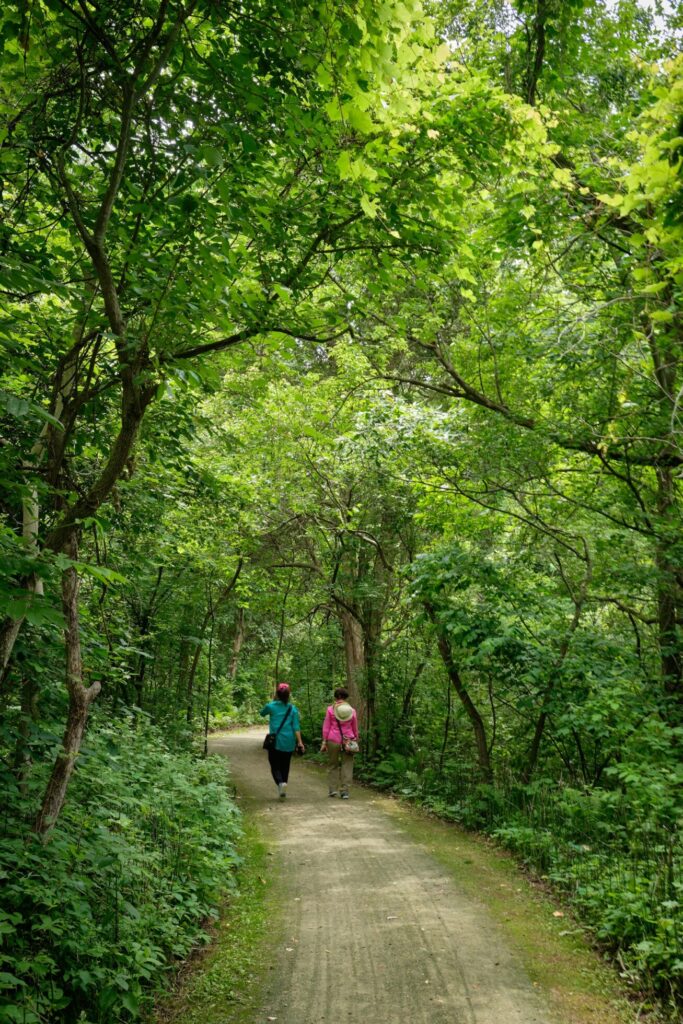
Karura’s three marked loops are 5 km (yellow), 10 km (blue) and 15 km (green). Each one starts and ends near the main gates, and every major junction carries a number that matches the Friends of Karura trail map.
| Loop | Distance | Walking time | Suits |
|---|---|---|---|
| Yellow | 5 km | 1-1.5 hours | First-timers, children, a lunchtime walk |
| Blue | 10 km | 2.5-3 hours | Weekend walkers building fitness |
| Green | 15 km | 3.5-4.5 hours | Training for Ngong Hills or Longonot |
| Waterfall and caves from Sharks Gate | roughly 8 km return | about 3-4 hours with stops | Families and photographers |
How long does a Karura Forest hike take?
Most visitors spend one to four hours inside. The yellow loop fits in before work; the green loop with a detour to the falls fills a Saturday morning.
Times are planning figures. Paths are mostly murram tracks and footpaths with gentle gradients, but the drops into the Karura River valley are steep for a few hundred metres and turn greasy after rain.
Can you get lost on a Karura Forest hike?
Getting truly lost is unlikely, but wrong turns are easy where several paths meet. Save the trail map on your phone, note junction numbers as you pass, and retrace your steps if they stop making sense.
How Do You Reach the Karura Waterfall and Mau Mau Caves?
The waterfall and caves sit on the Karura River in the main block. From Sharks Gate on Kiambu Road, the waterfall leg of a Karura Forest hike is about 4 km each way, starting on a murram track before a signed footpath drops towards the river.
The caves come first, a few metres off the trail above the river. Mau Mau fighters are said to have used them as a hideout in the 1950s. About 1 km further on, the Karura River falls roughly 15 m over three shelves into a pool. Add the falls to any Karura Forest hike from Gate A as well; the signposts at the junctions show the distance.
Lily Lake, on the Lake Trail, makes a quieter stop on the way back. The rocks at the base of the falls stay wet all year, so keep children back from the edge and do not climb the shelves.
What wildlife lives in Karura Forest?
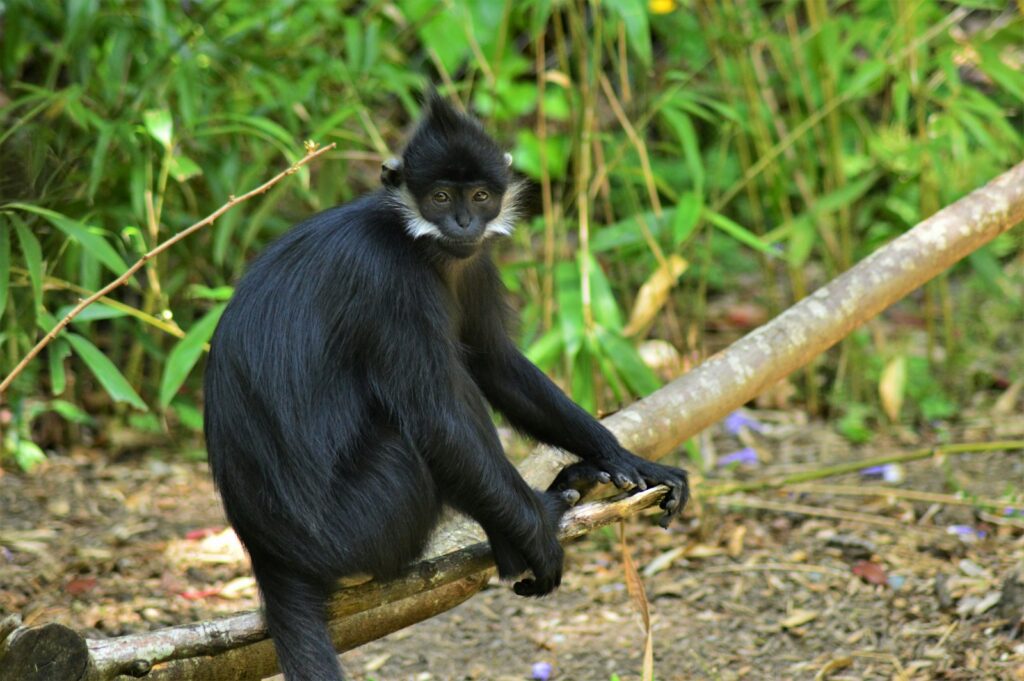
Karura holds about 200 bird species and mammals including Sykes’ monkeys, reintroduced colobus monkeys, bushbuck, suni, Harvey’s duiker, bush babies, porcupines and genets. Walk quietly on an early-morning Karura Forest hike and you will usually hear the monkeys before you see them.
Karura was gazetted in 1932, and in January 1999 Wangari Maathai and a group of tree planters were attacked while protesting the grabbing of forest land here. Their stand helped save Karura, and the Wangari Maathai Track near Sharks Gate carries her name. Since 2009 the Friends of Karura Forest have co-managed it with the Kenya Forest Service.
When Is the Best Time to Walk in Karura, and What Are the Rules?
A Karura Forest hike works all year, but January to February and June to September give the firmest paths. During the long rains (roughly March to May) and the short rains (roughly October to December), expect red mud on the descents to the river.
In November, start in the morning, because showers often build in the afternoon. Weekends get busy from 7:00am, so plan a weekday Karura Forest hike if you want the waterfall to yourself.
Entry is paid by M-Pesa through eCitizen, and day rates differ for citizens, residents and international visitors, so check the current fee notice on the Friends of Karura essential information page before you go. Dogs need an annual dog pass and stay on leash outside the marked off-leash areas. Cyclists keep to the bike trails, and picnic sites must be booked in advance.
A Karura Forest hike is one of the safest walks in Nairobi, with controlled gates and ranger patrols. Still, walk in daylight, tell someone your plan if you go alone, and save the forest’s emergency line, +254 111 944846, before you set off.
What Should You Wear for a Karura Forest Hike?
Quick-drying layers and grippy shoes are enough for Karura. Boots are optional in the dry months, but in the rainy season the river descents reward a deeper tread.
On a dry-season Karura Forest hike, trainers with a good sole are fine for the shorter loops. For the waterfall in the rains, a mid boot such as the Quechua waterproof hiking boot keeps your footing on slick clay. Pair any shoe with merino wool hiking socks.
Up top, a polyester tee such as our short-sleeve quick-dry T-shirt dries far faster than cotton, and our notes on choosing quick-dry shirts in Nairobi explain the fabrics. Carry a light rain layer from October to December; the unisex rain poncho folds into a side pocket.
Take at least a litre for the yellow loop and two for a longer Karura Forest hike, or use a 3L hydration backpack so you can sip on the climbs. Our stock is mostly quality thrifted gear from established outdoor brands, with some new pieces, which keeps a decent kit affordable. Order online and pay with M-Pesa, or try things on at our gear shop at Thika Road’s Mountain Mall, open Monday to Friday 8:30am-6:00pm and Saturday 9:00am-2:00pm.
Gear up for your next hike
Shop quality hiking and outdoor gear at great prices — from socks and gloves to hats, balaclavas and camping fuel. Everything you need for Kenya’s trails, delivered fast.
Pro Tips for Karura
- Start a weekend Karura Forest hike by 7:00am for cool air, easy parking and quiet trails.
- Have M-Pesa ready on your phone; the gate does not take cash.
- Photograph the trail map at the gate and note junction numbers as you walk.
- Wipe the mud off your shoes before the car; red clay sets hard by evening.
Where Should You Hike After Karura?
The usual next step from a Karura Forest hike is the Ngong Hills ridge walk, about 25 km from the CBD, followed by Ol Donyo Sabuk near Thika.
Open hills mean full sun, so step up with more water, a hat and an earlier start. Our beginner’s ladder into Kenya’s trails sets out the order, and our round-up of the best hikes in Kenya ranks the bigger days by effort. We run guided day hikes regularly; check the hike calendar for the next date.
Ready to hit the trail?
Join one of our upcoming guided hikes — from beginner-friendly day hikes to longer treks across Kenya’s best routes.
Frequently Asked Questions
How much is the entrance fee for Karura Forest?
Karura Forest charges a day entry fee that differs for Kenyan citizens, residents and international visitors, Rates change, so check the current fee notice on the Friends of Karura website before you go. Payment is by M-Pesa through eCitizen at the gate.
Is Karura Forest okay for kids and total beginners?
A Karura Forest hike suits children and total beginners well. The 5 km yellow loop is mostly gentle and shaded, and it starts close to the River Café near Gate A. Older children usually manage the waterfall walk too, with an adult keeping them off the wet rocks.
Can I do a Karura Forest hike alone?
Yes, many people walk Karura alone. The gates are controlled and rangers patrol the forest. Stay on marked paths, carry a charged phone with the trail map saved, tell someone your route, and leave before the 5:30pm last entry so you are out well before the gates lock at 7:00pm.
Can you cycle or bring a dog to Karura?
Karura welcomes both cyclists and dog walkers on designated paths. Bikes keep to the marked bike trails, and Sharks Gate on Kiambu Road is the recommended entry. Dogs need an annual dog pass, must stay on a leash outside the off-leash zones, and should be vaccinated.
Do I need hiking boots for a Karura Forest hike?
Hiking boots are not required on Karura’s paths in dry weather; trainers with a good tread are enough. During the long and short rains, though, the descent to the river turns to slippery red clay, and a mid boot with deep lugs gives far better grip and keeps your socks dry.
Final Thoughts
Few capitals have a forest with a waterfall and a piece of liberation history inside their ring roads. Pick a loop for the time you have, enter early with M-Pesa on your phone, and save the falls for a dry morning; that is the whole recipe for a good Karura Forest hike.
Start with the yellow loop this weekend, then add 5 km each time until the green loop feels easy.
Planning a Karura Forest hike and unsure whether your trainers will cope with the mud?
Our team can help you choose the right gear, answer your hiking questions and get your order dispatched quickly. Message us for a quick, straight answer.