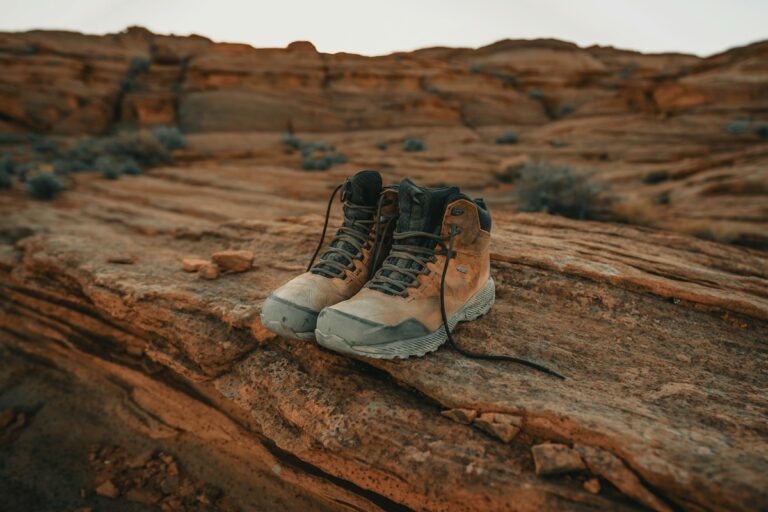
Six hiking boot brands cover almost every Kenyan trail: Lowa and Scarpa for heavy packs and Mt Kenya, Keen for wide feet and wet forest, Salomon and Merrell for light day hikes, and Quechua for value. Karrimor and Brütting fill the budget gap. Pick the brand whose fit and sole suit your trail, not the loudest logo.
Most people shopping for boots in Nairobi have heard of these hiking boot brands but cannot say how a Scarpa differs from a Merrell, or whether a pre-owned Lowa is a better buy than a new budget pair. Below we explain what each brand is known for, where it comes from, how its boots tend to fit, and which Kenyan trails each one suits, from the ash of Longonot to the scree below Point Lenana. We also cover buying thrifted, spotting copies and where to try pairs on in Nairobi.

Quick Facts
- Heavy-duty brands: Lowa (Germany, since 1923) and Scarpa (Italy, since 1938) build stiff, supportive boots for multi-day treks and heavy packs.
- Light and fast: Salomon (France, since 1947) and Merrell (USA, first boot in 1981) make lighter mid-cuts and hiking shoes for day hikes.
- Wide feet: Keen boots such as the Targhee have a famously roomy toe box, a KEEN.DRY membrane and 4 mm lugs.
- Best value: Quechua, Decathlon’s mountain brand since 1997, offers waterproof mid-cuts at entry prices.
- Kenyan conditions: deep lugs for red-soil mud in the short rains (roughly October to December) matter more than any logo.
- Thrifted pairs: a pre-owned boot from one of the big hiking boot brands, with plenty of tread left, often outlasts a new no-name boot.
What Makes a Hiking Boot Brand Good for Kenyan Trails?
Good hiking boot brands for Kenya make boots with grippy rubber, a supportive midsole and a waterproof lining that still breathes on hot lower slopes. Fit consistency matters too: once you know your size in a brand, you can buy its other models with confidence.
Kenyan hiking is unusually varied for one pair of feet. A single Mt Kenya trek can start in warm, muddy montane forest at around 2,600 m and finish on frozen scree at 4,985 m. A Saturday on the Ngong Hills means dusty grass slopes, while the Aberdares can be a bog by noon in April. Good hiking boot brands design for that range, and the details below are what separate them.
Sole rubber and lug depth
Lug depth decides grip on wet clay. Keen quotes 4 mm multidirectional lugs on the Targhee, and Vibram outsoles appear on many models from hiking boot brands such as Lowa, Scarpa and Merrell. Deep, widely spaced lugs shed the sticky red mud of Kiambu and Ngong far better than the shallow pattern of a city trainer.
Waterproof membranes
Most premium hiking boot brands use Gore-Tex, while others use their own membrane, such as KEEN.DRY. Both keep out puddles and forest drip. In Kenya’s dry seasons a membrane can feel warm on low trails like Karura, so some hikers keep a breathable non-waterproof shoe for January and February and a waterproof boot for the rains.
The last, or the shape of the boot
Every brand builds its boots around a foot-shaped mould called a last, and this is why two size 42 boots from different hiking boot brands can feel completely different. Italian and German lasts often run narrower and lower in volume; Keen and Merrell tend to be roomier. Your foot shape should narrow the list before price or colour does.
Can the boot be repaired?
Stitched or well-bonded leather boots from heavy-duty brands can often be resoled by a skilled cobbler, which stretches their life by years. Lighter fabric hiking shoes are usually worn out by the time the sole goes. Ask about resoling before you pay a premium for a boot you hope to keep.
Which Hiking Boot Brands Suit Kenya? A Brand-by-Brand Look
Each of the hiking boot brands below has a clear strength. Lowa and Scarpa suit long, cold, rocky treks; Keen and Merrell suit comfort-first day hikers; Salomon suits fast movers; Quechua, Karrimor and Brütting suit tighter budgets.
Lowa: German build for long, loaded days
Lowa began in 1923, when Bavarian cobbler Lorenz Wagner started making boots in the village of Jetzendorf, which is still home to the company. Its best-known hiking boot, the Renegade GTX Mid, was first produced in 1997. Lowa’s own company history traces how that small workshop grew into the brand hikers know today.
The Renegade pairs a nubuck leather upper with a Gore-Tex lining, a Vibram Evo sole and a moulded Monowrap frame that steadies the foot on uneven ground, at roughly 585 g per boot. That combination suits long, rocky routes such as Sirimon and Chogoria on Mt Kenya. We list the Lowa Renegade Evo GTX Mid on our site, and you can see every Lowa piece we have in stock on our Lowa brand page. Lowa lasts are moderate in width, so most average feet fit without fuss.
Scarpa: Italian precision with a snug heel
Scarpa was founded in 1938 in the foothills of the Dolomites, and its headquarters and factories remain in Asolo and Montebelluna, the heart of Italy’s mountain-boot industry. The name is an acronym for a group of shoemakers from the Asolo area, and the Parisotto family has owned the firm since 1956.
Scarpa’s R-Evo GTX, from the R-Evolution family, shows the brand’s style: a suede and fabric upper, Gore-Tex lining, a Vibram outsole and a heel-hold system that limits slipping and twisting. Among the hiking boot brands here, Scarpa usually suits narrow to average feet with a slim heel. If your heel lifts in other brands, a Scarpa is worth trying on before a Mt Kenya trek.
Keen: room for your toes in wet forest
Keen boots are recognised by their rubber toe guard and generous toe box. The Targhee Mid Waterproof uses waterproofed nubuck leather with mesh panels, the brand’s KEEN.DRY membrane, 4 mm multidirectional lugs, an EVA midsole and a nylon shank for twist resistance. Sizing feedback is mixed, so try before you buy.
That roomy shape sets Keen apart from most hiking boot brands and makes it a strong choice for hikers with wide feet or bunions, and the toe guard earns its keep on the rocky descents of Ol Donyo Sabuk and Elephant Hill. We list the Keen men’s Targhee Mid waterproof boots, and our Keen brand page shows any other Keen pairs currently in stock.

Salomon: light and quick from the French Alps
Salomon was founded in 1947 in Annecy, in the French Alps, and is now part of the Finnish-headquartered Amer Sports group. Salomon’s hiking footwear grew out of its trail-running know-how, which sets it apart from hiking boot brands rooted in leather bootmaking, so lines such as the X Ultra feel light and agile, with grippy soles and quick-pull laces on many models.
Salomon suits day hikers who move fast on firm ground, such as the Ngong Hills ridge or the climb to Longonot’s crater rim. The trade-off is less ankle support and a narrower fit than Keen or Merrell. For a heavy pack on Mt Kenya, most hikers are better served by a stiffer leather boot.
Merrell: comfort straight out of the box
Merrell’s first boot, the Wilderness, was built by hand by Randy Merrell in 1981. Today the brand is best known for the Moab, which Merrell calls the “Mother of All Boots” and which comes in low, mid and waterproof versions. Merrell’s brand story also highlights its long partnership with Vibram on soles.
Merrell boots need less breaking in than those of most hiking boot brands and suit average to wide feet. A waterproof Moab Mid is a sensible all-rounder for weekend hikes around Nairobi and the Rift Valley, though its softer build is less suited to scree and heavy loads than a Lowa or Scarpa.
Quechua: Decathlon’s value brand from Mont Blanc
Quechua, the youngest of these hiking boot brands, was created in 1997 by a small team of Decathlon staff and is designed in Sallanches, near Mont Blanc. Decathlon now sells its trekking range under the Forclaz name, so you will see both labels on boots such as the Forclaz 500 High.
Quechua boots are the easiest way into proper waterproof footwear on a tight budget. The Quechua MH100 hiking boots are a light entry-level option, while our Quechua waterproof hiking boot adds a membrane for the rains. Browse our Quechua brand page for current sizes.
Karrimor and Brütting: budget boots from Britain and Germany
Karrimor started life in Lancashire, England, as a family bicycle-bag business and became the Karrimor Bag Company in 1946, famous for rucksacks and the Karrimat foam mat. Since 2004 it has belonged to the Sports Direct group, and its boots, such as the Hot Rock, are aimed at walkers on a budget.
Brütting is a German footwear brand, and its Mount Bona is a mid-cut hiking boot made in both men’s and women’s versions. Both are hiking boot brands that make sense for occasional hikers who walk a few times a year on trails like Karura or Kereita rather than tackling 4,000 m peaks.
What about The North Face?
The North Face is better known for jackets than boots, so it sits outside the main hiking boot brands in this list, though it does make hiking footwear. We cover the brand’s shells, fleeces and down in our guide to buying The North Face in Nairobi, including how to judge a pre-owned piece.
How Do the Hiking Boot Brands Compare?
The quickest way to compare hiking boot brands is by origin, typical fit and the Kenyan trail each one suits best. The table sums up the brands we have covered.
| Brand | Origin | Known for | Typical fit | Best Kenyan use |
|---|---|---|---|---|
| Lowa | Germany, 1923 | Renegade GTX Mid, durable leather | Average width | Mt Kenya, Kilimanjaro, multi-day treks |
| Scarpa | Italy, 1938 | Precise mountain boots, R-Evo GTX | Narrow to average, slim heel | Rocky, cold, high routes |
| Keen | USA | Targhee, toe guard, roomy toe box | Wide | Wet forest, Aberdares, wide feet |
| Salomon | France, 1947 | Light trail-running-style boots | Narrow to average | Fast day hikes on firm ground |
| Merrell | USA, first boot 1981 | Moab, comfort from day one | Average to wide | Weekend hikes near Nairobi |
| Quechua | France, 1997 | Value waterproof boots | Average | Beginners, budget buyers |
| Karrimor | UK, 1946 | Budget walking boots, rucksacks | Average | Occasional easy walks |
| Brütting | Germany | Mount Bona mid-cut boot | Average | Light trails, forest walks |
Notice that none of the hiking boot brands wins every row. The right pick for a 25 kg trek on Kilimanjaro is the wrong pick for a dawn run up to Longonot’s rim, which is why many regular hikers end up owning two pairs from different hiking boot brands.
Gear up for your next hike
Shop quality hiking and outdoor gear at great prices — from socks and gloves to hats, balaclavas and camping fuel. Everything you need for Kenya’s trails, delivered fast.
Is a Thrifted Branded Boot Better Than a New Budget Pair?
A thrifted boot from one of the leading hiking boot brands is often the better buy, as long as the sole, midsole and lining still have life in them. Leather boots from Lowa or Scarpa are built for years of use, so a lightly worn pair can outlast a new no-name boot.
That is the thinking behind our shop: we sell quality thrifted hiking gear alongside some new items, which makes boots from the bigger hiking boot brands affordable for Kenyan hikers who could not justify a new premium price. Our post on thrifted outdoor gear in Nairobi explains the wider idea.
What should you check on a pre-owned pair?
- Press a thumbnail into the lugs under the ball of the foot. At least 3 mm of tread left is a good sign.
- Squeeze the midsole at the heel. Deep, permanent creases or cracks mean the cushioning has gone.
- Flex the boot at the toe. The upper should bend where your foot bends, without cracking along the crease.
- Look inside the heel cup. Torn lining here causes blisters within the first hour.
- Check that the sole is firmly bonded all round, especially at the toe tip.
- Try the boots on with a proper hiking sock and walk down a slope or a step to test toe room.
How can you tell a genuine branded boot from a copy?
Copies of boots from popular hiking boot brands do circulate, so it pays to know the general signs. Genuine boots usually have neat, even stitching, clearly moulded logos on the sole, a size label inside the tongue with matching style codes, and branded membrane tags or prints where the maker uses one. A price far below the usual second-hand range is a warning in itself.
None of these checks is proof on its own, and stitching on a well-used boot will show wear. Trust the overall picture, and buy from a seller who lets you handle the boot properly before paying.

Where Can You Try These Hiking Boot Brands On in Nairobi?
You can try pairs from several hiking boot brands at our shop in Mountain Mall, 3rd Floor, Shop D39, Thika Road, near Kasarani, Garden Estate and Thome. We are open Monday to Friday 8:30am to 6:00pm, Saturday 9:00am to 2:00pm, and on Sunday by appointment.
Trying boots on in person beats guessing a size from a photo, especially when moving between hiking boot brands with different lasts. Bring the socks you hike in, come in the afternoon when your feet have swollen slightly, and walk around for ten minutes. If you live outside Nairobi or cannot make it across town, order online and pay by M-Pesa or cash on delivery. Visit our hiking shop near Kasarani on Thika Road for directions and contacts.
Good socks change how any boot fits, so pick up a pair of merino wool hiking socks when you try boots on. For the rainy months, waterproof leg gaiters stop mud and water pouring in over the collar, whatever the brand. Our guide to where to buy hiking boots in Nairobi covers fitting in more detail.
Pro Tips for Choosing Between Brands
- Fit first: shortlist two or three hiking boot brands whose lasts match your foot, then compare models.
- Thumb rule: leave about a thumb’s width between your longest toe and the front of the boot for descents.
- Match the trail: stiff leather for Mt Kenya and Kilimanjaro, lighter mid-cuts for Ngong Hills and Karura.
- Break them in: walk 20-30 km around Nairobi before a big trek, even in a soft Merrell or Keen.
- Rains plan: buy a waterproof pair before the short rains rather than during a wet week.
- Mix hiking boot brands freely: a Lowa on your feet and a Quechua as a spare is a perfectly sensible pairing.
Which Brand Should You Choose for Each Kenyan Trail?
Match hiking boot brands to the hardest part of your hike. Rocky, cold or long routes favour Lowa and Scarpa; muddy forest favours Keen’s grip and toe guard; short, dry day hikes are where Salomon, Merrell and Quechua shine.
Ngong Hills and Karura Forest
These are the hikes most Nairobi beginners start with. The Ngong ridge is grassy and dusty for most of the year, and Karura’s paths are firm and shaded. A mid-cut from one of the lighter hiking boot brands, such as Merrell, Salomon or Quechua, is plenty. If you hike the Ngong Hills during the rains, the clay turns slick, so prioritise deep lugs over cushioning.
Mt Longonot and Hell’s Gate
Longonot’s loose volcanic ash punishes smooth soles and low-cut shoes on the descent, and grit gets in everywhere. A mid-cut boot with a firm heel counter from Lowa, Keen or Quechua handles it well; add gaiters if you plan to walk the crater rim loop. Our Mt Longonot hike guide covers the route itself.
The Aberdares and Table Mountain
The Aberdares are wet, boggy and cold, with tussock grass that hides deep puddles. Waterproofing and toe protection matter most here, so lean towards hiking boot brands with tried membranes: Keen’s KEEN.DRY boots and Gore-Tex boots from Lowa or Scarpa are the safer picks. Breathable non-waterproof shoes will be soaked within an hour.
Mt Kenya and Kilimanjaro
For Point Lenana at 4,985 m or Uhuru Peak on Kilimanjaro, choose a supportive, waterproof leather boot that fits over a thick sock. Lowa and Scarpa are the hiking boot brands built for exactly this, and Keen’s Targhee is a reasonable choice for wide feet on non-technical routes. Our Mt Kenya hiking guide explains the routes and conditions.

Common mistakes when buying by brand
The most common mistake is buying from whichever of the hiking boot brands a friend swears by without checking it suits your foot. Others include choosing a heavy mountaineering boot for Karura walks, buying a size too small because the shop is cool in the morning, and assuming every boot from a premium brand is waterproof. Read the model’s details, not just the logo. For a wider look at features, see our post on hiking boots for Kenyan trails, and the hiking gear checklist for Kenya for everything else you will need.
Ready to hit the trail?
Join one of our upcoming guided hikes — from beginner-friendly day hikes to longer treks across Kenya’s best routes.
Frequently Asked Questions
What is the best hiking boot brand for beginners in Kenya?
For most beginners in Kenya, Quechua or Merrell is the best of the hiking boot brands to start with. Quechua’s waterproof mid-cuts are affordable and grippy enough for Ngong Hills, Karura and Longonot, while Merrell’s Moab is comfortable from the first walk. Move up to Lowa or Scarpa only when you start planning multi-day treks such as Mt Kenya.
Are Lowa boots worth the money?
Lowa boots are worth the money if you hike often or carry heavy loads. A Lowa Renegade combines nubuck leather, a Gore-Tex lining and a Vibram sole, and well-kept pairs last for years and can often be resoled. Buying a thrifted Lowa in good condition brings the cost close to a new budget boot.
Is Merrell or Salomon better for hiking?
Merrell is usually better for comfort and wider feet, while Salomon is better for speed and narrow feet. Merrell’s Moab feels softer and roomier from day one; Salomon’s trail-running heritage gives a lighter, more precise boot. For relaxed weekend hikes near Nairobi, Merrell suits most people; for quick ridge hikes, Salomon wins.
Which boot brand is good for wide feet?
Keen is the best known of the hiking boot brands for wide feet, thanks to its roomy toe box, and Merrell is a close second. Some Keen and Merrell models also come in wide versions. Lowa sits in the middle, while Scarpa and Salomon generally suit narrower feet. Always try boots on with your hiking socks to be sure.
Can I buy branded hiking boots in Nairobi without paying full price?
Yes. Branded hiking boots in Nairobi cost far less when you buy quality thrifted pairs. Our Mountain Mall shop on Thika Road sells quality thrifted boots plus some new pairs, with brands that have included Lowa, Keen and Quechua, and you can also order online and pay by M-Pesa or cash on delivery.
Final Thoughts
A logo tells you how a boot is likely to be built, not whether it suits your feet. Lowa and Scarpa lead for long, cold, rocky treks, while Keen and Merrell put comfort and room first.
Salomon is for light, fast days, and Quechua, Karrimor and Brütting keep costs down. Among all the hiking boot brands sold in Kenya, the one that fits you is the one worth buying.
Next step: write down the hardest hike you plan this year, then come and try two or three hiking boot brands back to back with your hiking socks on.
Torn between a Lowa, a Keen and a Quechua?
Our team can help you choose the right gear, answer your hiking questions and get your order dispatched quickly. Message us for a quick, straight answer.