Seven degrees Celsius is a normal July night beside Lake Naivasha, so buy camping gear in Nairobi for the cold, not for the warm afternoon you drive out in. Start with a sleeping bag and an insulated pad, then add a headlamp, a screw-on gas stove, a rain-ready tent and a pack that carries it all.
Most people planning a first night under canvas spend money in the wrong order: a big tent first, a thin bag last, and then a long night shivering at Hell’s Gate or Longonot. Below we set out what to buy and in what order, what each item needs to handle at Kenyan altitudes and in the rains, how thrifted gear compares with new, and where to find camping gear in Nairobi on Thika Road.
Quick Facts
- Buy first: sleeping bag and sleeping pad, then headlamp, stove and gas, tent, pack
- Naivasha nights: average lows of about 7-8°C for most of the year
- Sleeping bag: plan with the comfort rating, not the lower limit
- Sleeping pad: R-value 4 or more for cold ground at altitude
- Flights: gas canisters are not allowed in any baggage; buy fuel in Nairobi
- KWS campsites: Longonot and Hell’s Gate ask you to bring your own camping equipment
- Where to buy camping gear in Nairobi: Mountain Mall, 3rd Floor, Shop D39, Thika Road, Nairobi
What Camping Gear Do You Need for a Weekend Out of Nairobi?
A weekend out of Nairobi needs six things: a sleeping bag, a sleeping pad, a tent, a headlamp, a stove with gas, and a pack with water bottles. Warm clothes for the evening count as a seventh. Everything else, from camp chairs to coffee presses, is comfort.
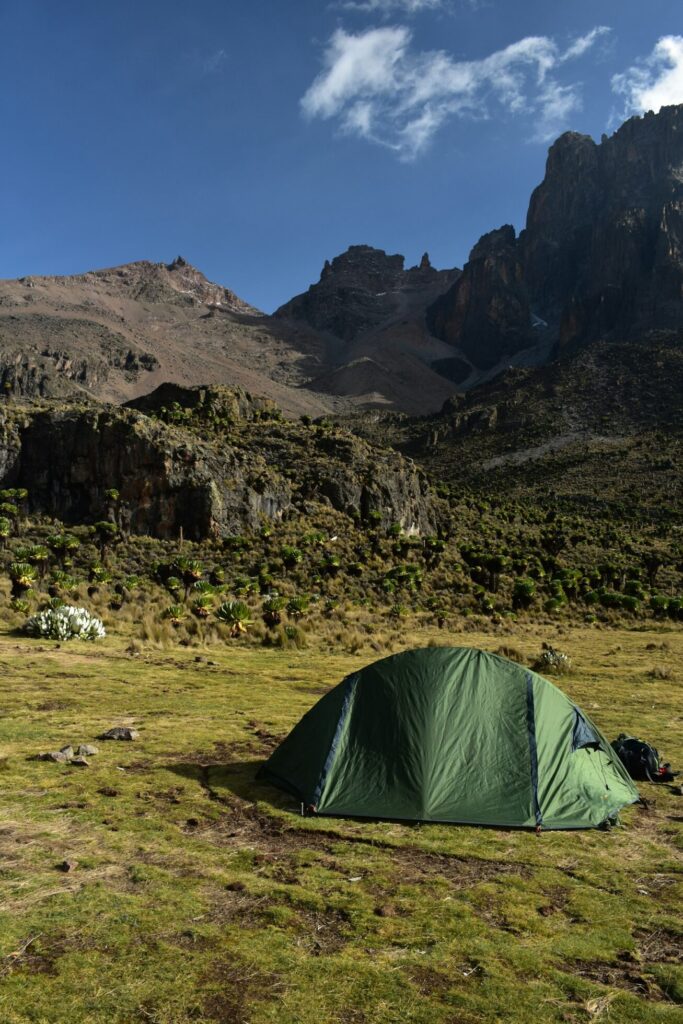
The two campsites most Nairobi campers try first are a short drive away. Mt Longonot National Park sits about 90 km from the city off the Nairobi–Nakuru highway and has a public campsite, Oloongonot, plus two special campsites. Hell’s Gate, reached through Naivasha and the Moi South Lake Road, has two public campsites, Naiburta and Oldubai, and a special campsite called Endachata. Kenya Wildlife Service asks campers at both parks to bring their own equipment, so the camping gear in Nairobi you pack on Friday is the only kit you will have.
In what order should you buy camping gear in Nairobi?
Buy camping gear in Nairobi in order of what ruins a trip fastest if it is missing. Cold and a sleepless night end more first camping trips than rain or hunger do.
- Sleeping bag rated for the coldest night you expect.
- Sleeping pad, because the ground takes more heat than the air.
- Headlamp, since the sun sets around 6:30pm all year near the equator.
- Stove and screw-on gas, for hot food and drinks on a cold evening.
- Tent, which you can often borrow for the first trip or two.
- Backpack, water bottles or a hydration bladder, and a rain cover.
Spreading the cost this way also means each purchase gets used straight away. Plenty of people borrow a friend’s tent for Longonot and buy their own only once they know they will keep camping.
Which Sleeping Bag and Pad Suit Kenyan Campsites?
Choose a sleeping bag whose comfort rating sits a few degrees below the coldest night you expect, and pair it with a pad of R-value 3 or more. Around Naivasha that means a bag comfortable to about 5°C; on Mt Kenya you need one comfortable well below freezing.
What do comfort and limit ratings mean?
Bags tested to ISO 23537 carry two key numbers. The comfort temperature is where a typical relaxed sleeper stays warm; the lower limit is where a curled-up sleeper gets through the night without real discomfort. Plan with the comfort figure when you compare camping gear in Nairobi. A bag sold as “-5°C” is often quoting its limit, and on a clear Naivasha night that difference is the line between sleeping and waiting for dawn.
Down or synthetic: which is better for camping in Kenya?
Down is warmer for its weight and packs to half the size, which matters if you carry the bag up a mountain. Synthetic filling keeps more of its warmth when damp and handles the short rains (October to December) with less fuss. For car camping at Hell’s Gate, either works. For Mt Kenya, where porters or your own back carry everything, down earns its place, and it is the better-value camping gear in Nairobi for anyone planning a mountain trip. A mummy shape is warmest because there is less air inside to heat; our older post on the 15°C mummy-shape down sleeping bag explains the design.
For a closer comparison of ratings, see the sleeping bags guide for Nairobi buyers.
Why does the sleeping pad matter so much?
Your body crushes the filling underneath you flat, so the bag does almost nothing against the ground. The pad does that job. Pads are now rated under the ASTM F3340 standard, which lets you compare brands directly. Closed-cell foam gives roughly R 3 per inch of thickness, and many insulated air pads reach R 4 to 5. Below R 2, expect to feel the ground through the night. The pad is also the most overlooked camping gear in Nairobi, because it looks too simple to matter.
| Where you camp | Typical night | Bag comfort rating | Pad R-value |
|---|---|---|---|
| Naivasha, Hell’s Gate, Longonot (around 1,900-2,100 m) | Average lows about 7-8°C | About 5°C | 3 or more |
| Aberdares and high forest camps | Colder and wetter than Naivasha | About 0°C | 4 or more |
| Mt Kenya high camps (above 4,000 m) | Below freezing | -5°C to -10°C | 4 to 5 or more |
How Do You Choose a Tent for Kenya’s Rains and Wind?
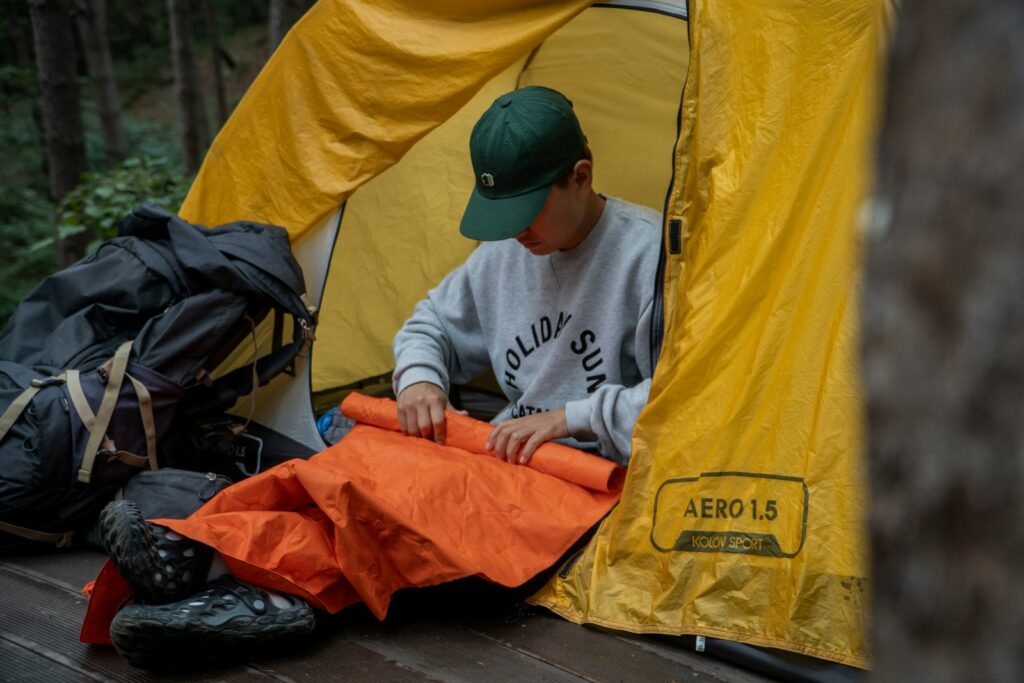
Pick a double-wall, three-season dome tent with a full-length rainfly, taped seams and a bathtub floor. That design copes with afternoon storms in the long rains (March to May), wind across open Rift Valley grassland, and fine dust in the dry months.
What size tent should you get?
Size up by one person. A two-person tent suits one camper with a pack and boots inside; a three-person tent suits a couple. If you will walk in to camp, aim for a packed weight under about 2.5 kg per person, and split poles and fly between two packs. Compare packed size as well as floor area when you weigh up tents against the rest of your camping gear in Nairobi.
How waterproof does a tent need to be?
A fly rated at 1,500 mm hydrostatic head or more is enough for most Kenyan storms, provided the seams are taped and the fly reaches the ground on all sides. The floor takes your weight on wet soil, so it needs a higher rating than the fly. A cheap single-wall tent with an untaped fly will drip through the short rains however good the label sounds. When you look at a used tent while shopping for camping gear in Nairobi, open the fly and look for peeling seam tape.
Pitching tips for Hell’s Gate and Longonot
Point the narrow end of the tent into the wind, peg every guyline, and keep the door away from the prevailing breeze so dust and rain stay out. Volcanic soil can be loose, so longer pegs or a few heavy stones help. Pitch before 6pm: the light goes quickly, and doing it by headlamp turns a ten-minute job into forty. Practise with any new camping gear in Nairobi before the trip, not at the campsite.
What Do You Need for Cooking, Light and Water at Camp?
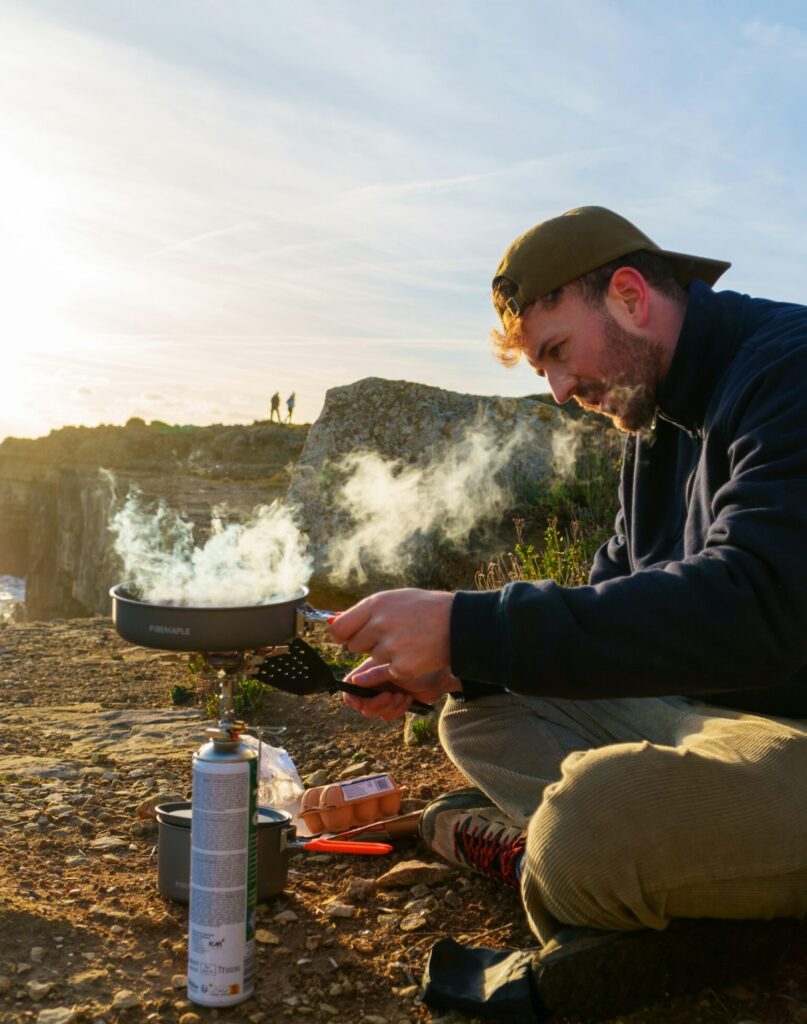
Cooking, light and water need a compact gas stove with screw-on canisters, a small pot and lighter, a headlamp with a red-light mode, and capacity for 2-3 litres of water per person, plus tablets or a filter for anything from a stream.
Which camping gas should you buy?
Most lightweight hiking stoves take screw-on (threaded) canisters filled with a butane and propane mix, which keeps burning better on a cold morning than pure butane. Check the thread on your stove before you buy fuel; our post on camping gas in Nairobi explains which cartridge fits which stove, and the older Coleman C300 post covers one common screw-on can. If you are flying into Kenya, airlines allow a clean, empty camping stove in checked baggage but refuse fuel canisters altogether, so buy your gas along with the rest of your camping gear in Nairobi.
What makes a good camping headlamp?
Look for 200 lumens or more, a red-light mode that does not dazzle the people around you, and a battery you can recharge from a power bank. A waterproof rechargeable headlamp keeps working through a stormy night. For most people it is the cheapest piece of camping gear in Nairobi that changes the most about an evening at camp. The headlamps guide compares modes and battery types.
How much water should you carry?
Carry 2-3 litres per person for a day of walking and more for cooking if the campsite has no reliable tap. A 3L camel hydration backpack makes a good day pack for walks from camp, such as the crater rim at Longonot. Boil, filter or treat any stream water before drinking. Bottles are the cheapest camping gear in Nairobi to get right: two 1-litre bottles plus a bladder cover most weekends.
What Should You Wear Around Camp After Dark?
Around camp after dark, wear a warm mid-layer, a hat that covers your ears, light gloves and dry socks. The temperature drops fast once the sun sets, and sitting still by the stove chills you far quicker than walking does.
Clothing is the part of camping gear in Nairobi that people forget to budget for, and it doubles as extra warmth inside the sleeping bag. A fleece or light down jacket over a thermal base layer handles a Naivasha evening. A winter trapper hat or beanie keeps your head warm while you sleep, and Thinsulate waterproof gloves make it easier to handle cold pegs and pots at 6am. Keep a clean pair of merino wool hiking socks just for sleeping; damp walking socks will cool your feet all night.
For colder trips, our posts on thermal wear in Nairobi and layering for cold weather hikes go into base layers and how to stack them.
Gear up for your next hike
Shop quality hiking and outdoor gear at great prices — from socks and gloves to hats, balaclavas and camping fuel. Everything you need for Kenya’s trails, delivered fast.
What Should You Look for When Buying Camping Gear in Nairobi?
When buying camping gear in Nairobi, check three things for every item: that it suits Kenyan altitude and rain, that every part works today, and that fuel or spares are easy to find locally. Use the table below as a shopping list.
| Item | What to look for | Check before you pay |
|---|---|---|
| Sleeping bag | Comfort rating suited to your altitude; mummy shape and hood for cold | Filling evenly spread with no flat patches; zip and drawcords work |
| Sleeping pad | R-value 3 or more; 4+ for high camps | Air pads hold pressure for several minutes; valve seals |
| Tent | Double-wall, full fly, taped seams, 1,500 mm+ fly | All poles, pegs and guylines present; zips run smoothly |
| Stove and gas | Thread type that matches canisters sold locally | Clean thread, valve turns freely, no gas smell when fitted |
| Headlamp | 200+ lumens, red mode, rechargeable | Every mode switches on; battery holds a charge |
| Backpack | Padded hip belt, back length that fits you, rain cover | Buckles, straps and zips intact; try it loaded |
Is thrifted camping gear in Nairobi worth buying?
Thrifted camping gear in Nairobi is usually a sound buy, because sleeping bags, packs and stoves from established outdoor brands are built to last many seasons. Our stock is mostly quality thrifted (pre-owned) gear plus some new items, which brings good kit within reach of a normal budget. Go through the table above yourself before you pay, and ask about anything you are unsure of.
Where Can You Buy Camping Gear in Nairobi?
You can buy camping gear in Nairobi at our shop in Mountain Mall, 3rd Floor, Shop D39, on Thika Road, or order online at hikingoutdoorhub.com and pay by M-Pesa or cash on delivery.
Mountain Mall sits on the Thika Superhighway close to Kasarani, Garden Estate and Thome, so it is easy to reach by car or matatu from north and east Nairobi. Opening hours are Monday to Friday 8:30am to 6:00pm and Saturday 9:00am to 2:00pm, with Sunday visits by appointment. Directions are on the page for the Mountain Mall outdoor store we run on Thika Road. Seeing camping gear in Nairobi in person lets you feel the loft of a sleeping bag, try a pack with weight in it and match a stove to a gas can before you leave.
Ordering camping gear in Nairobi online suits people who already know what they need. Our 28L day hiking backpack, for example, carries a day’s kit for walks out of a base camp. If you are also kitting out for walking, our hiking gear checklist for Kenya covers every item from boots to rain pants.
Pro Tips Before Your First Night Out
- Lay out all your camping gear in Nairobi on the floor the night before and tick it off against the table above.
- Fit the gas canister and light the stove once at home so you know the thread matches.
- Charge the headlamp and a power bank on Thursday, not Friday night.
- Pack sleeping clothes and socks in a dry bag so they stay dry whatever the weather.
- Keep food sealed in the car or tent; baboons at some Rift Valley sites are quick to raid bags.
- Confirm current campsite fees and bookings with KWS before you set off.
What Mistakes Do First-Time Campers from Nairobi Make?
The most common first-trip mistakes are packing for the daytime heat, trusting a sleeping bag’s limit rating, and arriving after dark. Each is cheap to avoid, and none needs expensive camping gear in Nairobi to fix.
- Packing shorts and a T-shirt only. Afternoons in the Rift Valley are hot, but the same campsite can be 7°C by midnight.
- Sleeping straight on a tent floor or a yoga mat. Thin mats have very little insulation, and the cold ground wins.
- Buying gas before checking the stove. Screw-on, push-on and pierce-type canisters are not interchangeable.
- Leaving Nairobi late on Friday. Traffic out along the Nairobi–Nakuru road can turn a two-hour drive into four, and gates close at 6pm for visitors who are not booked in overnight.
- Storing the tent damp. A tent packed wet after a rainy Sunday can smell of mould by the following weekend.
How Do You Care for Camping Gear After a Trip?
Care for camping gear by drying everything fully within a day of getting home, brushing out dust and grit, and storing sleeping bags loose rather than compressed. Damp storage causes mould, smells and peeling waterproof coatings.
Hang the fly and inner tent on a washing line or balcony as soon as you are back in Nairobi, even if they look dry. Brush volcanic dust from Hell’s Gate out of zips, because it wears the teeth quickly. Store a down bag in a large cotton or mesh sack and keep the small stuff sack for the trail. Take gas canisters off the stove and keep them somewhere cool and shaded. Well-kept camping gear in Nairobi can last for many seasons, which is exactly why good second-hand gear is worth buying in the first place.
Before each trip, check campsite rules and current fees on the Kenya Wildlife Service Mt Longonot page or the page for the park you are visiting. Single-use plastic is banned in national parks, and campfires must never be left unattended. Our Mt Longonot hike guide covers the crater walk most people do the morning after camping there.
Ready to hit the trail?
Join one of our upcoming guided hikes — from beginner-friendly day hikes to longer treks across Kenya’s best routes.
Frequently Asked Questions
Where can I buy camping gear in Nairobi?
You can buy camping gear in Nairobi at Hiking Outdoor Gear Hub, Mountain Mall, 3rd Floor, Shop D39, on Thika Road near Kasarani and Garden Estate. The shop opens Monday to Friday 8:30am to 6:00pm and Saturday 9:00am to 2:00pm, with Sunday by appointment. You can also order online and pay with M-Pesa or cash on delivery.
Is second-hand camping gear any good?
Second-hand camping gear in Nairobi is often very good value, because sleeping bags, packs and stoves from established outdoor brands are made to last for years. A pre-owned bag with even, springy filling and working zips will keep you as warm as a new one. Check every zip, seam, buckle and fitting yourself before paying, and ask questions about anything that looks worn.
How warm a sleeping bag do I need for Naivasha or Longonot?
A sleeping bag with a comfort rating of about 5°C suits camping around Naivasha, Hell’s Gate and Longonot, where average night-time lows sit around 7-8°C for much of the year. Pair the bag with a sleeping pad of R-value 3 or more. For the Aberdares or Mt Kenya, step up to a bag rated around 0°C or lower.
Can I fly into Kenya with my camping stove and gas?
A camping stove can usually travel in checked baggage if it is clean and empty, but gas canisters are not allowed in either cabin or checked bags. Airlines may refuse a stove that smells of fuel at check-in, so clean it well. Buy screw-on gas canisters with the rest of your camping gear in Nairobi after landing, and check the thread matches your stove.
Do KWS campsites give you a tent?
Kenya Wildlife Service public campsites such as Oloongonot at Longonot and Naiburta or Oldubai at Hell’s Gate give you a pitch, not a tent, and KWS asks campers to bring their own equipment. If you do not own a tent, borrow one or book a trip that supplies it. Confirm current campsite fees and booking rules with KWS.
Final Thoughts
Warm sleep decides whether a first camping weekend turns into a habit or a one-off. Put your money into the bag and pad first, add a headlamp and a stove that fits locally sold gas, and borrow a tent until you know you will use your own.
Good camping gear in Nairobi does not have to be new to do the job well. Your next step: pick a date for Longonot or Hell’s Gate, then come to Mountain Mall on a weekday or Saturday morning to choose camping gear in Nairobi that matches that night’s likely low.
Not sure which sleeping bag or stove suits your first camping trip?
Our team can help you choose the right gear, answer your hiking questions and get your order dispatched quickly. Message us for a quick, straight answer.